

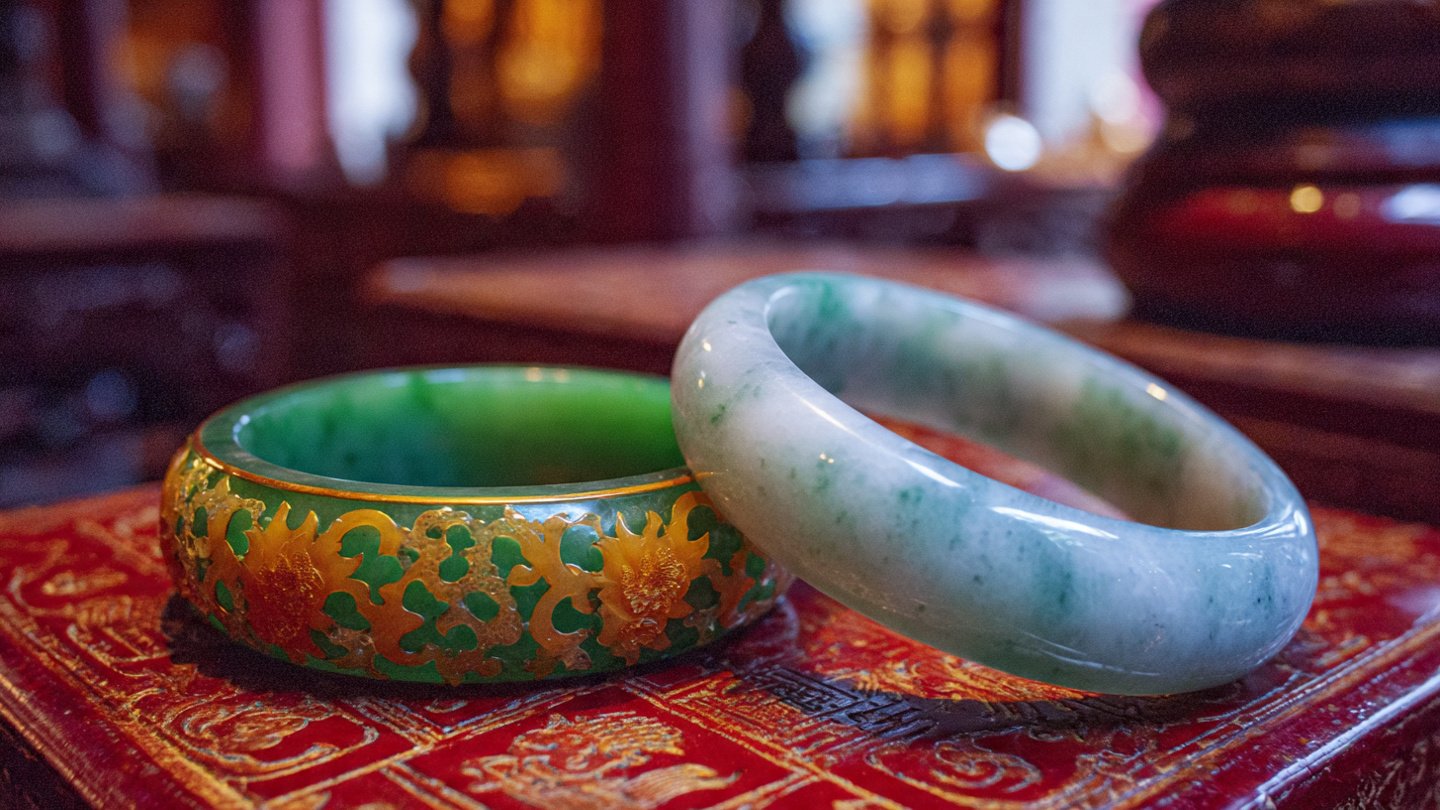
Your grandmother’s jade bangle just cracked down the middle, and she whispers that it saved your life. A superstition, right? Maybe not entirely. The breaking of jade bangles carries profound meaning across Asian cultures, blending ancient spiritual beliefs with surprisingly practical explanations.
This phenomenon has fascinated people for thousands of years, creating a rich tapestry of cultural interpretations alongside scientific reasoning. Whether you view broken jade through the lens of tradition or science, understanding both perspectives reveals why this gemstone holds such a special place in human history.
In this comprehensive guide, you’ll discover why jade bangles break physically, explore the deep cultural beliefs surrounding these breaks, and learn what different traditions say about this mysterious occurrence.
The Cultural Significance of Jade Bangles
Before we explore why jade bangles break, let’s understand their profound cultural importance. This context is essential because it explains why broken jade carries such emotional and spiritual weight.
Jade has been treasured in Chinese culture for over 7,000 years. According to the National Palace Museum in Taiwan, jade ranks higher than gold in traditional Chinese value systems. The Chinese character for jade (玉) appears in numerous words associated with beauty, purity, and excellence.
In Chinese tradition, jade bangles are not mere jewelry. They represent protection, good fortune, family connection, and spiritual energy. Mothers traditionally pass jade bangles to daughters, creating generational bonds. These pieces absorb the wearer’s essence over time, becoming deeply personal talismans.
Vietnamese, Korean, and other East Asian cultures share similar reverence for jade. The Maori people of New Zealand treasure their jade (pounamu) as taonga—sacred treasures carrying ancestral spirits.
Understanding this cultural backdrop helps explain why a broken jade bangle triggers such intense reactions. It’s not just jewelry breaking—it’s the shattering of something sacred.
The Primary Cultural Belief About Breaking Jade
The most widespread belief about broken jade bangles centers on protection and sacrifice. This interpretation dominates across Chinese, Vietnamese, Thai, and other Asian communities worldwide.
The Protection Theory
Traditional belief holds that jade bangles protect their wearers from harm. When a bangle breaks, believers interpret this as the jade sacrificing itself to absorb misfortune, danger, or negative energy that would have otherwise harmed the wearer.
According to research published in the Journal of Chinese Religions, this belief dates back to the Han Dynasty (206 BCE to 220 CE). Ancient texts describe jade as possessing living energy—qi—that connects with the wearer’s own life force.
The protection theory suggests that when danger approaches, the jade bangle absorbs the impact—whether physical or spiritual—and breaks instead of allowing harm to reach the person. Think of it as a spiritual airbag deploying at the moment of crisis.
This belief is so ingrained that many people recount dramatic stories. A woman falls down stairs but emerges unscathed with a broken bangle. A car accident leaves the driver uninjured but their jade in pieces. These anecdotes reinforce the cultural narrative across generations.
Why This Belief Persists
The protection belief endures because it provides comfort during traumatic events. When something frightening happens, finding meaning helps people process the experience. Believing the jade protected you transforms a negative event (broken jewelry) into a positive narrative (divine protection).
Psychologically, this belief also reinforces the emotional bond between the wearer and their jade. It’s not just sentimentality—it becomes a relationship with a protective guardian.
Alternative Cultural Interpretations
While protection dominates jade-breaking beliefs, various cultures offer additional interpretations worth exploring.
Absorbing Negative Energy
Some believe jade bangles continuously absorb negative energy from the environment and the wearer’s experiences. Over time, this accumulation reaches a saturation point where the jade can hold no more and breaks to release the stored negativity.
This interpretation treats jade like a spiritual filter that eventually clogs and needs replacement. The breaking signals that the jade has completed its duty and should be retired with gratitude.
Life Transition Marker
Another interpretation views broken jade as marking significant life transitions. The break signals that one chapter of life has ended and another begins. Some cultures see this as positive—the old jade served its purpose during one life phase, and breaking frees the wearer to move forward unburdened.
This perspective is particularly common when jade breaks during major life events like marriages, career changes, or geographical moves.
Warning Sign
Some traditions interpret broken jade as a warning rather than protection already delivered. The break signals that danger lurks nearby and the wearer should exercise caution in coming days or weeks.
This interpretation encourages heightened awareness and careful decision-making following a jade break. It shifts from “you were saved” to “be careful now.”
Karmic Debt Repayment
Certain Buddhist-influenced interpretations suggest broken jade indicates karmic debt being paid. The misfortune that would have manifested more severely was absorbed by the jade, softening the karmic lesson while still allowing necessary spiritual growth.
This nuanced view combines protection with the concept that challenges serve purposes in spiritual development.
The Scientific Reasons Jade Bangles Break
Now let’s ground these cultural beliefs in physical reality. Jade bangles break for concrete, measurable reasons that have nothing to do with spirits or energy—though these explanations can coexist with cultural interpretations.
Material Properties and Fracture Points
Despite its reputation for toughness, jade is not indestructible. Jadeite ranks 6.5 to 7 on the Mohs hardness scale, while nephrite ranges from 6 to 6.5. Hardness measures scratch resistance, not impact resistance.
According to the Gemological Institute of America, jade’s true strength comes from its fibrous, interlocking crystal structure—similar to reinforced concrete. This structure makes jade incredibly tough but not immune to breaking.
All jade bangles contain microscopic stress points, natural inclusions, and crystalline boundaries. These weak spots make the bangle vulnerable to fracture under the right conditions.
Impact and Physical Trauma
The most common cause of broken jade bangles is simple impact. You knock your wrist against a doorframe, drop something on the bangle, or bump it against a hard surface. Even minor impacts can fracture jade if they hit a weak spot at the right angle.
Jade bangles are rigid circles with no flexibility. Unlike metal bangles that might bend, jade must absorb the entire impact force. If that force exceeds the material’s tensile strength at the impact point, the bangle fractures.
Interestingly, this scientific explanation aligns with the protection belief. The bangle literally did absorb an impact that might have otherwise injured your wrist or hand.
Temperature Fluctuations
Jade expands and contracts with temperature changes. Rapid temperature shifts create internal stress within the crystalline structure. According to materials science research, these thermal stresses can cause spontaneous fracturing, especially in bangles with existing micro-fractures.
Imagine wearing your jade bangle outdoors in winter cold, then immediately entering a warm building. Or washing dishes with hot water while wearing jade. These temperature changes stress the material over time.
This explains why some jade bangles seem to break spontaneously without obvious impact. The accumulated thermal stress finally exceeds the material’s tolerance.
Manufacturing Flaws and Treatments
Not all jade is created equal. Modern jade bangles may contain hidden flaws from manufacturing, including thin spots from over-carving, treatment-related weaknesses, poorly matched jade pieces glued together, and stress fractures from improper cutting or polishing.
Type B and Type C jade (bleached, filled, and dyed) are particularly vulnerable. The polymer fillers and chemical treatments weaken the natural structure. According to the International Gem Society, treated jade can break more easily than natural Type A jade.
Age and Wear
Like all materials, jade experiences cumulative stress over time. Years of daily wear create micro-fractures that gradually weaken the structure. A bangle that survived impacts when new might break from the same impact years later simply due to accumulated wear.
This aging process is usually invisible until the final break. The jade looks fine, then suddenly shatters—appearing spontaneous but actually resulting from years of incremental damage.
The Physics Behind “Protective” Breaking
Here’s where science and spirituality find common ground. The physics of impact distribution can make jade bangles seem genuinely protective.
Impact Absorption Mechanics
When you experience physical trauma—like falling or hitting your arm—the jade bangle absorbs and distributes impact force. Hard materials like jade resist compression better than soft tissue.
If you fall and your jade-adorned wrist hits the ground, the bangle takes the initial impact. If this impact exceeds the jade’s fracture threshold, the bangle breaks—but in doing so, it has absorbed significant force that would otherwise have transferred to your bones and soft tissue.
This is real, measurable protection. The broken jade literally prevented worse injury, just as cultural beliefs claim—but through physics rather than metaphysics.
Real-World Protection Examples
Emergency room doctors have documented cases where jewelry prevented or reduced injuries. Thick bangles can prevent wrist fractures by providing rigid support during impacts. Metal bangles bend; jade breaks—but both can absorb force that would otherwise damage your body.
Medical literature includes cases of “jewelry-related protection” where bracelets, bangles, or rings bore the brunt of injuries. While these studies don’t focus specifically on jade, the principle applies.
So when someone says their jade bangle broke but saved them from injury, they might be absolutely correct—just through mundane physics rather than mystical intervention.
What to Do When Your Jade Bangle Breaks
Both cultural wisdom and practical considerations guide how you should handle a broken jade bangle.
Immediate Cultural Responses
Traditional practices suggest several immediate steps when jade breaks. First, do not throw away the broken pieces immediately. Many cultures view this as disrespectful to the jade’s spirit and the protection it provided.
Thank the jade verbally or mentally for its service and protection. This acknowledges the relationship between you and the object, providing psychological closure. Reflect on recent events to see if the breaking might connect to a specific incident or narrow escape, as this reflection helps process the event meaningfully.
Your file is almost ready
Please wait 15 seconds to unlock the secure download button.
Some traditions recommend wrapping the broken pieces in red cloth—red symbolizes good fortune in Chinese culture and is thought to contain any residual energy. Store these wrapped pieces respectfully rather than discarding them immediately.
Spiritual Cleansing Practices
Many traditions suggest performing cleansing rituals after jade breaks. These practices help the wearer release any negative energy the jade might have absorbed and clear space for new protection.
Common cleansing methods include burning sage or incense around yourself, taking a salt bath, or visiting a temple for blessing. These rituals provide psychological closure and mark the transition from the broken jade’s protection to whatever comes next.
Practical Next Steps
From a practical standpoint, carefully collect all broken pieces, examining them for sharp edges that could cause injury. If the jade was valuable or sentimental, consider repair options—skilled artisans can sometimes reunite broken pieces with kintsugi-inspired techniques or convert pieces into new jewelry.
If repair isn’t possible or desired, some people bury broken jade pieces in their garden, viewing this as returning the stone to earth. Others keep pieces in a memory box with other meaningful items.
When to Get a New Jade Bangle
Cultural beliefs vary on timing for replacement jade. Some suggest waiting a symbolic period—perhaps 49 days (significant in Buddhist tradition)—before wearing new jade. This pause honors the previous bangle’s service.
Others believe you should replace broken protective jade immediately to maintain continuous protection. There’s no universal rule—follow what feels right for your beliefs and circumstances.
Choosing Jade That Won’t Break Easily
If you want to minimize future jade breakage, certain selection and care practices help.
Selecting Durable Jade
When purchasing jade bangles, look for these characteristics associated with greater durability: Type A jade with no treatments, thicker bangle walls (at least 6-8mm), even color indicating uniform structure, and minimal visible inclusions or flaws.
Ask sellers about the jade type and any treatments. According to consumer protection guidelines, reputable dealers must disclose treatments that affect durability.
Proper Sizing Matters
Bangles that fit too loosely slide around, increasing impact frequency. Those too tight stress both your wrist and the jade during normal movement. Proper sizing reduces both discomfort and breakage risk.
A jade bangle should slide over your hand with gentle pressure but fit snugly enough on your wrist to prevent excessive movement. Many jewelers offer sizing assistance.
Protective Care Practices
Minimize breakage risk by removing jade before activities like heavy lifting, sports, cleaning with tools, and sleeping if you move actively.
Store jade bangles in padded boxes or soft pouches when not worn. Never store jade with harder gemstones like diamonds that could scratch or chip it.
Avoid exposing jade to extreme temperature changes. Take it off before hot showers or cold outdoor activities if possible.
Modern Perspectives on Jade Breaking Beliefs
Contemporary jade wearers often navigate between cultural tradition and scientific understanding, creating hybrid interpretations that honor both.
Bridging Science and Spirituality
Many modern jade enthusiasts view the cultural beliefs and scientific explanations as complementary rather than contradictory. The jade physically absorbed an impact (science) and thus protected you (cultural interpretation). Both are true simultaneously.
This integrated perspective respects ancestral wisdom while acknowledging physical reality. It’s not either-or but both-and thinking.
Psychological Benefits of Belief
Research in psychology shows that protective beliefs provide measurable benefits including reduced anxiety, increased sense of security, better stress management, and stronger resilience during difficulties.
Whether jade truly has mystical protective properties, believing it does creates real psychological benefits. The placebo effect is real and powerful—your brain’s belief in protection can actually help you feel more secure and cope better with challenges.
Respecting Cultural Traditions
For people from cultures with jade traditions, these beliefs connect them to their heritage, ancestors, and community. Even those who intellectually question the supernatural aspects may maintain practices out of cultural respect and continuity.
There’s wisdom in honoring traditions that have provided meaning and comfort to billions of people across millennia, even while understanding the scientific mechanisms involved.
Jade Breaking Stories from Around the World
Personal stories illustrate how people interpret and respond to broken jade bangles across different contexts.
Family Heirloom Breaks
Many stories involve inherited jade breaking during significant moments. A woman wears her grandmother’s bangle to a job interview, it breaks during the meeting, she still gets the job but interprets the breaking as her grandmother’s spirit approving the new direction.
These stories emphasize continuity, ancestral connection, and the idea that protective energy transfers across generations through jade objects.
Near-Miss Incidents
Countless accounts describe jade breaking during accidents or close calls. A motorcyclist crashes but walks away uninjured with a broken jade bangle. A person nearly gets hit by a car, their jade breaks that evening.
These narratives reinforce the protection belief and become family stories passed down to younger generations.
Spontaneous Breaking
Perhaps most mysterious are stories of jade breaking with no apparent cause—sitting quietly at a desk, sleeping peacefully, or during completely ordinary activities. These cases invoke interpretations about distant dangers averted or negative energy releases.
Scientific explanations involving accumulated stress and temperature changes apply here, but the sudden, seemingly causeless nature invites spiritual interpretation.
The Economics of Broken Jade
Broken jade has interesting economic and market implications worth considering.
Value Impact
A broken jade bangle loses most of its monetary value. Even if pieces are large enough for repurposing, the value drops dramatically. High-quality jade that might have been worth thousands becomes worth a fraction when broken.
This economic reality makes the protective interpretation particularly comforting—at least the financial loss served a higher purpose.
Repair and Repurposing Market
A niche market exists for repairing or repurposing broken jade. Artisans use techniques like gold or silver joinery (inspired by Japanese kintsugi), converting pieces into pendants or earrings, or incorporating fragments into new designs.
Some people value repaired jade more than unbroken pieces because the repair represents resilience and the object’s protective history.
Insurance Considerations
Most jewelry insurance doesn’t cover jade breakage unless resulting from specific covered incidents like theft or fire. The spontaneous breaking that cultural beliefs celebrate usually isn’t insured.
This is something to consider when purchasing expensive jade—insurance won’t compensate for mystical protection rendered.
Teaching Younger Generations About Jade Traditions
Many families grapple with passing jade traditions to younger, often more scientifically minded generations.
Balancing Tradition and Modernity
Parents and grandparents can frame jade beliefs in ways that resonate with modern sensibilities by emphasizing the psychological comfort and cultural connection rather than insisting on literal supernatural beliefs. They should acknowledge the science while respecting the tradition and focus on the meaning and values behind the beliefs rather than requiring rigid adherence to superstitions.
This approach lets younger people engage with their heritage authentically without feeling forced to abandon critical thinking.
Cultural Heritage Education
Understanding jade traditions connects younger generations to thousands of years of history, art, philosophy, and cultural values. Even without believing in mystical properties, learning these traditions provides cultural literacy and identity.
Museums worldwide feature jade collections that educate about cultural significance. Visiting these exhibitions creates opportunities for intergenerational dialogue about beliefs and traditions.
Final Thoughts on Jade Bangle Breaking
The breaking of jade bangles sits at a fascinating intersection of culture, belief, psychology, and physics. The cultural interpretations—particularly the protection belief—provide meaning, comfort, and connection to heritage. The scientific explanations reveal that jade can indeed provide physical protection through basic physics, even without invoking supernatural forces.
Neither perspective invalidates the other. Jade bangles break because they’re physical objects subject to stress, impact, and material fatigue. People interpret these breaks through cultural lenses that reflect thousands of years of accumulated meaning. Both truths coexist comfortably.
What matters most is how the breaking affects you personally. If believing your broken jade protected you provides comfort and meaning, embrace that interpretation. If understanding the physics helps you appreciate the material’s properties, that’s equally valid. If you hold both perspectives simultaneously, recognizing the complementary wisdom in each, you’ve achieved a mature, nuanced understanding.
The jade bangle’s ultimate value—whether intact or broken—lies not in the object itself but in the human meanings we weave around it. These meanings connect us to our ancestors, our cultures, and the universal human desire to find purpose and protection in a sometimes chaotic world.
Has your jade bangle ever broken? What did you believe it meant? Share your story in the comments below—your experience might provide insight or comfort to someone else navigating this phenomenon. Don’t forget to share this article with anyone who wears jade or appreciates cultural traditions. Understanding the ‘why’ behind jade breaking enriches our connection to this timeless treasure!


