

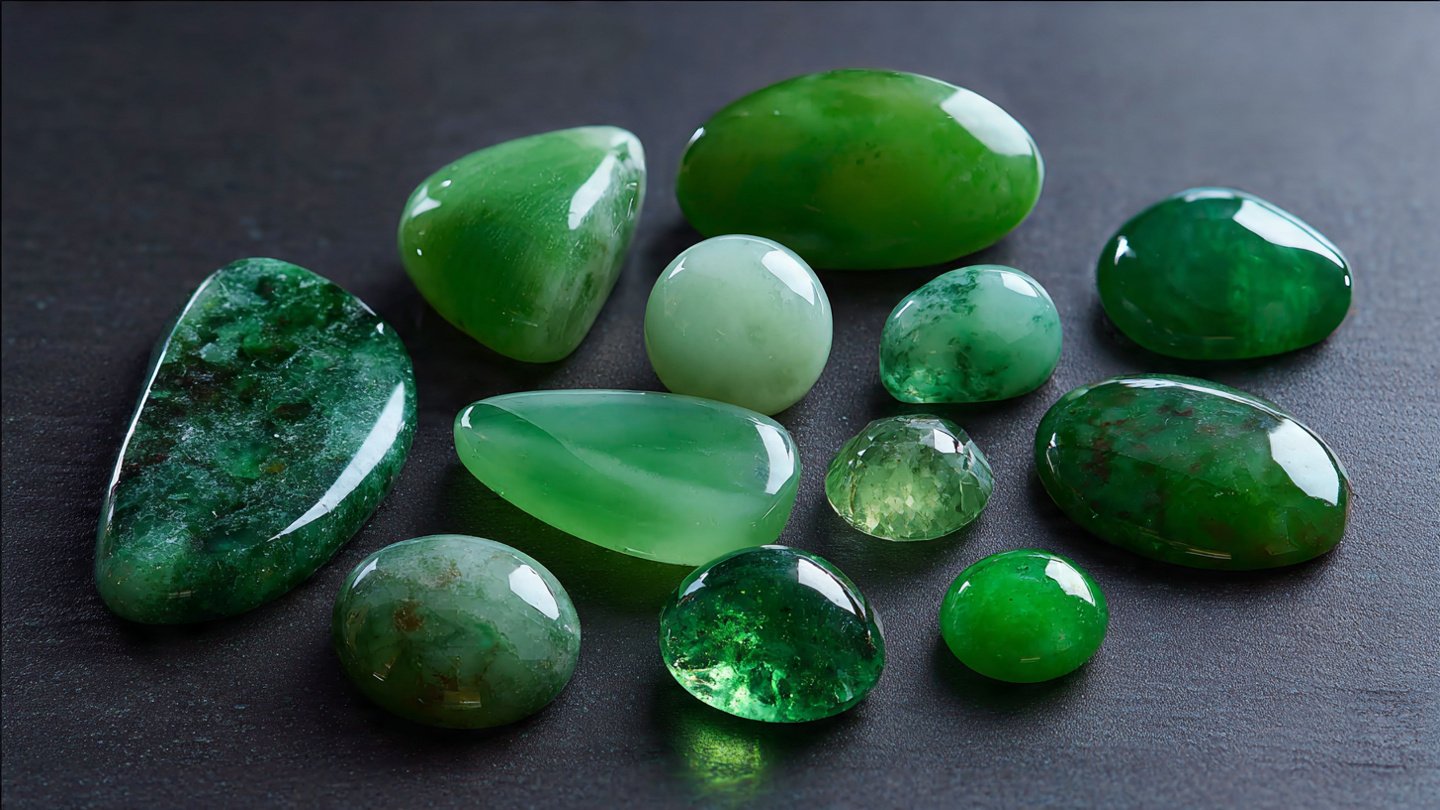
Walk into any fine jewelry store and ask about the most expensive gemstones. Diamonds will come up. Rubies and sapphires too. But mention imperial green jade and watch the expert’s eyes widen. This rare color commands prices that rival—and sometimes exceed—the world’s finest gems, yet most people don’t even know it exists.
Here’s what surprises everyone: while jade comes in almost every color imaginable, one specific shade dominates the market so completely that a single bangle can sell for nearly $4 million. Understanding which jade colors command premium prices protects you from overpaying while helping you recognize genuine investment-quality material.
This comprehensive guide reveals exactly which jade colors cost the most in 2025, why imperial green reigns supreme, and which other shades compete for the number two spot. You’ll discover current market prices, what makes certain colors so valuable, and how to identify premium jade when you see it.
Whether you’re considering your first jade purchase or evaluating a family heirloom, knowing which colors command the highest prices transforms you from a confused buyer into a confident collector.
Imperial Green: The Undisputed King
Imperial green jadeite stands alone at the top of jade pricing. This vivid emerald green with exceptional translucency represents the pinnacle of jade value, commanding prices that shock even experienced gemstone collectors.
What Makes Imperial Green So Valuable
Imperial green exhibits a pure, intense emerald color without any brown, gray, or yellow undertones. The shade must evoke the finest emeralds—rich, vibrant, and alive. According to the Gemological Institute of America, the green must be pure and penetrating, a vivid hue with no hint of gray that looks intense even from a distance.
The color ranges from pure green to slightly bluish green or slightly yellowish green. What matters is intensity and purity. Any secondary tints reduce value dramatically.
Translucency multiplies the value exponentially. The finest imperial jade appears almost transparent while maintaining color saturation. When you hold it to light, it should glow from within with an ethereal quality that seems almost alive.
The Chinese royal court once maintained a standing order for all available imperial jade material, according to the GIA. This historical demand, combined with extreme rarity from Myanmar’s limited deposits, drives modern prices to astronomical levels.
Current Imperial Green Pricing
Imperial green jadeite currently ranges from $500 to over $100,000 per carat depending on quality. But these numbers tell only part of the story.
According to market data from reputable jade dealers, premium imperial jade typically costs $5,000 to $10,000 per carat for good specimens. Exceptional museum-grade pieces regularly exceed $50,000 per carat.
The absolute finest material can reach up to $3 million per carat at auction. In one remarkable sale, an imperial jade bangle fetched over $3.8 million, translating to approximately $69 million per kilogram—dramatically exceeding gold’s value.
The 2014 auction of the Hutton-Mdivani jadeite necklace set records when it sold for $27.4 million—more than double the expected price. The necklace featured 27 exquisite jadeite beads, each displaying premium imperial green color.
According to gemstone valuation experts, imperial jadeite can reach up to $3 million per carat, making it the second-most valuable gemstone in the world, surpassed only by blue diamond valued at $3.93 million per carat.
Why Imperial Green Costs More Than Other Colors
Rarity drives imperial green’s premium pricing. Quality material comes almost exclusively from Myanmar’s northern jadeite deposits. These specific geological conditions occur nowhere else on Earth in quantities sufficient for commercial mining.
The odds of finding imperial green material are staggeringly low. Miners might process tons of jadeite rough before discovering a single piece of imperial quality. Even within that piece, truly flawless imperial green might occupy only a small portion.
Cultural demand amplifies scarcity. Chinese collectors view imperial green as the ultimate jade color, driving intense competition at auctions and private sales. When wealthy collectors compete for limited material, prices skyrocket.
The combination of perfect color, exceptional translucency, and fine texture in a single piece is extraordinarily rare. Most jadeite exhibits one or two of these qualities. Finding all three creates exponential value multiplication.
Lavender Jade: The Prestigious Runner-Up
While imperial green dominates pricing discussions, lavender jadeite commands the second-highest prices in the jade market. This romantic purple-pink hue combines rarity with timeless appeal.
Understanding Lavender Jade Value
Lavender jade exhibits soft purple to pink tones that evoke serenity and elegance. According to jade experts, the second most expensive jade stone displays this distinctive lavender hue.
The color comes from trace amounts of manganese and iron in the jadeite structure. Achieving vibrant, saturated lavender without gray or brown tints requires very specific geological conditions.
Quality lavender jade typically costs $200 to $1,400 per carat according to current market data. However, exceptional pieces command significantly higher prices. Some sources indicate lavender jade can reach $200 to $3,000 per carat for investment-grade material.
Color intensity drives pricing dramatically within the lavender category. Pale, washed-out lavender sells near the lower range at $200 to $400 per carat. Rich, saturated lavender with excellent translucency approaches $1,000 to $3,000 per carat.
Record-Breaking Lavender Sales
In 2018, a necklace featuring 35 lavender jade beads sold at Beijing Poly Auction for approximately $2.7 million (HKD 21.24 million), setting a record for lavender jade jewelry.
According to jade industry sources, top-quality lavender jade with pure, saturated color and fine texture can rival—and sometimes surpass—the market value of some grades of imperial green.
This surprises most people who assume the most expensive jade must always be green. In reality, exceptional lavender jade competing with mid-grade imperial green proves that rarity and quality matter more than color alone.
Color Sensitivity and Appeal
One enchanting quality of lavender jade is its color-changing property under different lighting. Under natural daylight, it may appear pink-purple. Under warm indoor light, it can shift toward grayish or bluish violet.
This play of light makes lavender jade feel almost alive, changing mood from moment to moment. Collectors prize this dynamic quality as it creates visual interest that static-colored gems cannot match.
The rarity factor cannot be overstated. Almost all high-quality lavender jade comes exclusively from Myanmar’s jadeite mines. Other regions produce little to no comparable lavender material.
Cultural symbolism enhances appeal. In Chinese culture, lavender jade is believed to calm emotions, promote wisdom, and restore balance. In Western contexts, purple links to the crown chakra, symbolizing intuition and spiritual awareness.
White Jade: Purity and Prestige
White jade, particularly the legendary mutton fat variety, commands prices that surprise those unfamiliar with jade markets. While not matching imperial green’s stratospheric values, top white jade competes with quality colored jadeite.
Mutton Fat Jade: The Premium White
Mutton fat jade exhibits a creamy white to pale yellow color with exceptional translucency and an almost greasy luster. The name derives from its resemblance to rendered mutton fat—soft, warm, and glowing.
Chinese collectors prize mutton fat jade above many jadeite colors. According to traditional Chinese aesthetics, this material embodies purity and perfection. Ancient emperors valued fine mutton fat jade as highly as imperial green.
Current pricing for white jade ranges from $50 to $500 per carat depending on quality. However, exceptional mutton fat jade can reach $250 to $500 per carat, competing with mid-grade jadeite prices.
The International Gem Society notes that the finest white jade displays soft, warm tone with excellent translucency and characteristic luster. These qualities separate premium mutton fat from ordinary white jade.
White Jadeite vs Nephrite
White jade appears in both jadeite and nephrite varieties. Quality white jadeite typically costs $50 to $500 per carat. The best pieces display good translucency, even color, and fine texture.
Mutton fat, traditionally nephrite, represents a special category. Despite nephrite generally costing less than jadeite, top mutton fat commands premium prices because of its legendary status in Chinese culture.
An imperial white jade seal sold for over $18.7 million in 2021, setting records for both white jade and imperial seals. This demonstrates that historical significance and exceptional quality can elevate white jade to extraordinary values.
Icy White Jadeite
“Icy” jadeite refers to material with glass-like transparency and minimal color. Icy white jadeite has gained popularity recently, trending among younger collectors who appreciate its modern, clean aesthetic.
While icy white costs less than imperial green, premium icy white with exceptional transparency can fetch $100 to $800 per carat. The appeal lies in its near-transparent quality that seems to capture and reflect light beautifully.
Other Valuable Jade Colors
Beyond the top three, several jade colors command significant prices based on rarity, quality, and market demand.
Blue Jade: The Rare Treasure
Blue jade ranks among the absolute rarest jade colors. Caused by titanium or iron inclusions, genuine blue jade commands strong prices between $100 and $1,500 per carat.
Color intensity separates expensive blue jade from cheaper varieties. Pale grayish-blue might cost $100 to $300 per carat. Rich, vibrant blue approaching sapphire intensity can reach $1,000 to $1,500 per carat.
The extreme scarcity means finding quality blue jade specimens requires patience and connections with specialized dealers. Most jade on the market isn’t truly blue but rather green with blue undertones.
Black Jade: Dark Elegance
Black jade shows enormous price variation reflecting quality differences. Low-grade black nephrite might sell for just $1 to $10 per carat—essentially decorative stone pricing.
High-quality black jadeite tells a different story entirely. Deep, even black with good texture can reach $100 to $1,500 per carat. The key is whether the black appears truly deep and consistent or shows gray mottling.
According to pricing data, quality black jade with translucency (visible when backlit around edges) commands premium prices. Completely opaque black jade typically stays in the lower price ranges.
Apple Green Jade: The Yellowish Variety
Apple green jadeite displays an intense yellowish-green color that’s less valuable than imperial green but more expensive than many other shades. The name perfectly describes its crisp, spring-like hue.
Current market prices for apple green jade range from $100 to $2,000 per carat depending on quality. The best pieces show vibrant, saturated color with good translucency and fine texture.
The Gemological Institute of America lists apple green as one of the highly valued jade varieties, though it falls below imperial and kingfisher green in pricing.
Yellow and Orange Jade
Yellow jade pricing depends heavily on the specific shade. Darker brownish-yellows might cost only $10 to $20 per carat. Pure, bright yellows range from $50 to $150 per carat.
Orange jade—relatively rare in both jadeite and nephrite—typically sells for $15 to $300 per carat. Some sources indicate yellow jade can reach $50 to $800 per carat for exceptional pieces.
The presence of iron gives jade its yellow hue. The more pure and saturated the yellow without brown tints, the higher the value climbs.
Purple Jade: Beyond Lavender
Purple jade distinct from lavender can be quite valuable, ranging from $10 to $300 per carat depending on color vibrancy. Some market data shows purple jade reaching $200 to $3,000 per carat for investment-grade material.
Purple jade continues appreciating in value, showing an average annual growth rate of 5-8% over the past decade according to gemstone investment analysts.
Intensity and even distribution of purple color determine whether a piece sells near the high or low end of the spectrum. Washed-out purple with poor translucency stays cheap. Vivid, saturated purple with fine texture commands premium pricing.
Red Jade: The Elusive Rarity
Genuine red jade is uncommon, resulting from iron or manganese in the stone. Quality varies enormously, with pricing from $10 to $300 per carat depending on color vibrancy and uniformity.
True red jade—vivid, saturated red without brown undertones—is extraordinarily rare. Most “red” jade actually shows brown or orange-brown colors rather than pure red.
Color Ranking by Average Price
Understanding relative pricing helps collectors make informed decisions. Here’s a comprehensive ranking of jade colors by typical per-carat value:
Top Tier ($500-$100,000+ per carat):
- Imperial Green Jadeite: $500 to $100,000+ (up to $3 million for museum quality)
Premium Tier ($200-$3,000 per carat):
- Lavender Jadeite: $200 to $3,000
- Purple Jade (high quality): $200 to $3,000
High-Value Tier ($100-$2,000 per carat):
- Apple Green Jadeite: $100 to $2,000
- Black Jadeite (quality): $100 to $1,500
- Blue Jade: $100 to $1,500
Mid-Range Tier ($50-$800 per carat):
- White Jade: $50 to $500
- Mutton Fat Jade: $250 to $500
- Yellow Jade: $50 to $800
Entry Tier ($5-$50 per carat):
- Light Green Jadeite: $5 to $100
- Low-grade colored jade: $5 to $50
- Commercial nephrite: $5 to $20
These ranges represent typical market prices. Exceptional pieces can exceed these ranges, while poor quality falls below them.
What Makes Certain Colors More Valuable
Understanding why specific colors command premium prices helps you evaluate jade more accurately.
Rarity Factor
The single biggest driver of color value is scarcity. Imperial green jadeite occurs in only a tiny fraction of Myanmar’s jadeite production. Lavender jade faces similar scarcity constraints.
Blue jade remains so rare that most dealers never handle it in their entire careers. This extreme scarcity automatically creates high values when quality material appears.
Common colors like light green or white occur more frequently, reducing their per-carat values despite still being genuine jade.
Color Intensity and Saturation
Within any color category, saturation dramatically affects price. Vivid, intense color commands multiples of what pale, washed-out versions fetch.
Your file is almost ready
Please wait 15 seconds to unlock the secure download button.
Imperial green must show intense, pure color. Slightly less saturated green might be called “kingfisher jade” or simply “fine green”—still valuable but not imperial pricing.
The same principle applies to lavender, blue, yellow, and other colors. Rich saturation elevates value; weak saturation reduces it.
Cultural Preferences
Chinese cultural preferences drive much of the jade market. Imperial green’s dominance partly reflects centuries of Chinese imperial court demand.
Mutton fat jade commands premium prices largely because of its legendary status in Chinese culture. Western buyers might not value it as highly, but Chinese collectors pay premium prices.
Lavender jade appeals across cultures—romantic and elegant in Eastern markets, associated with spirituality in Western contexts. This broad appeal supports its premium pricing.
Translucency Interaction
Color and translucency work together to create value. Even imperial green jadeite brings modest prices if completely opaque.
The finest imperial jade combines vivid green color with exceptional translucency—a rare combination that creates exponential value multiplication.
Lavender jade benefits tremendously from translucency. The lighter color allows easier light transmission, and the finest pieces glow beautifully when backlit.
Dark colors like black or deep green face challenges achieving high translucency in thicker pieces. This physical reality affects their maximum potential values.
How to Identify Premium Color Jade
Knowing which colors cost the most helps only if you can recognize them accurately. These practical tips improve your evaluation skills.
Examining Color Under Proper Lighting
Always evaluate jade under natural daylight if possible. Artificial lighting can mask color issues or create false impressions.
Hold the piece up to bright light to check translucency. Premium jade should show light passing through with a beautiful glow. Dead, opaque appearance indicates lower quality regardless of color.
Compare the jade to reference images of premium colors. Your eye calibrates over time, but starting with visual references helps you understand what “imperial green” or “quality lavender” actually looks like.
Testing for Treatment
Many jade pieces receive color treatments to imitate valuable natural colors. Type C jade gets artificially dyed to fake imperial green, lavender, or other premium shades.
According to the GIA, grayish jadeites may be stained to imitate imperial jade coloration or dyed to achieve mauve colors. These treatments dramatically reduce value.
Professional testing using UV fluorescence, spectroscopy, and microscopic examination can identify dyes that visual inspection might miss. For expensive purchases, laboratory certification becomes essential.
Natural color should appear to come from within the stone, not pooled on the surface or concentrated in cracks—signs of dyeing.
Evaluating Color Uniformity
Premium jade displays relatively even color distribution. Mottled or patchy color reduces value significantly.
Imperial green must show uniform color throughout without zones of lighter or darker green. Some natural color variation is acceptable, but dramatic patches or veining reduce value.
For lavender jade, consistent color throughout the piece commands the highest prices. Areas of white or gray mixed with lavender reduce per-carat values.
Understanding Color Names
The jade industry uses specific terms for colors. Understanding these helps you communicate with dealers and recognize quality.
“Imperial jade” specifically means vivid emerald green jadeite with exceptional translucency. Dealers shouldn’t use this term for ordinary green jade.
“Kingfisher jade” describes green slightly less vivid than imperial. Still valuable, but distinct from true imperial.
“Moss-in-snow jade” refers to translucent white with bright green veining, patches, or spots. The Gemological Institute of America lists this as one of the highly valued varieties.
Market Trends and Investment Considerations
Understanding current market dynamics helps you make informed purchasing decisions.
Price Appreciation by Color
Imperial green jadeite has shown consistent long-term appreciation, particularly in Asian markets. The 1997 auction record of $9.3 million grew to $27.4 million by 2014—demonstrating strong appreciation.
Lavender jade shows average annual growth of 5-8% according to investment analysts. This steady appreciation makes it attractive for collectors seeking alternatives to imperial green’s stratospheric entry prices.
White jade appreciation varies by specific type. Imperial white jade seals and historical pieces have set auction records, while commercial white jade shows modest gains.
Supply Constraints by Color
Myanmar’s political instability affects the supply of all jadeite colors, but impact varies by rarity. Imperial green and lavender, already scarce, face severe supply constraints.
Environmental regulations and mining restrictions further limit availability of premium material. These supply constraints directly support price increases for existing pieces.
For nephrite colors, British Columbia remains a stable source for green material. Chinese mutton fat jade faces shrinking production from Kunlun Mountain deposits.
Changing Collector Preferences
Younger collectors show increasing interest in icy white jadeite, appreciating its modern, clean aesthetic. This trend supports gradual price increases for quality icy material.
Lavender jade gains popularity beyond traditional Asian markets. Western collectors increasingly appreciate its romantic color and spiritual associations.
Blue jade, while always rare, sees increased attention from collectors seeking unusual colors. Limited supply means even modest demand increases create significant price impacts.
Buying Strategy by Color Preference
Your purchasing strategy should align with your budget, goals, and personal preferences.
For Investment Focus
If building investment-quality collection, prioritize imperial green jadeite when budget allows. Focus on certified Type A material with excellent color, translucency, and texture.
Lavender jade offers a more accessible entry point for investment collecting. Quality lavender costs less than imperial green while still showing solid appreciation potential.
Always insist on laboratory certification documenting natural color, Type A status, and specific quality characteristics. Investment pieces require documentation for future resale.
For Personal Enjoyment
If buying for personal wear and enjoyment, choose colors that appeal to you personally. Beautiful jade exists at every price point.
Quality nephrite in green or white offers excellent value for daily wear jewelry. The superior toughness makes nephrite ideal for bangles and rings that take abuse.
Mid-range jadeite in colors like apple green, yellow, or lavender provides beauty and cultural significance without investment-grade pricing.
For Cultural Significance
If cultural heritage matters most, consider traditional favorites like mutton fat jade or imperial green. These colors carry deep symbolic meaning in Chinese culture.
White jade symbolizes purity and virtue. Green represents growth, harmony, and prosperity. Choose colors whose symbolism resonates with your values.
Historical pieces or items with provenance can carry cultural value beyond their material worth. A modest jade piece from a significant historical period might interest you more than expensive modern material.
Common Color Misconceptions
Several myths about jade colors persist in the marketplace. Understanding these protects you from mistakes.
“All Green Jade is Valuable”
Green is jade’s most famous color, but not all green jade commands high prices. Light, yellowish greens might cost just $5 to $20 per carat.
Only imperial green—that specific vivid emerald shade with exceptional translucency—reaches premium pricing. Ordinary green jade remains relatively affordable.
The difference between $10 per carat green and $10,000 per carat imperial green lies in subtle color and translucency qualities that untrained eyes might miss.
“Rare Colors Are Always Expensive”
While rarity creates value potential, quality still matters enormously. Rare blue jade in poor quality with bad color brings modest prices.
Some rare colors like red jade seldom achieve investment quality because the geological conditions producing red rarely create fine texture and translucency simultaneously.
Rarity alone doesn’t guarantee value—it must combine with desirable color, good translucency, and fine texture.
“Treated Jade Shows Better Color”
Treated jade (Type B and C) can display intense colors that look attractive initially. However, treatments reduce value by 70-90% compared to natural material.
Type C jade dyed to imitate imperial green might look beautiful in the store but will never appreciate in value. The artificial color may fade or change over time.
Only natural, untreated Type A jade maintains and increases value long-term. Never pay premium prices for treated material regardless of how attractive the color appears.
“White Jade Costs Less Than Green”
This oversimplification ignores quality differences. Premium mutton fat jade can cost $250 to $500 per carat—more than most green jade except imperial quality.
The $18.7 million sale of an imperial white jade seal demonstrates that exceptional white jade competes with any color in value.
Color matters, but quality, rarity, and cultural significance often matter more when evaluating premium jade.
Final Thoughts on Jade Color Value
Imperial green jadeite unquestionably dominates jade color pricing, commanding values from $500 to over $100,000 per carat for the finest material. Its combination of rarity, cultural significance, and stunning beauty creates a unique position in the gemstone world.
Lavender jade secures second place, offering collectors a more accessible entry point to premium jade while still showing solid appreciation potential and timeless appeal.
White jade, particularly mutton fat variety, demonstrates that color alone doesn’t determine value—cultural significance and quality characteristics play equally important roles.
The knowledge you’ve gained here—understanding which colors command premium prices, recognizing quality characteristics, and knowing current market values—protects you from overpaying while helping you identify genuine opportunities.
Remember that jade transcends pure monetary value. Whether you own a $50 white jade pendant or a $50,000 imperial green ring, you’re connecting with 7,000 years of human cultural heritage and artistic expression.
Discover Your Perfect Jade Color
Ready to start your jade journey with clear color knowledge? Visit reputable dealers to examine different colors side by side. Train your eye to recognize the subtle differences separating premium imperial green from ordinary green, or quality lavender from pale purple.
Share this guide with anyone considering jade purchases—understanding color values protects buyers and supports fair dealing throughout the jade market. Comment below with your experiences or questions. Which jade color appeals to you most? Have you found differences between dealer descriptions and actual colors?
Join jade collecting communities to learn from experienced collectors. Their insights about color evaluation, dealer recommendations, and market trends prove invaluable for building your knowledge and collection.
Remember: the “best” jade color is the one that speaks to you personally while fitting your budget and goals. Imperial green might be most expensive, but the jade that brings you joy matters more than any price tag.
Start with education, buy certified material from reputable sources, and choose colors that genuinely resonate with you. That approach builds collections that bring lasting satisfaction while holding value across generations.
Your jade color journey begins with knowledge. Use this guide as your foundation, trust your developing judgment, and enjoy discovering the remarkable spectrum of colors this legendary gemstone offers.


