

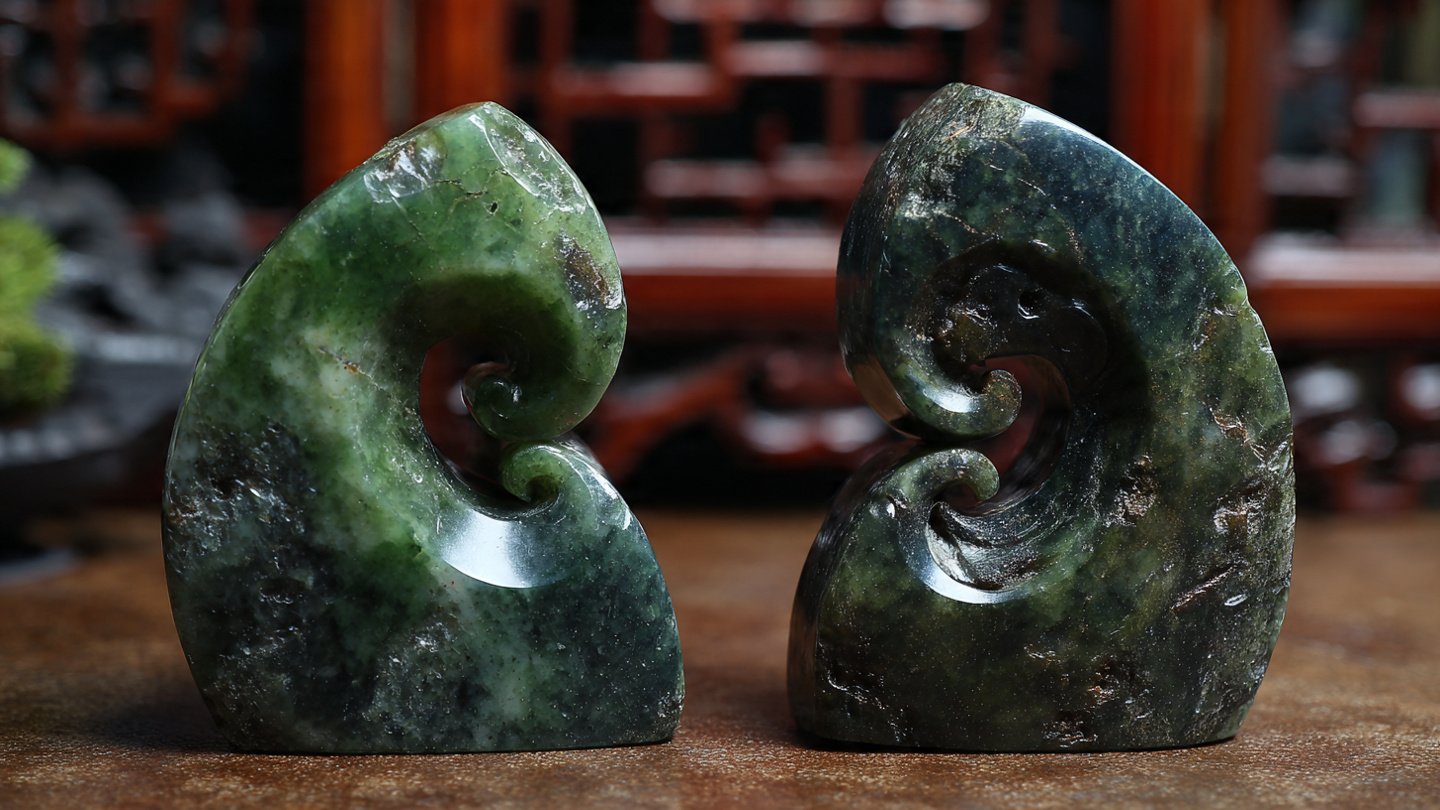
Walk into any jade market and you’ll notice something interesting: raw jade stones sit next to polished pieces, but their price tags tell very different stories. Understanding why these prices differ so dramatically can save you thousands of dollars and help you make smarter purchasing decisions.
This guide breaks down everything you need to know about raw versus polished jade pricing, helping you determine which option makes sense for your needs and budget.
The Basic Price Difference Explained
Raw jade typically costs 30-70% less than comparable polished pieces. This substantial difference exists for clear reasons that go beyond simple aesthetics.
A raw jadeite stone weighing 100 grams might sell for $500, while that same stone polished and finished could command $1,200-$2,000. The gap widens even more for exceptional material where the polishing reveals stunning qualities not visible in raw form.
Several factors create this price disparity. Labor costs for cutting, polishing, and finishing add significantly to the final price. The risk factor changes dramatically—polished jade reveals its true quality, while raw material might hide flaws or surprises. Market demand differs substantially between raw stones (limited to dealers and carvers) and finished pieces (appealing to general consumers).
Understanding this pricing dynamic helps you decide whether buying raw jade for eventual processing makes financial sense, or whether purchasing finished pieces better serves your needs.
Why Raw Jade Costs Less
Raw jade’s lower price reflects several practical realities that buyers often overlook. These aren’t arbitrary discounts—they’re genuine cost differences based on the stone’s state.
The hidden quality factor plays a major role. Even experienced dealers can’t fully assess raw jade’s internal characteristics. That brownish exterior might hide vivid green inside, or it might reveal disappointing gray when cut. This uncertainty creates risk that depresses raw material prices.
Limited market access restricts raw jade sales primarily to industry professionals. The average consumer wants something they can wear or display immediately, not a rough stone requiring professional processing. This smaller buyer pool reduces competition and keeps prices lower.
Processing requirements mean buyers must invest additional money and time. You need to find a skilled carver, pay for cutting and polishing, and wait weeks or months for completion. These added costs and complications reduce what buyers willingly pay for raw material.
Storage and handling concerns also factor in. Raw jade is heavier and bulkier than finished pieces of equivalent value. It requires secure storage and isn’t easily portable. These practical disadvantages reduce desirability and thus price.
The Value Addition Through Polishing
Polishing transforms raw jade in ways that justify significant price increases. Understanding what you’re actually paying for helps evaluate whether that premium is reasonable.
The revelation of true quality is perhaps polishing’s greatest value. A skilled polisher brings out color depth, reveals translucency, and showcases the stone’s finest characteristics. What looked mediocre in raw form might shine brilliantly when properly finished.
Professional craftsmanship adds genuine value. Master polishers spend years learning their craft. They understand how to orient cuts to maximize color and translucency, how to achieve mirror finishes that enhance beauty, and how to work with jade’s unique properties. This expertise commands legitimate compensation.
Market accessibility expands dramatically. Polished jade appeals to jewelry buyers, collectors, home decorators, and gift purchasers. This broader market creates more competition among buyers, naturally driving prices higher than the limited raw stone market.
Immediate usability provides practical value. You can wear polished jade jewelry immediately, display carved pieces in your home, or give them as gifts. This ready-to-use state eliminates the hassle and delay of processing, which many buyers willingly pay premium prices to avoid.
Quality Assessment Differences
Evaluating raw versus polished jade requires completely different skill sets and approaches. These assessment challenges directly impact pricing.
With raw jade, you’re essentially betting on potential. Even experienced buyers using flashlights to examine thin sections can be surprised when stones are cut. That promising green window might extend through the stone, or it might be a thin surface layer over gray material. This gamble keeps raw prices lower.
Surface features on raw jade often mislead. Brown iron staining, weathering crusts, and surface roughness obscure the stone’s true character. What looks unpromising might hide gem-quality material. Conversely, attractive surface features don’t guarantee quality throughout.
Polished jade reveals truth. You see exactly what you’re getting—the color distribution, translucency level, texture quality, and any flaws or inclusions. This transparency justifies higher prices because buyers know precisely what they’re purchasing.
The transparency factor fundamentally changes price dynamics. Uncertainty depresses raw prices while certainty supports premium pricing for polished pieces. When buyers can fully assess quality, they’re willing to pay accordingly.
Breaking Down Processing Costs
Understanding what happens between raw stone and polished piece helps you evaluate whether price differences are justified or inflated.
Initial evaluation and planning costs money even before cutting begins. Experienced jade workers examine raw material, plan optimal cuts to maximize value, and determine the best approach for each piece. This expertise-intensive planning stage can take hours for valuable stones.
Cutting represents the first major expense. Diamond-tipped saws slice jade into slabs or separate pieces for different uses. A single large stone might yield multiple smaller pieces, each requiring individual processing. Cutting costs typically range from $50-$300 depending on size and complexity.
Shaping and carving transform rough cuts into recognizable forms. For cabochons (smooth, rounded jewelry stones), this involves grinding to proper dome shapes. For carved pieces, skilled artisans spend days or weeks creating intricate designs. Simple shapes cost $100-$500 to produce, while elaborate carvings can cost thousands.
Polishing brings out jade’s characteristic luster. Multiple stages using progressively finer abrasives eventually achieve the mirror finish prized in fine jade. This time-intensive process costs $50-$200 for small pieces but can reach thousands for large, complex items.
Finishing touches include final inspection, drilling holes for jewelry, and mounting or setting if applicable. These seemingly minor steps add $25-$100 or more to total costs.
Total processing costs typically run $200-$1,000 for modest pieces, with exceptional items costing much more. These aren’t arbitrary markups—they’re legitimate expenses that partially justify the price gap between raw and polished jade.
Market Dynamics for Raw Jade
The raw jade market operates very differently from the polished jade market. Understanding these dynamics helps you navigate purchases intelligently.
Wholesale markets dominate raw jade sales. Places like Myanmar’s jade markets in Mandalay and Yangon, China’s Guangzhou jade market, and specialized auctions handle most raw material. These venues cater to industry professionals, not casual buyers.
Auction systems create unique pricing pressures. In Myanmar, the government conducts formal jade auctions where dealers bid on numbered lots. Competitive bidding can drive prices up, but the sheer volume and varying quality create opportunities for knowledgeable buyers.
Seasonal variations affect raw jade prices. Myanmar’s mining season runs during dry months, flooding markets with new material that temporarily depresses prices. Knowing these cycles helps strategic buyers time purchases advantageously.
Information asymmetry favors experienced dealers. They’ve handled thousands of stones, recognize quality indicators others miss, and understand which raw material will polish up well. This knowledge gap means novice buyers often overpay for raw material or pass on bargains.
Direct-from-mine purchases offer the lowest prices but carry maximum risk. Without the filtering effect of dealers who’ve already rejected poor material, buyers face higher probability of disappointment. The potential savings must be weighed against increased risk.
Polished Jade Market Characteristics
The polished jade market operates on completely different principles than raw material trading. These distinctions directly affect what you’ll pay.
Retail markup structures significantly increase prices. A piece that cost $500 to produce (including raw material and processing) might retail for $1,500-$2,500. This 200-400% markup covers retail space costs, sales staff, inventory carrying costs, and profit margins.
Brand premiums add another layer. Jade from established jewelers commands higher prices than identical pieces from unknown sellers. You’re paying for reputation, quality assurance, and sometimes design exclusivity. Whether these premiums are worthwhile depends on your priorities.
Geographic location dramatically affects pricing. Hong Kong, Beijing, and Singapore jade markets offer better prices than Western retail stores for comparable pieces. However, authentication concerns increase in unfamiliar markets, potentially offsetting savings.
Certification impacts pricing substantially. Certified pieces from reputable laboratories command 20-50% premiums over uncertified jade of similar appearance. This premium reflects reduced buyer risk and increased resale potential.
Design and craftsmanship create significant value additions. An outstanding carving by a recognized master can be worth ten times more than the raw material. Exceptional design work justifies substantial premiums beyond simple polishing costs.
When Raw Jade Makes Financial Sense
Buying raw jade isn’t always the budget-friendly option it appears. Certain situations favor raw purchases, while others make polished jade the smarter choice.
Large-scale buyers benefit most from raw material. If you’re purchasing multiple pieces for a jewelry line or collection, processing costs spread across many items. Volume also provides statistical advantage—some stones will exceed expectations, offsetting disappointments.
Established processing relationships change the equation. If you have reliable, affordable access to skilled cutters and polishers, you can capture the value-addition yourself. Without these connections, finding good processors at reasonable prices becomes frustratingly difficult.
Specific design visions might require raw material. If you want a custom carving or unique piece, starting with raw jade gives you and the artisan more flexibility. The processing costs are unavoidable regardless, so buying raw makes sense.
Educational purposes justify raw purchases. If you’re learning jade processing, working with raw material is essential. The financial losses from mistakes become tuition in your education.
Speculative opportunities occasionally appear. Experienced buyers sometimes spot undervalued raw material that will clearly polish up beautifully. These situations require expertise but can yield excellent returns.
When Polished Jade Is the Better Choice
Most buyers should stick with polished jade despite the higher prices. The reasons go beyond mere convenience.
Certainty eliminates costly surprises. You see exactly what you’re getting—no hidden flaws, no disappointing colors when cut. This transparency is worth substantial premium for most buyers, especially those making significant purchases.
Ready usability provides immediate value. Whether for jewelry, display, or gifts, polished jade serves its purpose immediately. The weeks or months required to process raw material delay gratification and tie up capital.
No processing hassles simplifies life considerably. Finding skilled jade workers, communicating design preferences, monitoring work quality, and handling logistics create stress and consume time. Buying finished pieces eliminates all these headaches.
Resale advantages favor polished jade. The larger market for finished pieces means easier, faster sales at better prices. Raw jade has limited buyer pool, making resale more challenging.
Lower entry barriers welcome novice buyers. You don’t need expertise to evaluate polished jade reasonably well. Raw material assessment requires experience most new buyers lack, leading to expensive mistakes.
Price Comparison Examples
Real-world examples illustrate how raw versus polished pricing actually works in practice.
Example 1: Mid-grade jadeite cabochon. A 20-gram raw stone with promising green color might cost $300. Processing into a polished cabochon adds $150. The finished cabochon retails for $800-$1,200. If you buy raw and process yourself (with connections), you save $350-$750. If you buy retail polished, you pay premium but avoid all risk and hassle.
Your file is almost ready
Please wait 15 seconds to unlock the secure download button.
Example 2: High-quality jadeite bangle. Raw material suitable for a fine bangle might cost $5,000. Expert carving and polishing adds $1,500-$2,500. The finished bangle retails for $15,000-$25,000. The massive markup reflects the specialized skill required to carve bangles perfectly (they crack easily if done wrong) plus retail premiums for high-end pieces.
Example 3: Nephrite carving. A 500-gram raw nephrite stone costs $200. An intricate carving by a skilled artisan takes 20 hours at $50/hour, totaling $1,000. The finished carving retails for $2,500-$3,500. Here, artistic labor dominates the cost, with raw material being relatively minor.
Example 4: Commercial-grade jadeite beads. Raw material for a strand of 8mm beads costs $100. Processing 50 beads adds $200. The finished strand retails for $600-$800. The retail markup is proportionally higher for these commodity-type items because per-piece handling costs don’t scale down proportionally.
These examples show raw material typically represents 20-50% of retail prices for polished jade. Processing adds 10-30%, with the remainder being wholesale and retail markups.
Investment Considerations
Whether raw or polished jade makes a better investment depends on your specific situation and capabilities.
Raw material offers higher potential returns but requires expertise. If you can accurately assess quality in rough form and have affordable processing access, buying raw provides maximum profit margin. However, mistakes can be costly and expertise takes years to develop.
Polished pieces offer safer, more liquid investments. You know exactly what you own, can resell more easily, and face fewer surprises. Returns are more modest but risks are substantially lower.
The opportunity cost matters significantly. Money tied up in raw jade awaiting processing isn’t earning returns. If processing takes six months, that’s six months of zero return. Factor this time cost into financial calculations.
Market timing affects both categories but differently. Economic downturns often hit polished retail prices harder initially, while raw material prices may hold steadier at wholesale levels. However, polished pieces recover faster when markets improve because of broader demand.
Authentication and certification favor polished pieces. Testing costs are similar whether stone is raw or polished, but you’re testing known versus unknown quantities. Certification adds more value to polished pieces because it confirms what’s visible.
Quality Indicators in Both Forms
Learning to assess quality in raw and polished jade protects you from overpaying regardless of which form you purchase.
For raw jade, look for color windows where you can assess internal color. Use bright flashlights to examine thin sections or edges. Some transparency indicates jadeite rather than nephrite. Smooth, even texture on test windows suggests fine crystalline structure.
Surface indicators provide limited information but some hints exist. Uniform density without porous areas suggests better quality. Certain types of weathering crusts associate with higher quality material underneath, though this requires experience to recognize.
For polished jade, evaluate color intensity and distribution. The most valuable pieces show vivid, evenly distributed colors. Check translucency by holding pieces to strong light—better jade glows with transmitted light.
Examine texture under magnification if possible. Fine texture appears smooth and uniform, while coarse texture shows visible crystalline structure. Surface polish quality also indicates professional work versus amateur finishing.
Look for treatments carefully. Type B and C jade (treated stones) cost far less than natural Type A material but can be hard to distinguish visually. This is where certification becomes crucial for expensive purchases.
Common Pricing Mistakes to Avoid
Both buyers and sellers make predictable errors that cost money. Avoiding these mistakes protects your interests.
Overpaying for raw material based on optimistic assessments plagues inexperienced buyers. That promising green patch might be surface-only. Always assume internal quality will disappoint rather than exceed surface indications—you’ll be right more often.
Underestimating processing costs and time leads to budget overruns. What seemed like savings on raw material evaporates when you discover good processing costs more and takes longer than expected. Get firm quotes before committing.
Ignoring opportunity costs skews calculations. That $1,000 saved buying raw instead of polished might take six months to realize after processing. Could that $1,000 have earned better returns elsewhere during that time?
Paying retail premiums for mediocre quality makes no sense. If you’re buying polished jade, either buy exceptional pieces that justify premiums or look for good values on decent quality. The middle ground of expensive but ordinary jade is poor value.
Assuming all price differences reflect quality leads to errors. Sometimes high prices just reflect retail location, brand names, or seller’s optimism. Learning to assess actual quality independent of price tags protects you from overpaying.
Negotiation Strategies for Both Markets
Effective negotiation differs substantially between raw and polished jade markets. Understanding these differences improves your purchasing power.
In raw jade markets, demonstrating knowledge commands respect. Sellers adjust prices when they realize you understand quality and won’t overpay for poor material. Ask informed questions about origin, mining location, and quality indicators.
Volume purchasing provides leverage. If buying multiple pieces, negotiate package pricing. Sellers often discount 10-20% for multi-piece purchases because they’re moving more inventory at once.
For polished jade, comparing prices across multiple sellers establishes fair market value. Don’t negotiate on the first piece you see. Visit multiple vendors, note prices for comparable items, then return to negotiate on pieces you want.
Certification status affects negotiation leverage. Uncertified pieces should cost significantly less than certified jade. If a seller won’t discount uncertified jade appropriately, walk away—they’re overpricing relative to risk.
Payment methods sometimes provide negotiation openings. Cash payments might earn 5-10% discounts because sellers avoid credit card processing fees. However, ensure you still get proper receipts and documentation for expensive purchases.
Regional Price Variations
Where you buy jade dramatically affects prices. Understanding these geographic differences helps you find better values.
Myanmar offers the lowest raw jade prices being the primary source, but buying there requires expertise and carries authentication risks. Many pieces in Myanmar markets are actually Chinese jade returned and remarketed as Burmese material.
China’s Guangzhou and other jade markets provide huge selection at competitive prices. However, treatment prevalence runs high, and sellers often misrepresent quality. Strong bargaining skills and authentication knowledge are essential.
Hong Kong combines reasonable pricing with better consumer protections. It’s a major jade trading hub with both wholesale and retail markets. Prices fall between China and Western markets, making it attractive for knowledgeable buyers.
Singapore and Taiwan offer mid-range pricing with generally honest dealers. These markets serve regional demand with mixed inventory from various sources. You’ll pay more than in China but face fewer authentication concerns.
Western retail markets charge the highest prices but provide consumer protections, return policies, and easier legal recourse for problems. These conveniences justify premiums for buyers prioritizing security over savings.
Future Price Trends
Understanding likely price trends helps you make better timing decisions for purchases or sales.
Supply constraints for quality jadeite continue tightening. Myanmar’s primary deposits are depleting, with new finds becoming rarer. This fundamental supply limitation supports long-term price appreciation for quality material, both raw and polished.
Growing Asian wealth, particularly in China, drives increasing demand. Rising middle and upper classes want luxury goods including jade. This demand growth supports prices, especially for polished pieces that appeal to consumers.
Treatment technology advances create market complications. Better treatments make detection harder, potentially suppressing prices for uncertified jade. Simultaneously, certified natural jade may command growing premiums as buyers seek guaranteed authenticity.
Environmental and ethical concerns may affect mining and prices. Increased regulation of Myanmar jade mining for environmental and human rights reasons could reduce supply and increase prices.
Generational preferences might shift demand. Younger buyers sometimes prefer different styles than traditional customers. This could affect pricing for different jade forms and designs, though jade’s deep cultural significance in Asian markets likely ensures continued strong demand.
Making Your Decision
Choosing between raw and polished jade ultimately depends on your specific situation, expertise, and goals.
Buy raw jade if you have reliable processing connections, possess expertise to assess rough material accurately, are purchasing in volume to spread risk, have specific custom designs in mind, or are treating purchases as learning experiences where mistakes are acceptable tuition.
Buy polished jade if you want certainty about what you’re getting, need immediate usability, lack processing connections or expertise, are making your first jade purchases, or prioritize convenient resale potential over maximum returns.
Consider hybrid approaches. Perhaps buy polished jade for personal use but explore raw material for investment pieces where you can take time for processing. Or start with polished pieces while learning, then gradually move into raw material as expertise develops.
Whatever you choose, prioritize education. Understanding jade quality, authentication, treatments, and market dynamics protects you regardless of whether you buy raw or polished stones. This knowledge pays dividends across all your jade purchases.
Conclusion: Value Exists in Both Markets
The raw versus polished jade question doesn’t have a universal answer. Both markets offer legitimate value for different buyer types.
Raw jade provides opportunities for maximum returns but requires expertise, processing connections, and risk tolerance. It suits professional buyers, volume purchasers, and knowledgeable collectors willing to invest time and effort for better pricing.
Polished jade offers certainty, convenience, and accessibility at the cost of higher prices. It serves casual buyers, gift purchasers, and anyone prioritizing simplicity over maximum cost savings.
The price differences between raw and polished jade—typically 30-70%—reflect genuine cost differences in processing, market access, and risk. They’re not arbitrary markups but rather natural consequences of the value chain from mine to consumer.
Your best strategy combines market knowledge, honest assessment of your expertise and connections, and clear understanding of your goals. Whether you choose raw, polished, or a mix of both, informed decisions lead to better outcomes and greater satisfaction.
What’s your experience buying raw or polished jade? Have you successfully processed raw stones yourself, or do you prefer the certainty of polished pieces? Share your stories and questions in the comments to help others navigate these decisions. If you found this comparison valuable, share it with friends interested in jade purchasing. Your insights and experiences enrich our community’s collective knowledge!
Disclaimer: Jade prices vary significantly based on quality, origin, market conditions, and individual seller pricing. The ranges and percentages provided represent general market observations. Always conduct independent research, obtain professional appraisals for valuable pieces, and work with reputable dealers. Processing jade requires specialized skills—attempting it without proper training can damage valuable material.


