

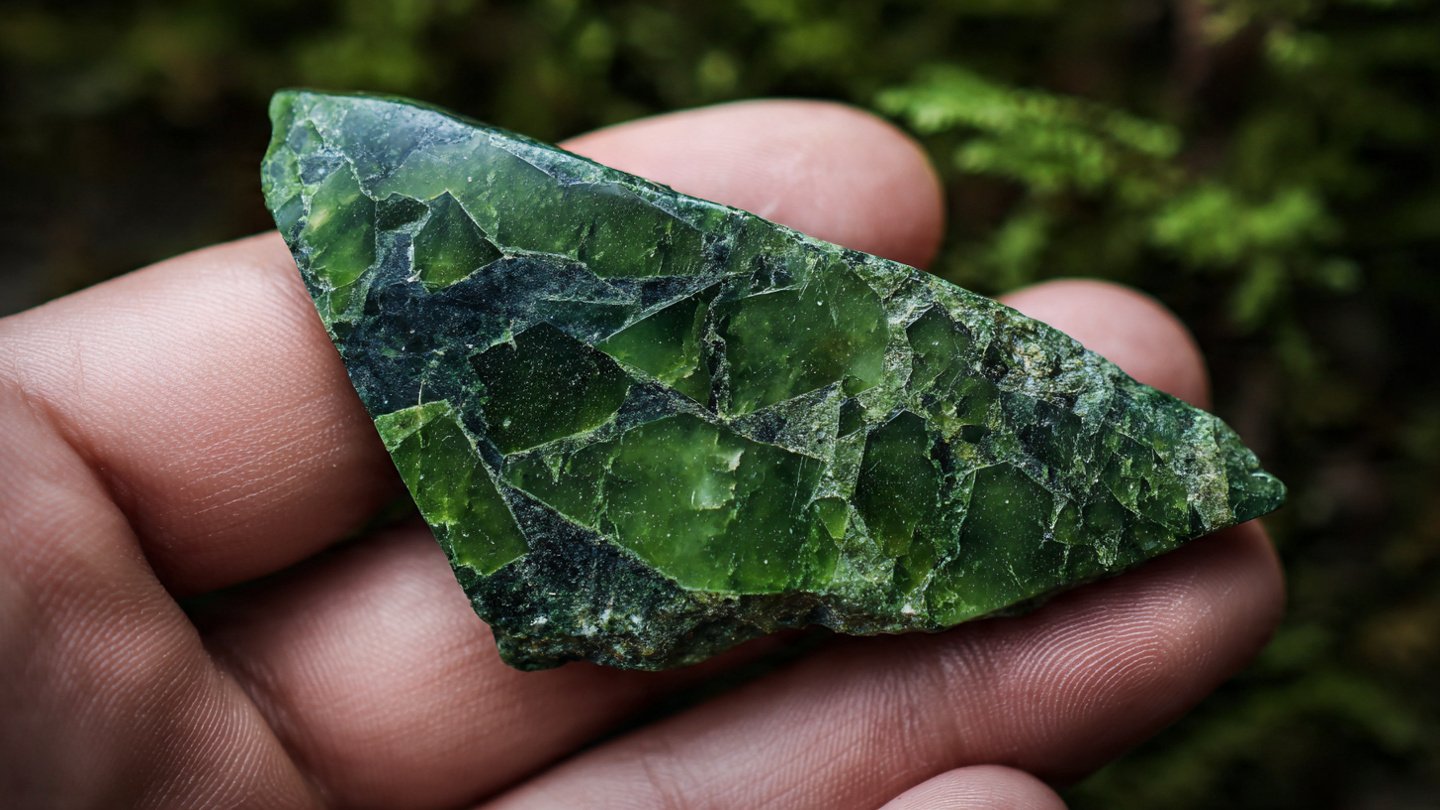
Canada produces some of the finest nephrite jade on the planet, yet many people remain unaware of this remarkable gemstone’s origins and versatility. From the rugged mountains of British Columbia to jewelry stores across Asia, Canadian jade has earned its reputation as the world’s premier nephrite source. This comprehensive guide explores what makes Canadian jade exceptional and how it’s used in everything from traditional carvings to modern architecture.
What Makes Canadian Jade Special
Canadian jade refers specifically to nephrite jade mined primarily in British Columbia and the Yukon Territory. Unlike jadeite, which comes mainly from Myanmar, nephrite is the tougher and more abundant variety of jade. British Columbia holds over 90 percent of the world’s nephrite deposits, making Canada the undisputed leader in this gemstone market.
The story begins deep in geological time. About 150 million years ago, volcanic eruptions deposited ash and lava flows throughout what is now British Columbia. The intense heat and pressure from these events caused rocks to metamorphose, creating the jade deposits miners extract today.
What sets Canadian nephrite apart? According to research published by the British Columbia Geological Survey, this jade exhibits exceptional translucency, vivid green colors, and remarkable hardness. Some deposits produce the brightest, most translucent nephrite ever discovered. The famous Polar Jade discovery secured Canada’s reputation as a world-class gemstone producer.
Chinese settlers first identified jade in Canada in 1886 while searching for gold in British Columbia. At that time, they considered the green stone worthless because no market existed for it. Commercial mining didn’t begin until the 1970s when companies like Loex James Ltd. recognized the material’s potential. Today, Canada exports approximately 200 tonnes of nephrite annually, more jade than any other period in human history.
Understanding Nephrite Jade Quality
Not all jade is created equal. Understanding quality factors helps buyers make informed decisions and appreciate the craftsmanship involved in creating jade pieces.
Translucency Matters Most
The primary quality indicator for nephrite jade is translucency—how much light passes through the stone. High-quality pieces allow light to penetrate deeply, creating a luminous, almost glowing appearance. This quality matters more than color when experts grade jade.
Professional gemologists use strong backlighting to assess translucency. Top-grade Canadian jade appears almost transparent when thinly cut, while lower grades remain opaque even with intense lighting. The interlocking fibrous structure of nephrite creates this unique optical property.
Color Variations and Value
Canadian nephrite ranges from pure white to deep forest green, with occasional black specimens. The most sought-after color is bright apple green, though this represents personal preference more than absolute value. Some buyers prefer the creamy white variety called “Mutton Fat Jade,” which Chinese collectors have treasured for millennia.
Color consistency within a single piece also affects value. Uniform coloring throughout commands higher prices than mottled or streaked stones. However, some artistic applications benefit from color variations, making uniform pieces less desirable for certain carvings.
Fractures and Inclusions
Natural jade often contains fractures, iron inclusions, or calcium veins. While some buyers appreciate these natural patterns, gemologically they reduce the stone’s value. Completely flawless jade is rare and commands premium prices.
The grading system for Canadian jade typically includes three categories. Grade A represents translucent color, freedom from fractures and flaws, and bright green hues. Grade B shows translucent color with minor discolorations or impurities. Grade C exhibits less translucent or mottled color with some fractures and more visible impurities.
Physical Properties
Canadian nephrite possesses specific measurable properties. It rates 6 to 6.5 on the Mohs hardness scale, has a specific gravity between 2.90 and 3.03, and displays a greasy to vitreous luster. These characteristics help distinguish genuine nephrite from imitations like serpentine or dyed stones.
Where Canadian Jade Comes From
The Cassiar Region
The Cassiar district in northern British Columbia produces some of the world’s finest nephrite. This remote, mountainous region requires helicopter access for much of the mining season. The jade from Cassiar often exhibits deep forest green colors and exceptional translucency.
Mining here presents extreme challenges. Winters last eight months, limiting operations to June through September. Deposits sit at high elevations, surrounded by towering peaks. Despite these difficulties, Cassiar remains one of the most productive jade mining areas globally.
Dease Lake Area
Near Dease Lake in northwestern British Columbia, multiple jade deposits produce commercial quantities of nephrite. This region became famous for the Polar Jade discovery, which yielded some of the brightest, greenest nephrite ever found.
The 18-ton “Polar Pride” boulder discovered here was carved into the Jade Buddha for Universal Peace, the world’s largest Buddha carved from gemstone-quality jade. This single find demonstrated the exceptional quality Canadian deposits can produce.
Mount Ogden Region
Central British Columbia’s Mount Ogden area contains numerous nephrite occurrences. These deposits formed at contacts between ultramafic rocks and silica-bearing formations, creating lens or cigar-shaped jade bodies.
Geologists believe British Columbia nephrite formed through metasomatic exchange between ultramafic rocks and surrounding materials. This geological process occurred over millions of years, concentrating calcium and magnesium silicate into the tough, interlocking crystal structure we recognize as jade.
Yukon Territory
The Yukon Territory, just north of British Columbia, also produces nephrite jade. While production volumes are smaller than BC, Yukon jade maintains the same high quality standards that define Canadian nephrite.
Jade City
A small village on Highway 37 called Jade City has become synonymous with Canadian jade. This community near the BC-Yukon border serves as a hub for jade mining operations and tourism. Visitors can purchase jade products and learn about the mining industry’s history and current practices.
How Canadian Jade Is Mined
Modern Mining Techniques
Today’s jade mining combines traditional knowledge with modern technology. Companies use diamond-tipped core drills to extract samples before committing to full-scale excavation. This ensures the jade meets quality requirements before the grueling mountain extraction process begins.
Once a deposit is confirmed, miners use hydraulic spreaders inserted into natural cleavage points to break away large sections. Water-cooled diamond saws then cut the jade into manageable pieces, typically 10 tonnes or smaller. These blocks are transported to processing facilities for further cutting and evaluation.
Jade West Group, founded in 1981 by Kirk Makepeace, pioneered many modern techniques. As one of British Columbia’s largest jade producers, they’ve refined methods to minimize environmental impact while maximizing yield. The company no longer uses explosives, relying instead on precise hydraulic splitting.
The Challenge of Toughness
Nephrite jade is the toughest naturally occurring stone in the world. This isn’t about hardness (resistance to scratching) but toughness (resistance to breaking). The fibrous structure, similar to human hair, makes nephrite extremely difficult to fracture.
This toughness presents both challenges and advantages. Mining requires specialized equipment and patience, but the resulting material can be carved into incredibly delicate pieces without fear of breakage. Diamond tools are essential—conventional cutting tools simply won’t work.
Seasonal Limitations
Most jade mines in British Columbia and Yukon are buried under snow eight months yearly. This limits the mining season to approximately 60 days during summer, typically June through September. Despite these constraints, Canadian operations produce more nephrite than the rest of the world combined.
The short season requires careful planning. Equipment must be mobilized quickly, and weather windows must be used efficiently. Helicopter support is often necessary to transport heavy machinery and jade blocks from remote mountain locations.
Traditional Uses of Canadian Jade
Jewelry and Adornment
Jewelry represents the most common use for Canadian jade. Craftsmen create rings, pendants, bracelets, earrings, and necklaces that showcase the stone’s natural beauty. The material’s toughness allows for intricate designs that would be impossible with more brittle gemstones.
Sterling silver settings are particularly popular, as the metal’s cool tone complements jade’s green hues. Traditional Chinese jewelry often features jade in gold settings, reflecting the stone’s status as more valuable than gold in Chinese culture.
Jade bangles hold special significance in Asian traditions. Creating a solid bangle from a single piece of jade requires exceptional skill because any flaw could cause catastrophic failure during the carving process. Canadian jade’s superior toughness makes it ideal for this application.
Artistic Carvings
For over 5,000 years, artisans have carved jade into artistic objects. Canadian nephrite continues this tradition, providing material for both traditional and contemporary designs. The stone’s toughness allows carvers to create incredibly detailed work.
Traditional subjects include Buddhist figures, Chinese zodiac animals, dragons, and symbolic items representing prosperity and good fortune. Contemporary artists push boundaries, creating abstract sculptures and innovative designs that challenge traditional conventions.
The carving process is laborious. Because jade cannot be cut with conventional chisels, artists must grind away material using diamond-embedded tools. A single piece may require hundreds of hours to complete, with the artist constantly revealing the stone’s inner beauty through patient work.
Cultural and Ceremonial Objects
Indigenous peoples of British Columbia have incorporated jade into cultural practices for centuries. First Nations artists create totem pole inlays, ceremonial masks, and traditional tools using locally sourced nephrite.
The Maori people of New Zealand also revere jade (called greenstone), though their material comes from local sources. The cultural significance across diverse societies demonstrates jade’s universal appeal as a material embodying spiritual and practical values.
Museum-Quality Specimens
Exceptional jade pieces find homes in museums worldwide. The Jade Buddha for Universal Peace, carved from the Polar Pride boulder, travels to museums and spiritual centers globally. The Smithsonian Museum features translucent jade window panels made from Canadian material.
Collectors seek museum-quality pieces that demonstrate exceptional color, translucency, and craftsmanship. These specimens often represent significant investments, with prices reflecting both the material’s quality and the artist’s skill.
Modern and Innovative Uses
Architectural Applications
Canadian jade has found surprising applications in architecture and interior design. The stone’s massive availability in British Columbia enables uses impossible with scarcer materials.
The Getty Mansion features jade fireplaces that showcase the material’s aesthetic appeal on a grand scale. These installations demonstrate how jade can serve as a luxury dimension stone for interior applications.
Jade panels, tiles, and decorative elements appear in high-end residential and commercial projects. The stone’s durability makes it practical for flooring, countertops, and wall cladding in addition to its visual appeal.
Window and Lighting Features
Translucent jade creates stunning effects when backlit. The Smithsonian Museum’s jade window panels allow natural light to filter through, creating a warm, green glow that changes throughout the day.
Modern designers incorporate thin jade slices into lighting fixtures, lampshades, and decorative screens. When illuminated from behind, the stone’s internal structure becomes visible, revealing patterns invisible under normal lighting.
Landscaping and Garden Design
Raw jade boulders serve as striking landscape features. Gardens in Asia and North America incorporate Canadian jade as focal points, combining natural beauty with symbolic meaning.
Water features benefit particularly from jade’s presence. The stone’s association with tranquility and its visual appeal complement flowing water, creating peaceful environments.
Wellness and Beauty Products
The wellness industry has embraced jade for facial rollers and gua sha tools. While scientific evidence for therapeutic benefits remains limited, these products have gained widespread popularity in skincare routines.
Jade rollers theoretically promote lymphatic drainage and reduce facial puffiness. The stone’s natural coolness provides a soothing sensation, and many users report satisfaction with results, though this may partly reflect the massage technique rather than the material itself.
Industrial and Technical Applications
Jade’s extreme toughness suggests potential industrial applications. Research continues into using jade powder in specialized abrasives and composite materials where extreme durability is required.
The stone’s thermal properties also interest researchers exploring heat-dissipation applications. While these uses remain experimental, they demonstrate jade’s versatility beyond traditional ornamental purposes.
Buying Canadian Jade: Expert Tips
Verify Authenticity
Several materials masquerade as jade in the marketplace. Serpentine, sometimes called “new jade,” has lower hardness and different optical properties. Dyed quartzite, treated polymer, and even glass imitations appear regularly.
When buying Canadian jade, request certification from reputable gemological laboratories. The stone should feel cool to the touch initially and warm slowly. It should produce a musical note when struck due to its fibrous structure.
Reputable dealers provide information about origin, treatment history, and quality grades. Be suspicious of prices far below market rates, as this often indicates imitation material or treated stones.
Understand Pricing
Several factors determine jade prices. The amount of material in a piece provides the baseline. Quality grade significantly impacts value, with translucent, flawless specimens commanding premium prices.
Craftsmanship adds substantial value. A small, intricately carved piece may cost more than a larger, simply polished stone because of the time and skill required. Hand carving by master artisans can increase prices tenfold compared to basic polished pieces.
Market demand also influences prices. Certain colors, sizes, and artistic subjects fluctuate in popularity. Working with knowledgeable dealers helps buyers understand current market dynamics.
Choose Reputable Sources
Canada’s jade industry includes established companies with decades of experience. Jade West Group, founded in 1981, maintains strict quality control. Their founder, Kirk Makepeace, started as a jade driller and built the company into one of BC’s largest producers.
Jade City Jade Store offers products guaranteed to be 100 percent Canadian nephrite with no artificial coloring. They provide transparency about sourcing and processing.
Online purchases require extra caution. Look for detailed photographs showing the actual piece, not stock images. Check return policies and read customer reviews before purchasing.
Consider the Setting
Jewelry settings affect both appearance and value. Quality settings in gold or sterling silver indicate the dealer values the jade. Poor settings might suggest lower-grade material.
The setting should secure the stone properly while allowing light to interact with it. Prong settings work well for translucent pieces, while bezel settings suit opaque stones. The metal should complement rather than overpower the jade’s natural beauty.
Caring for Canadian Jade
Cleaning and Maintenance
Despite its toughness, jade benefits from proper care. Clean jade jewelry with warm water and mild soap, using a soft brush for carved details. Avoid harsh chemicals, ultrasonic cleaners, and steam cleaning, which might damage settings.
Perspiration, makeup, and skin oils can build up over time, dulling the surface. Periodic washing maintains the stone’s natural luster. Dry jade thoroughly after cleaning to prevent water spots.
For jade carvings and sculptures, occasional application of furniture polish helps maintain luster. Some collectors use mineral oil, though this remains controversial among experts who worry about long-term effects on the stone.
Storage Recommendations
Store jade separately from harder gemstones like diamonds or sapphires to prevent scratching. Wrap pieces in soft cloth or keep them in padded jewelry boxes.
Jade appreciates contact with human skin—the natural oils actually enhance its luster over time. This traditional belief has some basis in fact, as gentle handling does help maintain the stone’s polish.
Handling Precautions
Though jade is tough, it can chip if struck against hard surfaces. Remove jade rings before heavy work or activities where impact is likely. The stone’s toughness means it rarely breaks completely, but chips can occur at edges and corners.
Temperature extremes should be avoided. Rapid temperature changes could theoretically cause internal stress, though jade’s structure makes this less likely than with other gemstones.
The Global Market for Canadian Jade
Export Destinations
Most Canadian jade travels to Asian markets, particularly China and Taiwan. The historical and cultural significance of jade in these societies creates strong, consistent demand. China’s growing middle class has increased demand for quality jade products.
New Zealand, Germany, and the United States also import significant quantities. The material serves both traditional carving industries and contemporary jewelry markets in these countries.
Canadian production of 200 tonnes annually represents more jade than any previous period in history. This availability has opened markets previously reserved for emperors and elite collectors.
Market Trends
The jade market shows interesting dynamics. While top-grade jadeite from Myanmar can sell for thousands of dollars per ounce, quality Canadian nephrite remains more affordable while offering excellent aesthetic appeal.
Investment interest in jade has grown. Collectors recognize that fine jade appreciates over time, particularly pieces by renowned carvers or with exceptional quality. Some auction results for jadeite have exceeded prices for comparable diamonds, though nephrite generally remains more accessible.
Younger consumers show increasing interest in jade as contemporary designers create modern pieces that appeal to new aesthetics. This trend helps expand jade’s market beyond traditional buyers.
Sustainability Considerations
Responsible mining practices are becoming increasingly important to consumers. Canadian operations generally maintain higher environmental and labor standards than mines in some other countries.
Companies like Jade West Group work to minimize environmental impact, using precision equipment instead of explosives and implementing reclamation plans for worked-out sites. Supporting such operations encourages industry-wide improvements.
Buyers can inquire about sourcing practices and choose suppliers committed to sustainability. This ethical approach ensures jade mining benefits local communities while preserving natural environments.
Canadian Jade in Indigenous Culture
First Nations Heritage
British Columbia’s First Nations peoples have worked with jade for generations. The stone appears in traditional art, tools, and ceremonial objects that predate European contact.
Totem poles, those iconic Pacific Northwest art forms, sometimes feature jade inlays. These additions aren’t merely decorative—they carry spiritual significance and demonstrate the carver’s skill and access to valued materials.
Contemporary First Nations artists continue these traditions while innovating with new forms and techniques. Their work bridges ancient practices with modern artistic expression, ensuring cultural continuity.
Cultural Preservation
As demand for Canadian jade grows, efforts to preserve traditional knowledge intensify. Cultural historians work with elders to document traditional uses and meanings before this knowledge is lost.
Programs teaching young people traditional carving techniques ensure skills pass to new generations. These initiatives benefit both cultural preservation and economic development in Indigenous communities.
Respectful Appreciation
When buying jade pieces created by First Nations artists, understanding the cultural context enriches appreciation. Many pieces carry meanings beyond mere decoration, representing stories, clan affiliations, or spiritual concepts.
Supporting Indigenous artists directly helps sustain traditional practices and provides economic opportunities in communities that often face limited options.
The Science Behind Canadian Jade
Chemical Composition
Nephrite jade is a calcium magnesium silicate with the chemical formula Ca₂(Mg,Fe)₅Si₈O₂₂(OH)₂. The iron content influences color—higher iron creates greener tones, while lower iron results in whiter stones.
This composition places nephrite in the amphibole mineral group, specifically as a variety of tremolite-actinolite. The name “nephrite” was deprecated as a mineral species in 1978, though it remains in common use as a rock type designation.
Microscopic Structure
Under magnification, nephrite reveals a felted mass of interlocking fibers. These fibers align randomly, creating jade’s characteristic toughness. This structure prevents cracks from propagating through the material.
The fibrous nature also creates nephrite’s distinctive luster and translucency. Light scatters through the interlocking crystals, producing the soft glow that makes fine jade so appealing.
Formation Conditions
Nephrite forms through metamorphism of serpentinite rocks under specific conditions. The process requires high pressure but relatively low temperature—conditions typical of subduction zones where oceanic crust meets continental crust.
British Columbia’s geological history provided ideal conditions. The collision of tectonic plates created the necessary environment for jade formation approximately 150 million years ago.
Why British Columbia Excels
Several factors make British Columbia exceptional for jade production. The province sits on the Pacific Ring of Fire, where tectonic activity created extensive serpentinite deposits. The subsequent metamorphism occurred over vast areas, creating numerous jade deposits.
Glacial activity during ice ages exposed many deposits, making them accessible to miners. Rivers carried jade boulders downstream, creating secondary deposits that early miners exploited before moving to primary mountain sources.
Future of the Canadian Jade Industry
Exploration Potential
Much of British Columbia and Yukon remains geologically unexplored. Systematic surveys using modern techniques could reveal additional deposits, potentially making Canada an even more dominant jade producer.
Some industry experts believe the best deposits may still await discovery in remote mountain regions. Improved access and exploration technology could unlock these resources.
Industry Development
Infrastructure improvements could transform the industry. Better roads to mining sites would reduce transportation costs and extend the working season. Processing facilities closer to mines would add value before export.
Training programs for miners, carvers, and gemologists would improve quality control and safety standards. British Columbia could become not just a raw material source but a center for jade expertise and finished products.
Market Expansion
New applications for jade could drive demand growth. Architects and designers are discovering jade’s potential for luxury interiors. Industrial applications, though still experimental, could create entirely new markets.
Marketing Canadian jade’s quality and ethical sourcing could command premium prices. As consumers become more conscious of sourcing practices, Canada’s regulated industry offers advantages over less transparent operations.
Environmental Considerations
Balancing extraction with environmental protection remains crucial. British Columbia’s jade deposits sit in ecologically sensitive mountain environments that deserve protection.
The short mining season actually helps protect these environments, limiting disturbance to a few summer months. Continued development of low-impact techniques will ensure jade mining remains sustainable long-term.
Conclusion
Canadian jade represents one of nature’s most remarkable materials, combining exceptional quality with versatile applications. From the Cassiar Mountains to jewelry stores worldwide, this stone carries a legacy of geological wonder and human craftsmanship.
British Columbia’s dominance in nephrite production—over 90 percent of global supply—ensures Canadian jade’s importance in international markets. The material’s exceptional translucency, toughness, and color variations make it sought after by collectors, artists, and consumers globally.
Whether adorning jewelry, gracing architectural installations, or serving as cherished carvings, Canadian jade demonstrates versatility rare among gemstones. Its uses span from ancient ceremonial objects to contemporary wellness products, proving that quality materials transcend temporal trends.
The future looks bright for Canadian jade. Increasing recognition, expanding applications, and growing appreciation for ethically sourced materials position this gemstone for continued success. As deposits in other regions face depletion, Canada’s substantial reserves ensure its leadership for generations to come.
For anyone interested in gemstones, artisan crafts, or natural materials, Canadian jade offers a perfect combination of beauty, durability, and fascinating geological history. This truly is the stone that transformed from a worthless rock in gold prospectors’ eyes to one of the world’s most valued gemstones.
Have you discovered the beauty of Canadian jade? Share your experiences with this remarkable gemstone in the comments below! If you found this guide helpful, please share it with fellow gem enthusiasts and help spread appreciation for Canada’s natural treasure.
Disclaimer: Gemstone prices and market conditions vary. Always verify quality through certified gemological testing when making significant purchases.


