

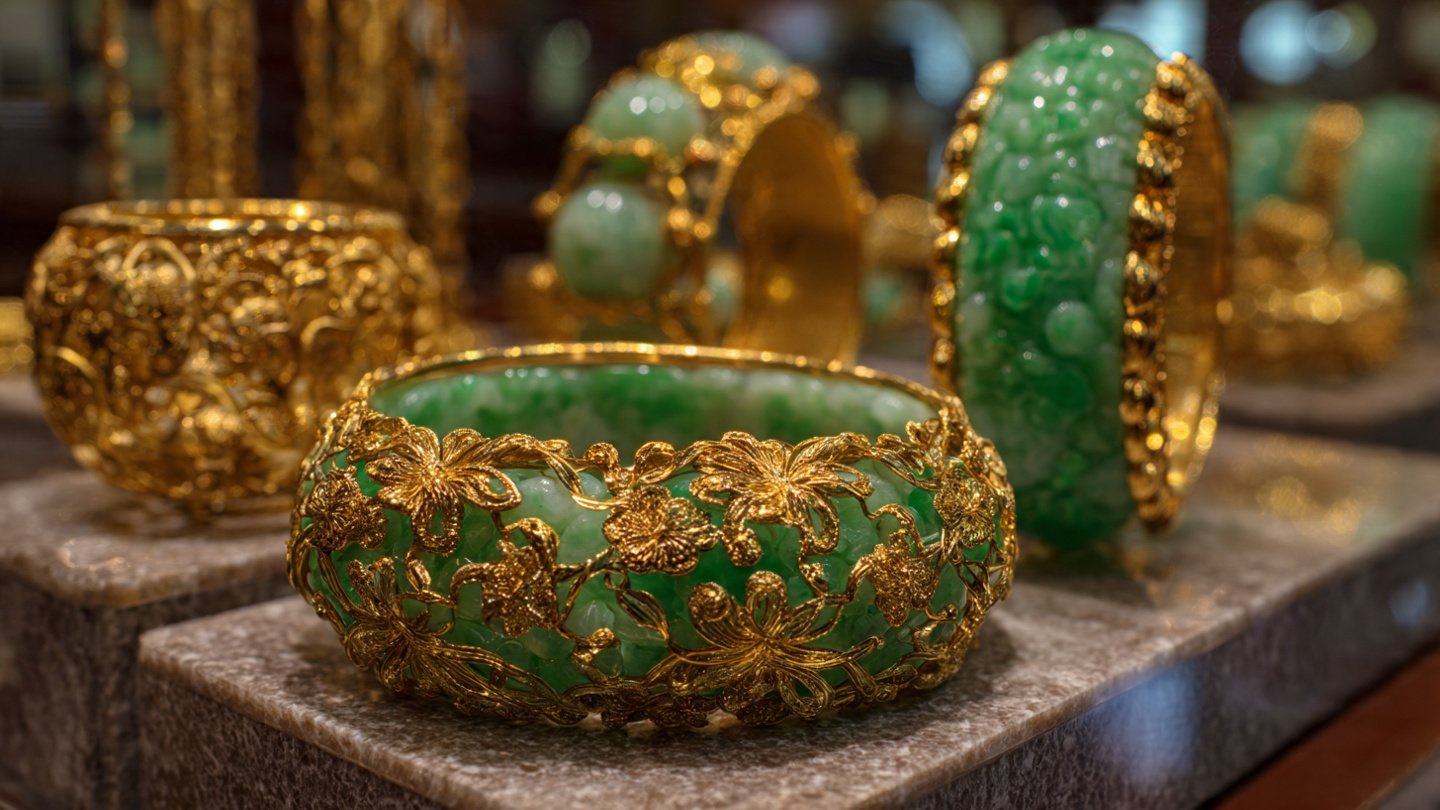
Jade stone jewelry carries thousands of years of cultural significance wrapped in stunning beauty. Whether you’re eyeing a traditional bangle, an elegant ring, or a symbolic pendant, understanding jade jewelry helps you make choices you’ll treasure for a lifetime.
Let me walk you through everything you need to know about jade jewelry. From sizing secrets to spotting fakes, this guide covers the essentials that transform browsing into confident buying.
Understanding Jade Stone Jewelry Basics
Jade refers to two completely different minerals that share similar appearances. Jadeite is a sodium aluminum silicate with higher hardness and more vibrant colors, while nephrite is a calcium magnesium silicate known for its toughness and subtle beauty.
Both qualify as genuine jade despite their different compositions. Jadeite typically costs more due to its rarity, vibrant colors, and higher translucency. Nephrite offers durability and affordability, making it excellent for everyday wear.
The term jade has been used for at least 4,000 years, with jade bangles being among the oldest forms of jewelry. Chinese culture particularly reveres jade as the “Stone of Heaven,” treasuring it beyond gold or silver.
Understanding this distinction between jadeite and nephrite shapes your jewelry choices significantly. Each type offers unique benefits depending on your budget, style preferences, and intended use.
Jade Bangles Complete Guide
Jade bangles hold deep cultural significance and remain one of the most popular forms of jade jewelry worldwide. These circular bracelets symbolize protection, prosperity, and eternity in Chinese tradition.
Types of Jade Bangles
Closed bangles are carved from a single piece of jade without breaks or openings. These traditional designs offer maximum durability and carry the strongest cultural symbolism. They’re meant to fit snugly, staying close to the heart for protection.
Open bangles feature hinges or clasps, making them easier to put on and remove. These modern interpretations often combine jade with gold or silver embellishments. However, they’re less traditional and generally less durable than closed designs.
The most common mistake when buying closed jade bangles involves sizing. Since these solid pieces cannot be resized, accurate measurement becomes absolutely critical before purchase.
Sizing Your Jade Bangle Correctly
Measuring for a jade bangle requires precision because it must slide over your hand at its widest point. Think of it like buying a ring that can’t be resized—you need to get it right the first time.
Collapse your hand by bringing your thumb to your pinky finger. Use a flexible measuring tape, ribbon, or strip of paper to wrap snugly around your hand at the widest point, including your knuckles.
Measure the string or paper that went around your hand with a ruler in inches. Multiply this measurement by 8 to get the inside diameter in millimeters that you need.
If your size falls between standard sizes, round up rather than down. A slightly looser bangle is better than one that won’t fit over your hand or risks breaking during attempts to force it on.
Consider bangle width when sizing. Wider bangles may require a slightly larger inside diameter because they’re harder to angle through your hand. Some sellers recommend going up one size for bangles wider than 15mm.
Choosing Bangle Quality
Color and transparency rank as the most important factors determining jade bangle value. Rich, vibrant greens to deep lavenders command the highest prices. The more light that shines through the stone, the better the quality and value.
Examine the bangle’s surface carefully. High-quality bangles feature consistent color and a smooth, even finish. Look for natural inclusions, which authenticate the piece as genuine jade rather than glass or plastic.
Check for repairs or damage. If the jade appears to have been repaired, ensure it was done properly without disfiguring the piece. This evaluation also helps determine if the bangle is worth its asking price.
Nephrite bangles work better for everyday wear. They cost less, offer excellent durability, and come in a nice variety of colors. Jadeite bangles are more expensive but can display more vibrant, vivid hues.
Bangle Care and Safety
Jade is tough and durable but not indestructible. Bangles can have natural fissures depending on quality, which create weak points where breakage can occur. This matters especially with constant wear.
Remove bangles before heavy manual work, sports, or activities with impact risk. While jade ranks 6.5-7 on the Mohs hardness scale, sudden impacts can still cause cracks or breaks.
Clean bangles with mild soap and lukewarm water using a soft cloth. Avoid harsh chemicals, ultrasonic cleaners, or steam cleaning. Dry thoroughly after cleaning.
Store jade bangles separately from harder gemstones like diamonds that might scratch them. Wrap in soft cloth or keep in individual compartments.
Jade Ring Selection Guide
Jade rings capture the stone’s timeless beauty in one eye-catching focal point. From simple bands to elaborate engagement rings, jade rings suit various styles and occasions.
Popular Ring Styles
Cabochon bezel settings represent the most secure option while showcasing jade beautifully. This style works great for wedding and engagement rings, displaying the translucency of high-quality stones effectively.
Channel-set jade chips around a band add subtle color and detail without overwhelming the design. This style suits those wanting jade accents rather than a bold statement.
Carved signet-style rings make bold statements, particularly for men’s jewelry. These rings often feature traditional Chinese symbols or animals carved directly into the jade.
Modern designs combine jade with diamond halos, pavé bands, or mixed metal settings. These contemporary styles blend jade’s traditional appeal with current jewelry trends.
Sizing Jade Rings
Unlike metal rings, jade cannot be resized easily. Choosing the correct size from the beginning ensures long-term satisfaction and prevents stress on the gemstone.
Measure your finger at the end of the day when it’s slightly larger. Avoid measuring in extreme cold or heat, as temperature affects finger size.
Use a professional ring sizer at a jeweler for the most accurate measurement. If measuring at home, wrap a flexible measuring tape or strip of paper snugly around your finger’s base where you’ll wear the ring.
Mark where the string meets, then measure the distance with a ruler in millimeters. Match this measurement to a ring size chart to find your size.
Consider the ring’s band width. Wider bands feel tighter than narrow bands at the same size. You may need to go up half a size for bands wider than 6mm.
Ring Style Considerations
For everyday accessories, choose designs that balance durability with versatility. Bezel settings work better than prongs for protecting jade during daily activities.
For special events deserving extravagance, select pieces with vibrant gems or larger jade centerpieces that command attention. These statement rings elevate formal ensembles effortlessly.
Jade ring placement carries symbolic meaning in some traditions. Wearing jade on your index finger represents ambition and leadership in Feng Shui. The little finger offers protection during travel.
Most consumers in the US prefer larger jade stones, while consumers in China favor smaller, more delicate pieces. Choose based on your personal style and cultural preferences.
Jade Ring Care
Remove jade rings before swimming, bathing, or applying cosmetics. Chlorine and harsh chemicals can damage both natural and treated jade.
Store rings away from diamonds and other harder gemstones that might scratch jade’s surface. Individual compartments or soft pouches work best.
Jade can chip despite being durable. Choose bezel settings over prongs for better protection. This matters especially if you wear rings during manual tasks.
Clean with mild soap and water, drying thoroughly afterward. Avoid exposing jade rings to extreme temperatures or harsh chemicals.
Jade Necklace and Pendant Guide
Jade necklaces add presence without effort, bringing just enough color to frame the face beautifully. These versatile pieces work across casual and formal settings.
Pendant Styles and Meanings
Jade pendants are highly versatile and often carved into symbols like Buddha, dragons, or lotus flowers. These carvings carry significant meanings, symbolizing virtues like peace, strength, and good fortune.
A single jade pendant on a fine chain represents the easiest everyday choice. Select a length that sits at your collarbone—it layers under shirts, rests perfectly on crewnecks, and adds polish to silk tops.
Symbolic pendants designed around balance and wholeness feel both modern and rooted in tradition. Fish motifs represent abundance and prosperity, while floral designs embody purity and new beginnings.
High-relief carvings with crisp lines indicate skilled craftsmanship. Even mid-green nephrite makes excellent entry-level pendants, with quality carvings available at accessible prices.
For investment pieces, look for vivid green or lavender jadeite with high translucency. These premium pendants appreciate in value over time.
Choosing Your Chain or Cord
Silk or leather cords offer traditional, adjustable length options. Thicker leather cords last much longer than synthetic materials. Watch for rough edges on carved pendants that might degrade cords over time.
Silver or gold chains provide a modern look. Bezels usually secure the jade, allowing confident wear without worrying about cord breakage. Metal chains complement both casual and formal outfits.
Yellow gold creates warm, timeless combinations with jade’s cool tones. Silver or white gold offers a more contemporary, minimalist aesthetic.
Consider the pendant’s weight when selecting chain thickness. Heavier jade pieces require sturdier chains to prevent breakage and ensure comfortable wear.
Necklace Length Guidelines
Choker length (14-16 inches) sits close to the neck, making a bold statement. This length suits smaller pendants and works best for formal occasions.
Princess length (18 inches) represents the most versatile option, sitting at the collarbone. This length suits most necklines and works for both casual and dressy wear.
Matinee length (20-24 inches) falls at the bust line, creating elegant draping. This length works beautifully with business attire and layering.
Opera length (28-34 inches) offers dramatic impact and layering opportunities. This length suits evening wear and creates sophisticated, multi-strand looks.
Jade Earring Options
Jade earrings showcase the gemstone’s beauty in subtle, elegant ways. From simple studs to elaborate dangles, these pieces add refined color near the face.
Earring Styles
Simple jade studs provide timeless elegance for everyday wear. These minimalist designs suit professional settings and pair well with any outfit.
Hoop earrings featuring jade beads or accents add color while maintaining versatility. These contemporary styles appeal to those wanting modern jade jewelry.
Dangle earrings showcase jade’s translucency beautifully as light passes through. Thin designs are popular but require careful handling due to potential weak points.
Drop earrings with jade cabochons framed by metal or diamond accents create balanced, sophisticated looks. These designs work for both day and evening wear.
Earring Considerations
Light-colored jade earrings add elegance without being overly flashy. Pale greens, whites, and lavenders suit those preferring subtle jewelry.
Consider weight when selecting jade earrings. Larger pieces may feel uncomfortable during extended wear, especially if you have sensitive ears.
Choose secure backings for valuable jade earrings. Screw backs or locking mechanisms prevent loss better than standard butterfly backs.
Jade’s natural transparency shows beautifully in earrings, particularly when light shines through during movement. Translucent jadeite creates especially stunning effects.
Identifying Authentic Jade Jewelry
The jade market contains numerous imitations and treated specimens. Learning authentication basics protects you from costly mistakes.
The Jade Classification System
Type A jade is completely natural and untreated, having undergone no chemical processes except cutting and polishing. This represents the highest quality and best investment.
Type B jade has been bleached and polymer-impregnated. Bleaching removes impurities while resin fills fractures and enhances translucency. This treatment compromises structural integrity.
Type C jade has been dyed to enhance or change color. Much brightly colored jade on the market, particularly vivid reds and purples, has undergone dyeing.
Type B+C jade combines bleaching and dyeing. This extensively treated jade should sell at significantly lower prices than Type A material.
With full disclosure, selling Type B and C jade is acceptable. However, many retailers and wholesalers don’t properly disclose treatments, misleading buyers about what they’re purchasing.
Physical Authentication Tests
Genuine jade feels cool to the touch initially, then gradually warms against your skin. Glass warms quickly, while plastic never feels genuinely cold.
Tap the jade gently with a hard object. Quality jade produces a clear, musical tone. Lower quality or fake jade sounds dull or dead.
Examine color distribution under good lighting. Natural jade shows subtle variations, while dyed jade often displays perfect uniformity or dye concentration in cracks.
Check the luster by viewing from different angles. Jade has a distinctive waxy to silky sheen that differs from glass’s glassy brilliance.
Professional Certification
The only foolproof authentication comes from gemological laboratories. Facilities like GIA developed infrared spectroscopy in 1990 to detect polymers within jade non-destructively.
For purchases over $10,000, insist on professional certification. Reputable laboratories verify whether jade is jadeite or nephrite, identify treatments, and confirm authenticity.
Certificates should explicitly state treatment status using the Type A, B, or C classification. Vague language suggests sellers are hiding treatment.
Don’t purchase expensive jade without proper documentation. The cost of certification is minimal compared to potential losses from buying treated material at natural jade prices.
Jade Jewelry Value Factors
Understanding what makes jade valuable helps you assess whether jewelry is fairly priced.
Color Impact on Value
The most valuable color is Imperial Green, a vibrant, translucent emerald shade found in high-quality jadeite. This rare color commands the highest prices per carat.
Lavender ranks second in value, appearing exclusively in jadeite. Pure lavenders without gray overtones are particularly prized.
Natural red jade, yellow jade, and pure white “ice” jade follow in the value hierarchy. Each color’s rarity and cultural significance influences pricing.
For nephrite, creamy white “mutton fat” jade remains the traditional favorite. This variety has been treasured in China for millennia.
Translucency and Texture
Translucency dramatically affects value regardless of color. High-quality jade allows light to penetrate with a beautiful glow. Completely opaque pieces command lower prices.
Fine-grained texture with minimal imperfections increases value. Coarse texture or visible inclusions reduce desirability unless they create attractive patterns.
Polish quality matters significantly, especially for jadeite. A finely polished piece creates sharp, undistorted reflections without visible dimples or “orange-peel” texture.
Size and Craftsmanship
Larger pieces with uniform color distribution are exponentially more valuable. Finding big jade specimens without color variation proves challenging.
Craftsmanship greatly impacts worth. Intricately carved designs or patterns elevate value beyond the raw material cost. Hand-carved items are more treasured than machine-carved pieces.
The carved features should be exquisite with smooth, finished surfaces. High-relief carvings with crisp lines indicate skilled artisanship.
Combining Jade with Other Materials
Jade pairs beautifully with various metals and gemstones, creating diverse design possibilities.
Jade and Gold Combinations
Gold’s rich, warm tones complement jade’s cool green hues beautifully. This classic pairing appears frequently in high-end rings, necklaces, and earrings.
Yellow gold creates timeless, traditional looks that honor jade’s cultural heritage. This combination suits those appreciating classic elegance.
Rose gold provides soft, romantic glows that soften jade’s cool tones. This contemporary pairing appeals to modern jewelry enthusiasts.
White gold offers crisp, clean contrasts that make jade’s color pop. This combination suits minimalist, contemporary aesthetics.
Most experts recommend 18K gold (approximately 75% pure gold) for jade jewelry. This percentage provides durability while maintaining luxurious appearance.
Jade with Silver
Silver provides more modern, affordable, and minimalist aesthetics. It’s an excellent choice for nephrite jade jewelry, creating sleek, understated looks.
The cool tones of silver complement both green and lavender jade beautifully. This pairing suits those preferring contemporary styles.
Silver costs significantly less than gold, making jade jewelry more accessible. This option suits budget-conscious buyers wanting genuine materials throughout.
Diamond and Gemstone Accents
Pairing diamonds with jade is popular for rings and pendants. Diamond brilliance enhances jade’s natural beauty through contrast.
Small diamond halos frame jade centerpieces without competing. Keep diamond scale modest so it supports rather than overwhelms.
Sapphires, tourmalines, and topaz add complementary color pops. These vibrant gemstones create eye-catching, contemporary designs.
Lab-grown diamonds add luxury and ethical responsibility to jade pieces. This combination marries tradition with modern values.
Caring for Jade Jewelry
Proper maintenance preserves jade jewelry’s beauty for generations.
Daily Care Practices
Remove jade jewelry before swimming, bathing, or applying cosmetics. Chlorine and harsh chemicals damage both natural and treated jade.
Clean regularly with mild soap and lukewarm water using a soft cloth or brush. Rinse thoroughly and dry with a lint-free cloth.
Avoid ultrasonic cleaners or steam cleaning, which might damage treatments or stress natural jade. Stick with gentle hand cleaning.
Periodically moisturize jade with mineral oil to retain luster and prevent drying. This traditional practice keeps jade glowing beautifully.
Storage Best Practices
Store jade separately from harder gemstones to prevent scratching. Diamonds especially can damage jade’s surface.
Wrap pieces in soft cloth or keep in individual compartments. Avoid crowding jewelry boxes where pieces might rub against each other.
Keep jade away from direct sunlight for extended periods. UV exposure can potentially affect color in treated specimens.
Store in moderate temperature and humidity. Extreme conditions can stress jade, particularly pieces with existing fissures.
Long-Term Maintenance
Inspect settings periodically to ensure stones remain secure. Loose settings should be repaired immediately to prevent loss.
For valuable pieces, schedule professional cleaning annually. Jewelers can address issues you might miss and provide expert care.
Document your jade jewelry with photographs and certificates. This creates records for insurance and helps track condition over time.
Styling Jade Jewelry
Modern approaches to wearing jade balance tradition with contemporary fashion.
Everyday Elegance
A single jade pendant on a fine gold chain represents effortless daily elegance. This versatile piece works under shirts, with sweaters, and atop dresses.
Slim jade rings paired with plain gold bands create refined finger stacks. This minimalist approach suits professional settings.
Small jade studs or hoops add subtle color near the face without overwhelming outfits. These work beautifully with everything you own.
Statement Styling
For special occasions, bold jade bangles make dramatic impacts. Traditional closed bangles carry cultural significance while creating visual interest.
Layered jade necklaces at different lengths create sophisticated, multidimensional looks. Mix jade pendants with delicate gold chains.
Jade cocktail rings with large centerpieces demand attention. Pair with simple outfits to let the ring shine.
Mixing Metals and Styles
Two-tone approaches work when you repeat each metal at least once. Wear a jade pendant in yellow gold with a silver watch for intentional contrast.
If your outfit includes statement accessories, let jade be the calm element. One jade piece anchors looks without competing.
When outfits are simple, use jade as your focal point. Allow yourself a second supporting piece in complementary metal.
Investment Considerations
Jade jewelry can serve as both adornment and investment when chosen wisely.
What Holds Value
Type A jadeite with exceptional color, translucency, and fine texture represents the best investment. These pieces appreciate over time, particularly rare colors.
Antique jade jewelry by recognized artisans sells for substantial sums at auction. Provenance and artistic merit add value beyond material worth.
Imperial green jadeite bangles have sold for millions at major auctions. The “Circle of Happiness” jadeite bangle set a world record at $3.9 million in 2021.
What Depreciates
Treated jade (Type B and C) typically depreciates as treatments become more obvious over time. These pieces lose value rather than gaining it.
Mass-produced jade jewelry with poor craftsmanship holds minimal investment potential. Artistic quality matters as much as material quality.
Jade jewelry without proper documentation or certification faces skepticism in resale markets. Always obtain and preserve authentication.
Smart Investment Strategies
Buy the highest quality Type A jade your budget allows. Quality trumps quantity for investment purposes.
Choose classic designs over trendy styles. Timeless pieces maintain appeal across generations.
Obtain professional certification for all significant purchases. Documentation proves authenticity and treatment status definitively.
Share Your Jade Journey
Jade stone jewelry connects you with thousands of years of cultural heritage while offering timeless beauty for modern life. Whether you choose traditional bangles, elegant rings, or symbolic necklaces, understanding quality, authenticity, and proper care ensures your jade jewelry becomes treasured heirlooms.
Remember these key points: accurate sizing is critical for bangles and rings, Type A jade represents the best investment, proper care maintains beauty for generations, and combining jade with quality metals creates stunning designs.
Have you discovered your perfect piece of jade jewelry? Share this guide with friends exploring jade, and comment below with your jade jewelry questions or collection stories. Your experiences help build a community of informed, passionate jade enthusiasts.
What style of jade jewelry appeals to you most—traditional bangles steeped in cultural meaning, contemporary rings blending old and new, or symbolic pendants carrying personal significance? Join the conversation and explore the beautiful world of jade stone jewelry with confidence.


