

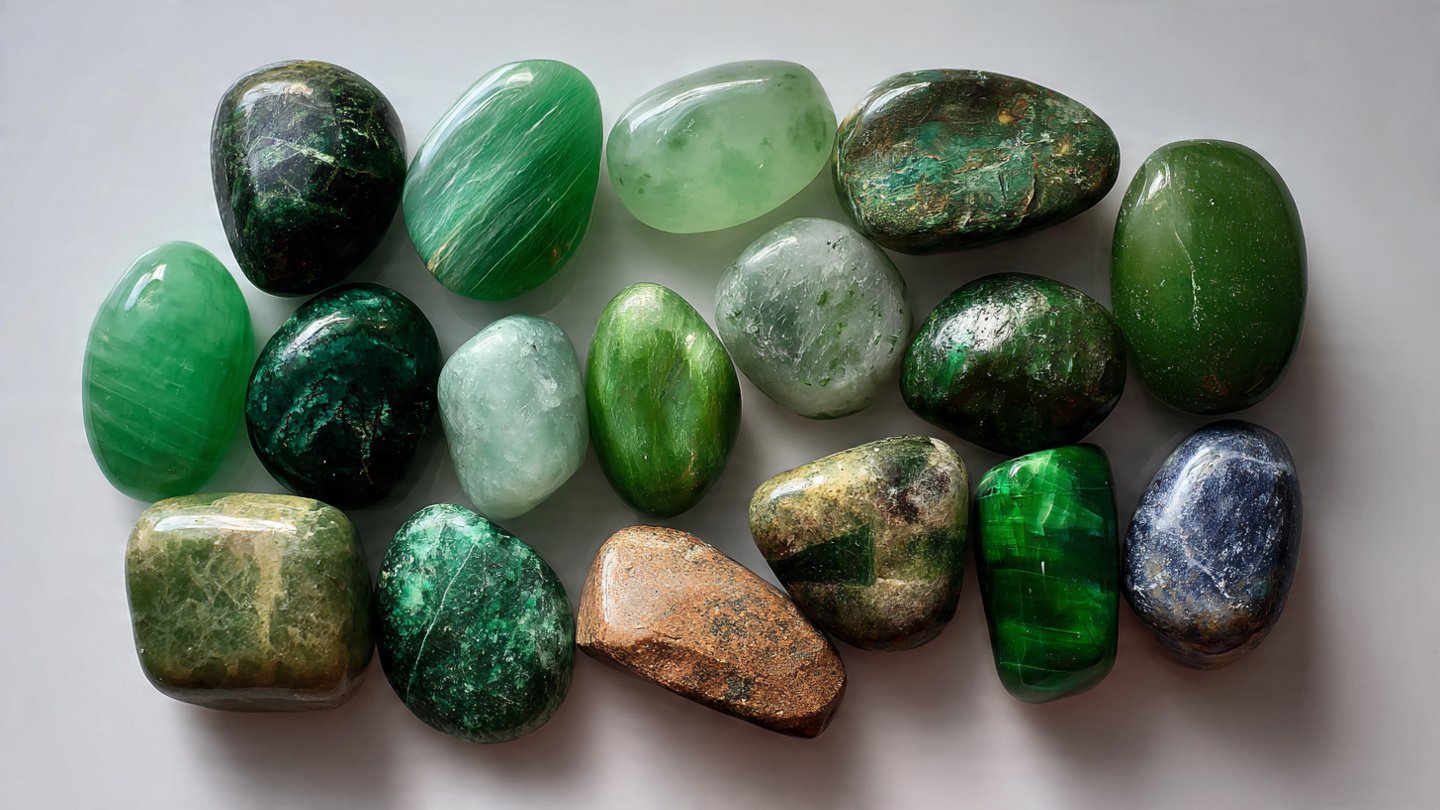
When most people think of jade, they immediately picture a vibrant green stone. While this association isn’t wrong, it only tells part of the fascinating story. Jade is actually one of the most colorful gemstones in the world, appearing in a stunning spectrum that ranges far beyond the classic emerald green most of us know. Let’s explore the beautiful world of jade colors and discover what makes this ancient gemstone so captivating.
The Classic Green: Jade’s Most Famous Color
Yes, jade is predominantly green, and there’s a good reason why this color has become synonymous with the stone itself. The most prized and valuable jade is a rich, translucent emerald green known as “Imperial Jade.” This stunning variety features an intense, uniform green color with excellent transparency and a smooth, almost glassy texture that seems to glow from within.
But green jade isn’t limited to just one shade. The green family of jade includes:
Emerald Green: The most valuable and sought-after color, featuring a deep, vibrant green reminiscent of fine emeralds. This color is particularly prized in jadeite jade from Myanmar (formerly Burma).
Apple Green: A lighter, fresher green that resembles the skin of a Granny Smith apple. This variety is bright and cheerful, offering excellent translucency.
Spinach Green: A darker green with subtle blue or black undertones, giving it a deep, forest-like appearance.
Moss Green: A muted green with grayish tones, often resembling moss growing on stones. This variety has an earthy, natural appeal.
Yellow-Green: Sometimes called “oil green,” this variety features a green base with warm yellow undertones, creating a unique olive-like color.
The green color in jade comes from the presence of chromium and iron in the stone’s chemical composition. The intensity and specific shade depend on the concentration of these elements and how they interact with the stone’s crystalline structure.
Beyond Green: The Rainbow of Jade Colors
Here’s where jade gets really interesting. This gemstone actually occurs in an impressive array of colors, each with its own unique beauty and characteristics.
White Jade (Mutton Fat Jade)
White jade is highly valued, particularly in Chinese culture. The most prized variety is called “mutton fat jade,” which has a creamy, opaque white color with a subtle yellowish tinge, resembling rendered sheep fat (which was considered precious in ancient times). Pure white jade is less common and can appear almost porcelain-like. White jade symbolizes purity and often features in religious and ceremonial objects.
Lavender Jade
One of the most beautiful and increasingly popular varieties, lavender jade ranges from pale lilac to deep purple. The color comes from trace amounts of manganese in the stone. The finest lavender jade has a uniform color distribution and good translucency. This variety has gained significant popularity in modern jewelry, particularly among younger collectors who appreciate its soft, romantic appearance.
Red Jade
Red jade is relatively rare and ranges from orange-red to deep brownish-red. True red jade gets its color from iron oxide, similar to how rust forms. The most valuable red jade is translucent with an even color distribution. In Chinese culture, red jade is highly symbolic, representing passion, vitality, and good fortune.
Yellow Jade
Yellow jade spans from pale lemon yellow to deep honey or amber tones. Like red jade, iron is responsible for yellow jade’s coloring. Yellow jade has been treasured for centuries, symbolizing prosperity and power in ancient Chinese dynasties. The most prized specimens have a warm, glowing appearance with good translucency.
Black Jade
Black jade isn’t truly black but rather a very dark green that appears black to the naked eye. When held up to strong light, most black jade will reveal its dark green color. This variety gets its color from high concentrations of iron and other minerals. Black jade has a mysterious, sophisticated appearance and is often used in men’s jewelry and decorative carvings.
Blue Jade
Blue jade is extremely rare and highly sought after. True blue jadeite ranges from pale blue-gray to deep blue with hints of green. This color occurs naturally but is uncommon, making blue jade specimens particularly valuable. Some blue-toned jade may have a slight lavender or gray cast, creating unique and beautiful variations.
Brown Jade
Brown jade ranges from light tan to deep chocolate brown. While not as highly valued as green or lavender varieties, brown jade has an earthy warmth that appeals to many collectors. The color comes from iron oxidation within the stone.
Two Types of Jade: Jadeite and Nephrite
Understanding jade colors also requires knowing that “jade” actually refers to two different minerals: jadeite and nephrite. While they look similar and are both called jade, they have distinct properties.
Jadeite is the rarer and more valuable of the two types. It’s capable of achieving the most intense and varied colors, including the prized Imperial Green. Jadeite can appear in almost all the colors mentioned above, often with better translucency and more vibrant hues. The finest jadeite comes from Myanmar.
Nephrite is more common and has been used for thousands of years, particularly in Chinese carvings. While nephrite also comes in various colors, it tends toward softer, more muted tones compared to jadeite. Nephrite is most commonly found in shades of green, white, gray, and yellowish-brown. It’s typically less translucent than jadeite but is tougher and more resistant to breakage.
What Determines Jade’s Color?
The color of jade depends on several factors:
Mineral Composition: The specific trace elements present in the stone during formation determine its color. Chromium creates green, manganese produces lavender, iron causes red and yellow tones, and titanium can contribute to violet hues.
Transparency: How much light passes through the jade affects how we perceive its color. More translucent stones often appear more vivid and valuable.
Texture: The fine-grained structure of jade affects how light interacts with the stone, influencing the depth and richness of its color.
Natural vs. Treated: It’s important to note that some jade is treated or dyed to enhance or change its color. Natural, untreated jade in rare colors commands the highest prices.
The Most Valuable Jade Colors
While beauty is subjective, certain jade colors are more valuable in the marketplace:
- Imperial Green Jadeite: The undisputed champion, with top-quality specimens selling for millions of dollars.
- Lavender Jadeite: Increasingly valuable, especially fine-quality stones with even color distribution.
- White “Mutton Fat” Nephrite: Highly prized in Chinese jade culture.
- Red Jadeite: Rare and valuable, particularly in Asian markets.
- Blue Jadeite: Extremely rare, making it highly valuable to collectors.
Cultural Significance of Jade Colors
Different cultures attribute various meanings to jade colors. In Chinese culture, green jade symbolizes virtue and beauty, white represents purity, yellow signifies power and prosperity, and red embodies passion and life force. The Maya and Aztec civilizations also treasured jade, primarily in green shades, associating it with water, vegetation, and life itself.
How to Identify Quality Jade Color
When evaluating jade color, experts look for:
- Uniformity: Even color distribution throughout the stone
- Intensity: Vivid, saturated colors are more valuable than pale or muddy tones
- Translucency: Better quality jade allows light to pass through
- Purity: Freedom from dark spots, uneven coloring, or cloudiness
Conclusion
So, what color is jade stone? The answer is wonderfully complex. While green remains the most iconic and widely recognized color, jade’s palette extends across a magnificent spectrum from pristine white to deep black, with stops at lavender, red, yellow, blue, and brown along the way.
This diversity is part of what has made jade beloved across cultures for over 7,000 years. Whether you’re drawn to the classic elegance of green jade, the romantic softness of lavender, or the mysterious depth of black, there’s a jade color that speaks to every taste and style.
The next time someone asks what color jade is, you can smile and explain that this ancient gemstone refuses to be limited to a single shade. Instead, it offers a rainbow of possibilities, each color telling its own story and carrying its own special beauty. That’s the true magic of jade—it’s not just one color, but a celebration of nature’s entire palette, captured in stone.


