

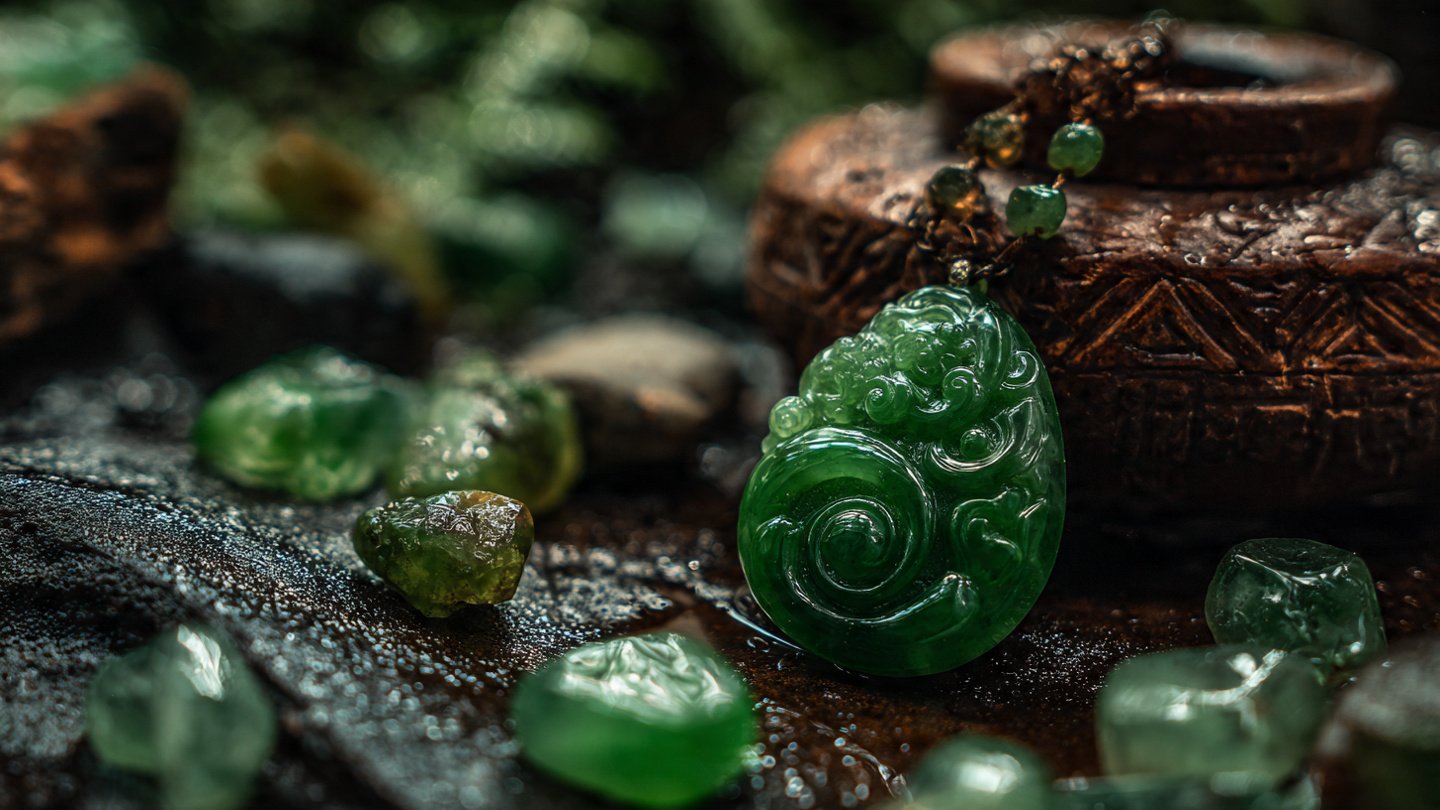
You’re browsing online, admiring a stunning jade bangle with vivid green color and perfect translucency. The price seems almost too good—just $200 for what looks like imperial quality. Your finger hovers over “Buy Now,” but something feels off. Should you take the plunge?
Here’s the harsh reality: fake jade outsells genuine jade by an estimated 4 to 1 ratio online, according to independent testing. Scammers have perfected the art of passing off dyed glass, treated stones, and even painted plastic as authentic jade. Thousands of people lose money every year—some dropping tens of thousands on worthless imitations.
But getting scammed isn’t inevitable. This comprehensive guide reveals exactly how jade scammers operate, which red flags scream “fraud,” and how to protect yourself when buying jade. You’ll discover authentication techniques that work, questions that expose dishonest dealers, and where to shop safely.
Whether you’re considering your first jade purchase or you’ve been burned before, these proven strategies ensure you buy genuine jade at fair prices—never paying thousands for painted glass again.
Understanding Common Jade Scams
Knowledge is your first line of defense. Understanding how scammers operate helps you recognize fraud before handing over your money.
The Complete Fake: Selling Non-Jade as Jade
The most brazen scam involves selling materials that aren’t jade at all. Scammers use several jade imposters that fool untrained eyes.
Dyed Glass represents the most common fake. Glass can be colored any shade of green, looks smooth and shiny, and costs pennies to produce. According to gemological testing, glass fakes often contain bubbles visible under magnification—something genuine jade never has.
Serpentine (sometimes called “new jade”) is a softer mineral that resembles nephrite jade. While serpentine qualifies as a legitimate gemstone, it’s not jade. Sellers use vague terminology to blur this distinction.
Aventurine, a type of quartz, gets passed off as jade because of its green color. However, aventurine contains reflective inclusions that create sparkle—something jade doesn’t display.
Chrysoprase, another quartz variety, shares jade’s green color but has different internal structure visible under magnification. It’s softer than jade and lacks jade’s characteristic fibrous or granular appearance.
According to testing from Taiwan’s Central Gem Laboratory, scammers have even sold jade with green lacquer painted on the back of ring settings. When the stone was removed, the vivid green color disappeared entirely—it was colorless jadeite made to look imperial green through painted backing.
Treated Jade Sold as Natural
This scam is more insidious because you’re actually buying real jade—just not the quality you’re paying for. The treatment grading system reveals the deception:
Type A Jade is completely natural with no chemical treatments except possibly a thin wax coating applied during polishing. This is the only grade that maintains and increases value over time.
Type B Jade undergoes acid bleaching to remove impurities, followed by polymer injection to fill microscopic cracks. This process improves appearance short-term but weakens the stone. Value drops 70-90% compared to equivalent Type A material.
According to the International Gem Society, Type B treatments can fail over time, with polymers yellowing and the stone deteriorating. Yet scammers sell Type B jade at Type A prices—a markup of 10 to 100 times fair value.
Type C Jade receives artificial dye to enhance or change color, often combined with Type B treatments. The color may fade or change, and value plummets to near-nothing compared to natural stones.
A gemologist from Mays Gems documented a case where Type C jadeite with painted color coating was sold with fake certificates showing it as Type A natural imperial jade. The victims lost significant money buying worthless treated material.
The Fake Certificate Scam
Authentic-looking certificates don’t guarantee authentic jade. Scammers create fake laboratory reports that mimic legitimate certification.
In Singapore alone, 10 victims lost at least $95,000 in the first three months of 2023 to jade scammers using fake certificates on social media platforms like TikTok, according to fraud reports.
The fake certificates often include:
- Made-up laboratory names that sound official
- Real laboratory names but fake report numbers
- Accurate descriptions that don’t match the actual stone
- Professional-looking layouts copied from genuine reports
Some scammers go further, creating entire websites for fake laboratories complete with verification portals that “confirm” fraudulent certificates.
The Tourist Market Trap
Travel to China or Myanmar often includes visits to “jade museums” or “government jade factories.” Many of these are elaborate showrooms designed to sell overpriced, low-quality jade.
According to a travel agency with nearly 20 years of experience, these operations disguise themselves as official institutions but actually charge 10 times the real value for cheap jadeite or synthetic material.
Tour guides receive commissions for each sale, creating pressure-filled atmospheres where tourists feel compelled to buy. The jade purchased is frequently worth a fraction of the price paid.
The “Lucky Draw” Scam
Some jewelry stores offer “free” lucky draws where you inevitably “win” jade jewelry. The pieces come with inflated price tags and fake certificates.
According to reports on gold-inlaid jade scams, mass-market vendors produce pieces costing as little as $1.40 to make, then sell them for hundreds through these lucky draw promotions. The gold content might be just 0.014 grams of electroplated coating on brass.
The Online Photo Scam
Online jade selling presents unique fraud opportunities. Scammers use:
- Photos of genuine jade to sell fake pieces
- Heavily edited images that misrepresent color
- Stock photos stolen from legitimate dealers
- Different angles to hide flaws or treatments
The jade you receive looks nothing like the photos you saw. By the time you discover the fraud, the seller has disappeared.
Red Flags That Scream Scam
Recognizing warning signs before purchasing protects you from the most common scams. These red flags should make you walk away immediately.
Prices Too Good to Be True
High-quality jadeite is expensive. That $99 bangle with flawless green and glassy glow? Almost certainly treated, fake, or misrepresented.
According to current market data, quality jade typically ranges from:
- Commercial grade: $5-$50 per carat
- Good quality: $50-$500 per carat
- Fine quality: $500-$5,000 per carat
- Imperial grade: $5,000-$100,000+ per carat
If the price seems dramatically lower than market average for the claimed quality, it’s almost certainly a scam. Real jade rewards patience and appropriate budgets.
Vague or Missing Origin Information
Legitimate sellers specify jade sources. “Burmese jadeite,” “BC nephrite,” or “Guatemalan jadeite” indicate transparency.
Vague descriptions like “jade,” “Asian jade,” or “jade crystal” suggest the seller doesn’t actually know what they’re selling—or they’re hiding the truth. Terms like “jade glass,” “jade quartz,” or “jade composite” are industry code for fakes.
No Treatment Disclosure
Honest dealers volunteer treatment information. They clearly state “Type A natural jade” or “Type B treated jade” without you asking.
If a seller gets defensive when you ask about treatments or refuses to provide written confirmation of Type A status, walk away. This evasiveness signals they’re hiding something.
Reluctance to Provide Certification
For any jade piece over $500, certification from a recognized laboratory should be standard. Reputable dealers provide this documentation willingly.
Sellers who claim certification is “unnecessary,” “too expensive,” or “available for extra fee” are raising red flags. Legitimate high-quality jade justifies certification costs because it protects both buyer and seller.
Pressure Tactics and Urgency
“Only one piece left!” “Special price ends today!” “Another customer is considering this!” These high-pressure tactics aim to rush you into buying before you can think clearly or research properly.
Legitimate dealers understand jade purchases require consideration. They welcome questions, encourage research, and never pressure immediate decisions.
Perfect, Uniform Color
Genuine jade rarely displays absolutely perfect, uniform color. Even top-quality imperial jade shows some natural variation when examined closely.
Solid, neon-green or electric-teal color suggests dyed glass or heavily treated jade. Real jade exhibits subtle tonal variations, possible veining, clouding, or slight translucency shifts.
No Physical Address or Contact Information
Online sellers hiding behind generic email addresses, P.O. boxes, or “customer support” bots fail basic transparency tests.
Legitimate businesses provide direct email addresses, physical addresses, and live chat with reasonable response times. Anonymous sellers make fraud easier and accountability impossible.
Reviews That Look Fake
Jade scammers manipulate reviews to appear trustworthy. Warning signs include:
- Hundreds of 5-star reviews posted in short timeframes
- Generic comments that could apply to anything
- Similar writing styles across multiple reviews
- Photos that don’t match the product being sold
According to testing of online jade rollers, fake products outnumber authentic ones 4 to 1, often with manipulated ratings and AI-generated reviews.
How to Authenticate Jade Before Buying
Professional testing provides certainty, but several preliminary checks help you identify obvious fakes before spending money on lab work.
Visual Inspection Techniques
Examine jade carefully under bright, natural lighting. Quality jade should show depth when you look into the stone—layers of color and translucency creating dimension.
Check for bubbles. Hold the piece up to bright light and examine it with a jeweler’s loupe if available. Any bubbles visible inside the stone prove it’s glass, not jade. Natural jade never contains bubbles.
Look for color accumulation. In dyed jade, color often pools in cracks, crevices, or areas of damage. Natural jade displays more even color distribution throughout the material.
Examine the surface texture. Real jade displays a “greasy” or waxy luster, especially nephrite. Many glass fakes show high-gloss, vitreous shine that looks too perfect.
Look for natural variations. According to gemological experts, authentic jade shows fibrous, granular, or felt-like marks intertwining within its structure. Perfect, completely uniform appearance suggests a fake.
The Temperature Test
One of jade’s most distinctive properties is how it feels. Genuine jade feels cool to touch initially and warms slowly as it absorbs body heat.
Hold the piece in your closed hand for 30 seconds, then feel it again. Jade should still feel cool. Plastic warms quickly. Glass stays cool but feels different than jade’s characteristic smoothness.
While not foolproof alone, this test catches many obvious fakes. According to experiments where participants attempted to identify real jade by touch, success varied widely—showing the test works but requires experience.
The Sound Test
Gently tap two jade pieces together or strike a jade bangle with your fingernail. Quality jade produces a clear, musical tone lasting several seconds—almost bell-like.
Glass, plastic, or low-quality jade makes a dull “thunk” that dies immediately. The sound test works best with bangles where you can hear resonance clearly.
Be very gentle with this test to avoid damaging jewelry. Honest dealers should be prepared to perform this well-known test themselves.
The Scratch Test (Use with Extreme Caution)
Jade’s hardness (6-7 on Mohs scale) means steel shouldn’t scratch it easily. Taking a needle or knife and attempting to scratch the surface can reveal fakes.
However, experts strongly discourage this test on valuable pieces because:
- You can damage genuine jade if done too aggressively
- It requires gentleness that’s hard to calibrate
- It may void return policies
- Other tests work better without risking damage
If you perform this test, do it on an inconspicuous area like the back of a pendant, being extremely gentle. Real jade resists scratching; fakes show deep scratches easily.
The Density Test
Both jadeite and nephrite have high density. When you hold them, they should feel substantial and heavy for their size—denser than glass or plastic of equivalent volume.
Professional testing measures specific gravity: jadeite ranges from 3.30-3.38, nephrite from 2.90-3.03. These higher densities create noticeable weight that experienced buyers recognize immediately.
The Translucency Test
Hold jade up to a bright light source. Quality jade should allow some light penetration, creating an internal glow or luminosity.
The finest jade appears almost transparent in thin sections while maintaining color saturation. Completely opaque material lacking any light transmission likely indicates lower quality or fake material.
Look for how light interacts with the stone. Does it seem to glow from within? Or does it block light completely like a painted surface?
Magnification Examination
A 10x jeweler’s loupe reveals characteristics invisible to the naked eye. Look for:
Fibrous or granular structure: Genuine jade shows interwoven, felt-like marks within its internal structure. This fibrous appearance is difficult to fake.
No layering: Examine edges carefully. Any visible layers indicate “jade doubling”—a thin layer of genuine jade over a different base material.
No perfect uniformity: Slight imperfections, natural inclusions, and color variations actually add authenticity. Perfectly flawless appearance suggests artificial material.
Surface polish quality: Real jade accepts superior polish. Look for smooth, even surfaces without pitting or irregularities suggesting lower-quality material.
Questions to Ask Before Buying
Educated questions expose dishonest dealers and protect you from scams. Always ask these specific questions—and demand clear answers.
“Is this jadeite or nephrite?”
This fundamental question must be answered definitively. Vague responses like “it’s jade” or “Asian jade” are unacceptable.
The seller should specify exactly which mineral you’re buying. If they can’t or won’t answer clearly, they either don’t know their inventory or they’re being deliberately deceptive.
“What is the treatment status—Type A, B, or C?”
This question is critical. Only Type A (natural, untreated) jade maintains and increases value over time.
Legitimate dealers answer this immediately and provide written confirmation. Evasive responses like “it’s natural jade” without specifying Type A status suggest the piece is treated.
If the seller doesn’t understand the A/B/C grading system, question their expertise entirely. Any serious jade dealer knows this classification system.
“Can you provide laboratory certification?”
For purchases over $500, certification should be standard. Ask which laboratory issued the certificate and request to see the actual report.
Verify the certificate’s authenticity. Check the laboratory’s website to confirm:
- The lab actually exists and is reputable
- The report number matches their records
- The stone description matches what you’re buying
Reputable laboratories include:
- Gemological Institute of America (GIA)
- Swiss Gemmological Institute (SSEF)
- Hong Kong Jade & Stone Laboratory
- Hong Kong Gems Laboratory
“Where does this jade originate?”
Source affects both value and authenticity. The finest jadeite comes from Myanmar. Quality nephrite sources include British Columbia, China (Hetian), Russia, and New Zealand.
Sellers should know their jade’s origin. “I don’t know” or “somewhere in Asia” suggests they haven’t done basic due diligence—or worse, they’re selling fake material.
“What is your return policy?”
Understanding return terms before purchasing protects you if the jade doesn’t match descriptions or fails independent testing.
Legitimate dealers typically allow returns within 15-30 days, especially for online purchases where you couldn’t examine pieces in person. Get return policies in writing.
If dealers refuse any return option, especially on expensive pieces, shop elsewhere. Confidence in merchandise quality shows through generous return policies.
“Can I have independent testing done?”
Honest sellers welcome independent verification. They understand sophisticated buyers protect their investments through professional gemological testing.
If a seller discourages or prohibits independent testing, massive red flags should wave. What are they hiding? Why won’t they let you verify what they’re claiming?
“How long have you specialized in jade?”
Experience matters enormously in jade dealing. The market’s complexity requires years to develop genuine expertise.
Sellers should demonstrate knowledge about jade types, quality factors, market values, and authentication. If they can’t discuss these topics confidently, question whether you want to trust them with your money.
“Can you explain the specific quality factors in this piece?”
This open-ended question reveals how much the seller actually understands about their inventory.
Knowledgeable dealers should discuss:
- Color characteristics and uniformity
- Translucency level
- Texture quality
- Any visible inclusions or flaws
- Size and craftsmanship considerations
- Why the piece is priced as it is
Vague, generic responses suggest the seller doesn’t truly understand jade quality—a dangerous situation for buyers.
Where to Buy Jade Safely
Choosing the right purchasing venues dramatically reduces scam risk. These options offer the best protection for jade buyers.
Established Brick-and-Mortar Jade Specialists
Physical stores specializing in jade provide several advantages. You can examine pieces in person, handle them, and assess quality directly.
Look for dealers who:
- Have operated for many years with established reputations
- Specialize specifically in jade (not general jewelry)
- Employ staff with gemological training
- Provide certifications from recognized laboratories
- Offer clear return policies
- Welcome questions and detailed examination
According to fraud prevention experts, buying from reputable shops is the safest option. The accountability of physical locations makes fraud less likely.
Reputable Online Jade Dealers
Online shopping offers convenience and often better selection, but requires extra caution. Research sellers thoroughly before buying.
Trustworthy online dealers:
- Provide detailed photos from multiple angles
- Include videos showing translucency and color
- Specify exact dimensions and weights
- Clearly state treatment status
- Include certification for valuable pieces
- List complete contact information
- Maintain transparent return policies
- Have verifiable customer reviews
Check online reviews across multiple platforms. Look for consistent patterns in feedback. Be wary of shops with only recent reviews or reviews that seem artificial.
Major Auction Houses
For high-value pieces, major auction houses like Sotheby’s, Christie’s, and Bonhams offer maximum security. Their reputations depend on authentication accuracy.
Auction houses provide:
- Expert vetting of all items
- Detailed condition reports
- Provenance documentation
- Certification from recognized laboratories
- Legal protections for buyers
The downside? Auction purchases involve premiums (typically 20-25% of hammer price) and require more sophisticated market knowledge.
Reputable Online Marketplaces (With Caution)
Platforms like Etsy, 1stDibs, and Ruby Lane host jade dealers, but quality varies dramatically. These marketplaces work only if you:
- Thoroughly research individual sellers
- Read all reviews carefully
- Ask all the critical questions listed earlier
- Insist on certification for valuable pieces
- Understand platform buyer protection policies
- Accept that platform oversight is limited
Never buy expensive jade from generic marketplaces like eBay or Amazon without extensive seller verification. The scam ratio on these platforms is extremely high for jade.
What to Avoid
Certain purchasing venues present unacceptable fraud risks:
Tourist markets and street vendors: The scam concentration here approaches 100% for quality jade. Prices get marked up 10-100 times fair value, and authenticity is rarely guaranteed.
Social media platforms: TikTok Shop, Instagram sellers, and Facebook marketplace jade frequently involves scams. The $95,000 lost by Singapore victims in just three months demonstrates the risk.
“Too good to be true” online deals: Websites offering imperial jade at bargain prices are nearly always scams. If it seems impossible, it is.
Unlicensed dealers: Anyone selling jade without proper business licensing, gemological credentials, or physical business location presents extreme risk.
Professional Certification: When and How
Understanding professional jade certification protects expensive purchases and provides peace of mind.
When Certification is Essential
Always insist on laboratory certification for:
- Any jade piece costing over $500
- All jade claimed to be Type A natural
- Imperial jade or other premium colors
- Large pieces like bangles and necklaces
- Investment-grade jade
- Jade with unusual or rare characteristics
Certification costs typically range from $50 to $200+ depending on the laboratory and testing required. This represents tiny fractions of valuable jade’s worth.
For pieces under $500, certification may exceed economic sense unless you’re building a documented collection. Use visual inspection and basic testing instead.
Recognized Gemological Laboratories
Only accept certification from established, reputable laboratories. The top choices include:
Gemological Institute of America (GIA): The world’s most respected gemological laboratory offers specific jade testing and certification. In December 2023, GIA introduced dedicated Jade Reports with enhanced information including type definitions and the trade term “Fei Cui” where appropriate.
GIA certification confirms:
- Whether stone is jadeite, nephrite, or omphacite/kosmochlor
- Treatment status (any enhancements detected)
- Color and transparency descriptions
- Physical properties confirming authenticity
Swiss Gemmological Institute (SSEF): SSEF is known for expertise in gemstone testing including jade. Their certifications are widely recognized and respected globally.
Hong Kong Jade & Stone Laboratory: This laboratory specializes in jade testing and provides detailed certification reports widely recognized in Asian jade markets.
Hong Kong Gems Laboratory: Another respected Hong Kong option specializing in jade and colored gemstone certification.
Chinese laboratories can be legitimate but verify their reputation carefully. Some fake laboratories produce unverifiable reports that scammers exploit.
What Certificates Should Include
Legitimate jade certificates contain specific information:
Jade type: Explicitly states “jadeite” or “nephrite” based on testing results
Treatment disclosure: Must clearly state if the piece is Type A (natural), Type B (polymer-filled), or Type C (dyed), or combinations thereof
Color description: Documents the color and whether it’s natural or enhanced
Physical properties: Includes measurements like refractive index, specific gravity, and other characteristics confirming authenticity
Report number: Unique identifier you can verify on the laboratory’s website
Photos: High-quality images of the tested piece for identification
Date issued: Certificates should be recent, ideally from the past year
Verifying Certificate Authenticity
Even certificates can be faked, so verification is crucial:
- Check the laboratory’s official website
- Enter the report number in their verification portal
- Confirm the stone description matches your piece
- Verify the issue date and laboratory contact information
- Call the laboratory directly if anything seems questionable
According to scam reports, fake certificates look convincingly professional. The Taiwan Central Gem Laboratory documented cases of completely fabricated certificates that fooled buyers until the stones were professionally tested.
Cost Considerations
Professional certification costs vary by laboratory and location:
- GIA jade reports: Approximately $50-$150
- SSEF certification: €75-€200 (approximately $80-$215)
- Hong Kong laboratories: HK$300-800 (approximately $40-$100)
Some online jade dealers offer certification services, charging fees that include testing, shipping, insurance, and their service fee. Total costs typically range from $100-$300 for standard pieces.
For valuable jade, certification costs represent insurance against buying misrepresented material. A $150 certificate protecting a $5,000 purchase makes excellent financial sense.
Building Your Jade Knowledge
Education remains your best defense against scams. The more you understand jade, the harder scammers find it to deceive you.
Study Quality Factors
Master the characteristics that determine jade value:
Color: Learn what different jade colors should look like. Study photos of certified imperial jade, lavender jade, mutton fat, and other premium varieties.
Translucency: Understand how light should interact with quality jade. Visit museums or reputable dealers to see genuine pieces demonstrating proper translucency.
Texture: Learn to recognize fine texture that feels silky smooth versus coarse texture that feels granular or rough.
Treatment indicators: Study what Type B and C jade looks like. Learn to spot polymer gloss, color pooling in cracks, and other treatment signs.
Handle Authentic Jade
Nothing replaces physical experience. Visit museums, reputable dealers, and gem shows to examine authenticated jade pieces.
Touch different quality levels. Feel the weight, temperature, and texture. Your hands learn to recognize genuine jade through repeated contact.
Compare pieces side by side. When you see commercial-grade jade next to investment-grade material, the quality differences become obvious.
Join Jade Communities
Online forums and social media groups focused on jade collecting offer invaluable shared knowledge:
- Members warn about problem dealers
- Experienced collectors share authentication tips
- People post photos for feedback before purchasing
- Market pricing discussions help calibrate expectations
However, remain cautious about advice from unknown sources. Verify information through multiple credible sources.
Read Expert Resources
Books and articles by recognized gemologists build foundational knowledge:
- GIA’s jade resources and educational materials
- Academic papers on jade geology and identification
- Books by jade experts like Richard Hughes
- Articles from International Gem Society
This study helps you ask intelligent questions and recognize when dealers don’t know what they’re talking about.
Practice Visual Assessment
Train your eye by examining jade photos and videos online. Try to assess quality before reading descriptions, then check your evaluation against expert assessments.
Over time, you’ll develop instincts about quality that help you spot obvious fakes immediately.
What to Do If You’ve Been Scammed
If you discover you bought fake or misrepresented jade, act quickly to protect your interests.
Document Everything
Gather all evidence immediately:
- Original product listings and photos
- All correspondence with the seller
- Payment receipts and transaction records
- The fake jade piece itself
- Any certificates (fake or real) provided
- Photos showing the item’s actual condition
This documentation supports refund requests, disputes, and potential legal action.
Contact the Seller
Reach out to the seller formally in writing. Explain the problem clearly:
- What you bought versus what you received
- Evidence of misrepresentation (lab testing, expert opinion)
- Your desired resolution (full refund, partial refund, replacement)
Remain professional but firm. Give them reasonable time to respond (48-72 hours typically).
Request Refund Through Payment Platform
If the seller refuses to help, dispute the charge through your payment method:
Credit cards: File a chargeback explaining the fraud. Provide all documentation. Credit card companies often side with buyers in clear fraud cases.
PayPal: File a dispute through PayPal’s buyer protection program. PayPal requires sellers to prove they delivered what was advertised.
Other platforms: Check the specific buyer protection policies for whatever payment method you used.
Report to Marketplace
If you bought through a marketplace (Etsy, eBay, Amazon), report the fraudulent seller:
- Platforms may remove the seller
- You might get refunded through platform guarantees
- Reports help protect other potential victims
File Regulatory Complaints
For serious fraud involving significant money:
Federal Trade Commission (FTC): File a complaint at ftc.gov for US-based scams
Better Business Bureau (BBB): Report businesses to impact their ratings
State consumer protection offices: File complaints with your state’s consumer affairs department
International Consumer Protection: Contact consumer protection agencies in the seller’s country
Seek Legal Advice
For fraudulent jade purchases exceeding several thousand dollars, consult an attorney specializing in consumer fraud. Legal action might be worthwhile depending on amounts involved and evidence strength.
Share Your Experience
Warn others by:
- Posting honest reviews on relevant platforms
- Sharing your story in jade collecting communities
- Reporting the seller to jade industry organizations
Your experience helps protect others from the same scam.
Final Thoughts on Buying Jade Safely
Jade scams flourish because the gemstone’s complexity creates confusion that scammers exploit. But armed with knowledge, you can navigate the jade market confidently.
The strategies you’ve learned here—recognizing red flags, asking the right questions, insisting on certification, and buying from reputable sources—protect you from the vast majority of scams.
Remember these key principles:
Education is protection. The more you understand jade, the harder you are to scam.
If it seems too good to be true, it is. Quality jade commands appropriate prices reflecting its rarity and cultural significance.
Certification is essential for valuable purchases. Never skip this step when spending significant money.
Reputable dealers welcome questions. Transparency and patience indicate honesty; evasiveness and pressure signal fraud.
Your instincts matter. If something feels wrong, walk away. There’s always another jade piece, another seller, another opportunity.
Buying jade should be joyful—connecting you with one of humanity’s oldest appreciated gemstones. Don’t let scammers rob you of that experience or your money.


