

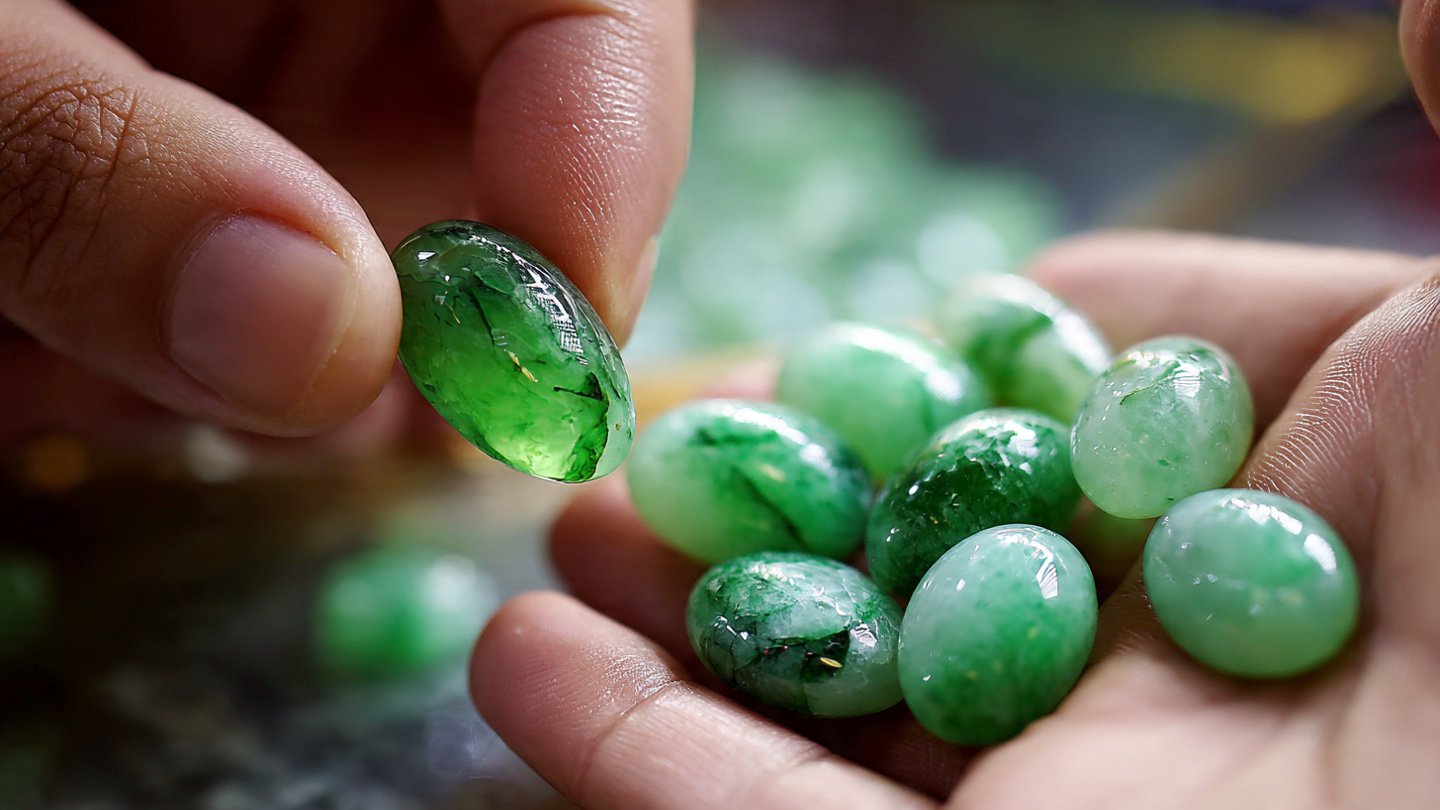
Fake jade floods the market. Every year, thousands of people unknowingly purchase counterfeit jade pieces online and in stores. They spend money on beautiful-looking stones that aren’t genuine at all. The heartbreak comes later when they discover their “precious jade” is actually colored glass or plastic.
Here’s the good news: you can learn to spot fake jade yourself. You don’t need expensive equipment or a gemology degree. This guide teaches you practical methods that work right now, today, with items you likely already have at home.
Let me show you exactly how to separate genuine jade from imitations so you never get fooled again.
Why Fake Jade Is So Common
Understanding the problem helps you stay vigilant. Jade commands high prices, especially imperial jade. When something valuable exists, counterfeiters create cheaper imitations. The profit margins motivate dishonest sellers to market fake jade as authentic.
Most fake jade comes from countries with minimal quality control. Sellers treat jade like a commodity rather than a precious gemstone. They care about volume and quick sales, not authenticity. Some sellers don’t even know they’re selling fakes—they’ve been deceived themselves by their suppliers.
Online marketplaces amplify the problem. Without expert verification, anyone can list jade for sale. Buyers can’t see, touch, or feel the stone before purchasing. This distance creates perfect conditions for fraud.
The good news is that fake jade usually fails basic tests. Real jade has properties that imitations simply cannot replicate. Once you know what to look for, identifying fakes becomes straightforward.
The Weight and Density Test
Start here because this test requires zero equipment. Real jade feels surprisingly heavy for its size. This heaviness comes from jade’s mineral density, which exceeds that of glass or plastic dramatically.
Pick up the jade piece and compare it to similarly sized stones you know are real. Jadeite feels heavier than nephrite, so keep that in mind. If a jade pendant feels light or hollow, skepticism is warranted.
Here’s the practical approach: hold it in your hand and assess whether the weight matches the size. Real jade stones have significant heft. Fake jade often feels suspiciously light. Your hand recognizes this discrepancy immediately.
This test isn’t foolproof alone—some dense materials like certain plastics can be heavy too. But combined with other tests, the weight assessment provides valuable information. Trust your instinct when something feels wrong.
The Sound Test for Authenticity
Real jade produces a distinctive sound when struck gently. This acoustic property reveals whether you’re holding genuine jade or an imitation.
Hold the jade piece loosely between your fingers. Let it hang freely so it can vibrate. Gently tap it with a wooden stick or even your fingernail. Listen carefully to the sound it produces.
Genuine jade creates a clear, bell-like tone that resonates briefly. The sound is pure and pleasant, almost musical. Fake jade produces dull thuds or flat sounds that stop immediately. There’s no resonance, no ring, just dead sound.
This difference is striking once you hear it. Real jade seems to sing a little. Imitations sound dead inside. Your ear can distinguish between these sounds reliably.
Practice this test with pieces you know are real first. This trains your ear to recognize the authentic jade sound. Then compare unknown pieces to what you’ve learned. The contrast becomes obvious.
The Temperature Test
Jade stays cool longer than most materials. This thermal property gives you another identification method.
Hold the jade piece against your cheek or forehead for a few seconds, then move it away. Real jade feels cool to the touch and retains that coolness. It stays cool even as other materials warm up from body heat contact.
Glass, plastic, and many fake materials warm quickly when held against skin. Real jade conducts heat away from your body, maintaining coolness.
This test works because jade’s density and mineral composition create different thermal conductivity compared to imitations. You’re detecting a real physical property, not relying on subjective judgment.
The test takes seconds and provides immediate feedback. If something warms up too quickly, doubt the authenticity. If it stays comfortably cool, that’s a positive sign.
Examining the Color and Transparency
Real jade displays specific color characteristics that fakes struggle to replicate convincingly.
Genuine jade comes in definite colors. Jadeite shows vibrant greens, whites, reds, purples, and blacks. Nephrite appears in softer greens, whites, and blacks. The colors have depth and subtle variations.
Fake jade often uses garish, uniform colors that look artificial. The color seems painted on rather than integral to the stone. When you look closely, you notice the coloring is too perfect, too uniform, and too bright.
Transparency provides another clue. Real jade has a characteristic translucency or opacity that varies by type and quality. Light passes through the stone in specific ways. Fakes often appear either completely opaque or totally transparent, lacking jade’s nuanced light behavior.
Check the stone under natural light and artificial light. Real jade looks different under different lighting conditions. Fake jade often looks the same regardless of light source because the coloring is surface-level rather than structural.
Look at the edges of the stone. Real jade shows consistent color throughout. Fake jade sometimes reveals different colors at the edges where the coating hasn’t completely covered the material underneath.
The Scratch Test for Surface Durability
Real jade resists scratching remarkably well. This hardness property distinguishes genuine jade from softer imitations.
Use a small piece of metal like a paperclip or knife. Gently try to scratch an inconspicuous area of the jade piece. You shouldn’t be able to create visible scratches on genuine jade.
Real jadeite rates 6.5 to 7 on the Mohs hardness scale. Nephrite rates 6 to 6.5. Both resist scratching from common metals. Fake jade—especially colored glass or plastic—scratches easily.
Be gentle with this test. You’re not trying to gouge the stone. A light touch is sufficient. If you easily create scratches or marks, the piece likely isn’t authentic jade.
Glass scratches readily from metal contact. Plastic shows damage almost immediately. Real jade remains unmarked by these gentle attempts.
This test also reveals coating on fake jade. Sometimes sellers apply jade-like coatings to cheap materials. The scratch test penetrates this coating and exposes the fake material underneath.
The Specific Gravity Test
This test requires a scale and water, making it slightly more technical but highly accurate.
Weigh the jade piece in air using a kitchen scale or jewelry scale. Record the weight. Then place it in a container of water and weigh it again while submerged.
The difference between dry weight and water weight reveals specific gravity. Real jadeite has a specific gravity between 3.30 and 3.38. Real nephrite measures 2.90 to 3.03.
Calculate this by dividing the dry weight by the difference: dry weight divided by (dry weight minus wet weight) equals specific gravity.
This test requires accuracy, but it provides definitive results. Fake materials have different specific gravities that fall outside jade’s range.
Most people skip this test because it requires equipment and math. But if you’re investing significantly in a jade piece, it’s worth the effort. You’re essentially buying a gemology test for just the cost of water and a scale.
Checking for Fractures and Internal Structure
Genuine jade shows specific fracture patterns. Real jade fractures unevenly—not along clean planes like some stones do. The internal structure shows through carefully.
Examine the piece under magnification if possible. Look for natural variations in color and density within the stone. Real jade shows these variations. The stone isn’t perfectly uniform throughout.
Fake jade often appears suspiciously perfect and uniform. There are no natural variations, no tiny inclusions, nothing that suggests natural mineral formation.
Look for veining or natural lines within the stone. Real jade develops these during formation. Fake jade lacks these authentic markers.
Check any cracks in the piece. Real jade cracks show consistent color throughout. Fake jade with surface coating shows different materials along crack lines.
Professional Testing Methods
Sometimes amateur testing isn’t enough, especially for expensive pieces. Professional gemologists use scientific equipment for definitive identification.
Refractive index testing measures how light bends through the stone. Real jadeite and nephrite have specific refractive indices. Professional gemologists use specialized equipment to measure this precisely.
X-ray diffraction analysis identifies the crystal structure. Real jade shows the crystal patterns of jadeite or nephrite. Fake materials show completely different patterns.
These professional tests cost money but provide absolute certainty. If you’re spending thousands on a jade piece, professional verification makes sense. Reputable dealers provide gemological certificates for valuable jade.
Ask for documentation when purchasing expensive jade. Legitimate sellers expect this request and readily provide certificates from recognized gemological institutes.
Red Flags When Buying Jade
Certain warning signs suggest you’re dealing with fake jade. Learn these red flags to protect yourself.
Suspiciously low prices are the biggest warning. Quality jade costs real money. If the price seems too good to be true, it probably is. Sellers price authentic jade according to its market value.
Vague descriptions online raise concerns. Legitimate dealers describe jade type clearly—they specify whether it’s jadeite or nephrite. They mention origin and quality. Vague listings often hide poor quality or fakes.
Pressure to buy quickly is a classic scam tactic. Honest sellers let you examine pieces carefully and ask questions. High-pressure sales suggest the seller knows there’s a problem you’d find with examination.
Photos that show the stone in only ideal lighting look suspicious. Professional sellers show jade under multiple lighting conditions. One perfect-angle photo often hides flaws or fakery.
Sellers unwilling to provide refunds or returns are major red flags. Legitimate businesses stand behind their products. Scammers know you’ll discover the fake after purchase and design no-return policies accordingly.
No certification for expensive pieces is concerning. If someone asks thousands for jade without providing gemological documentation, question why.
Where to Buy Real Jade
Purchasing from reputable sources significantly reduces fake jade risk. Established jewelry stores with physical locations have reputation to protect.
Certified gemological institutes maintain seller lists. Look for dealers with credentials from American Gem Society or International Gem Society.
Museums and cultural institutions often sell genuine jade pieces. Their reputation depends on authenticity, so they verify everything carefully.
Auction houses for fine art and antiques sell genuine jade. These establishments employ expert authentication before listing items.
Online sellers with extensive reviews and return policies generally conduct honest business. However, even established online retailers sometimes unknowingly sell fakes from dishonest suppliers.
When buying online, insist on return policies. If the seller won’t accept returns, that’s your answer—buy elsewhere.
Build relationships with jewelry stores you trust. Once you identify a reliable dealer, purchase from them repeatedly. They remember you and ensure you get quality pieces.
How to Care for Real Jade
Once you’ve identified and purchased genuine jade, protect it properly.
Clean jade gently with lukewarm water and mild soap. Use a soft cloth or soft brush. Never use ultrasonic cleaners or steam cleaning, which can damage jade.
Avoid exposing jade to extreme temperature changes. Sudden heat or cold causes cracking in the stone.
Keep jade away from harsh chemicals and strong sunlight. These can fade colors, especially in treated jade pieces.
Store jade separately from other gems. Harder stones can scratch jade despite jade’s relative hardness. Use soft cloth storage to protect the surface.
Have valuable jade insured. If you’ve invested significantly, insurance protects against loss or damage.
Conclusion
Identifying real jade requires knowledge and attention. You’ve now learned multiple testing methods that work without expensive equipment. The weight test, sound test, temperature test, color examination, and scratch test all provide valuable information.
Combining several tests gives you confidence in your assessment. A piece that passes all tests is almost certainly genuine jade. A piece that fails multiple tests is probably fake.
Remember the red flags when purchasing. Buy from reputable sellers. Request documentation for expensive pieces. Trust your instincts when something seems off.
Real jade is worth seeking out. It’s beautiful, durable, and meaningful. Your knowledge now protects you from fraud and ensures you get authentic jade that will last generations.
Have you purchased jade before? Did you encounter any fakes? Share your experiences in the comments below. Help others learn from your story. If this guide helped you identify real jade, share it with friends and family who appreciate gemstones. Your knowledge shared is the best protection against fraud.


