

Picture this: a simple green bead necklace selling for $27.4 million at auction. Not diamonds. Not rubies. Jade. Specifically, imperial jade—a gemstone so rare and coveted that it makes most precious gems look affordable by comparison.
Most people know jade as that green stone sold in tourist shops for twenty bucks. They have no idea that the finest imperial jade sells for up to $3 million per carat, outpacing even the most expensive diamonds. This disconnect creates one of the gemstone world’s greatest mysteries: what makes imperial jade worth more than gold, more than platinum, sometimes even more than its weight in diamonds?
This comprehensive guide reveals everything about imperial jade’s extraordinary value. You’ll discover why Chinese emperors hoarded it, what geological miracle creates its vivid color, and why a single jade bangle can cost more than a luxury car.
Whether you’re a collector, investor, or simply fascinated by rare gemstones, understanding imperial jade opens a window into one of nature’s most remarkable treasures and humanity’s longest-running love affair with a single stone.
What Exactly Is Imperial Jade
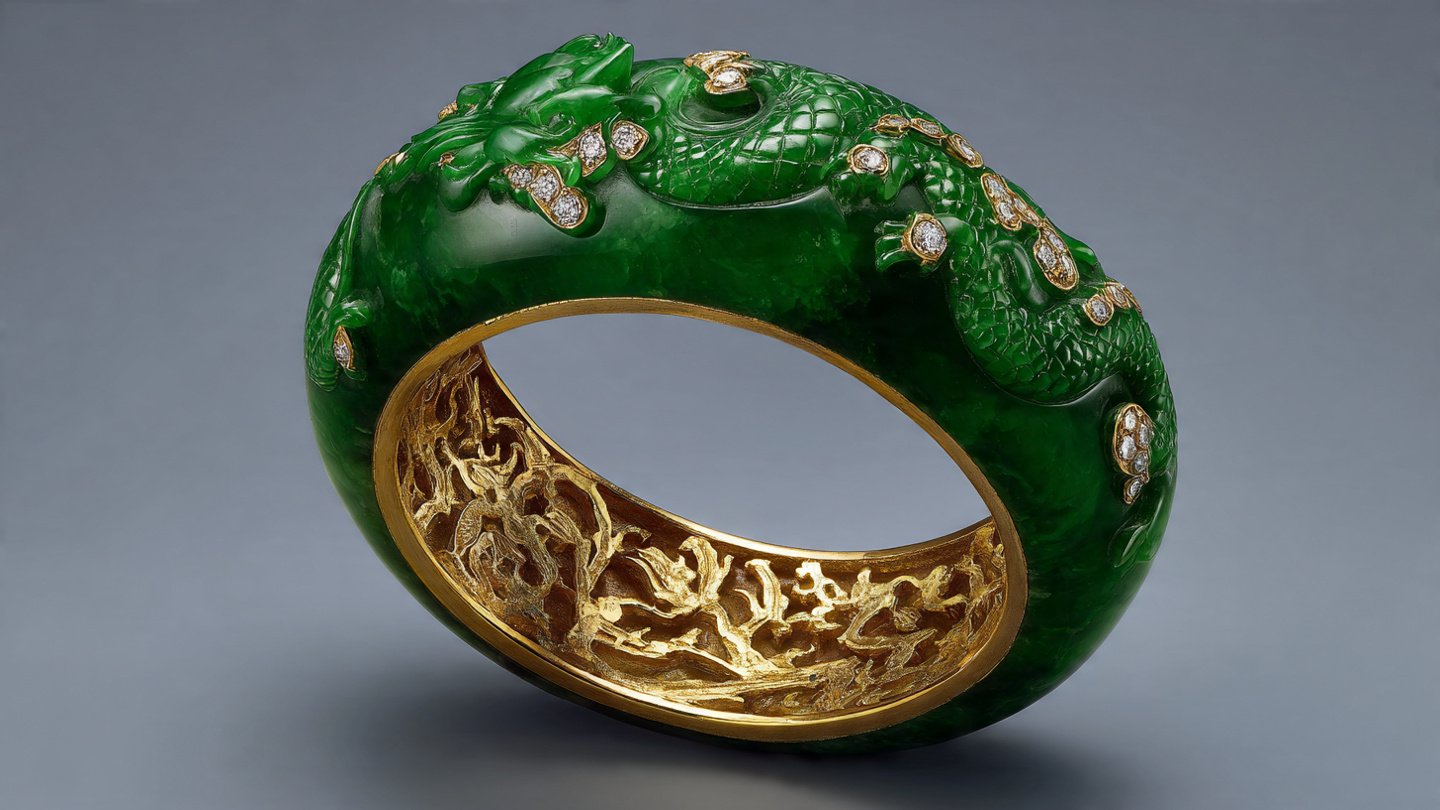
Imperial jade represents the absolute pinnacle of jadeite quality. According to the Gemological Institute of America, this designation applies only to jadeite displaying a vivid emerald green color combined with exceptional translucency.
The green must be pure and penetrating—a vibrant hue with no hint of gray that looks intense even from a distance. The color ranges from pure green to slightly bluish green or slightly yellowish green, but any significant secondary tints disqualify material from the imperial designation.
Translucency separates imperial jade from merely fine green jadeite. The stone must be semi-transparent to transparent, creating a glowing, water-like visual depth. When you hold imperial jade to light, it doesn’t just pass through—it seems to glow from within with an almost liquid quality.
Texture completes the trinity of imperial characteristics. The finest pieces show microscopic crystal structure so tightly packed that the surface feels silky smooth and accepts a mirror-like polish. Under magnification, you cannot see individual grains.
The term “imperial” itself carries historical weight. Chinese imperial courts once maintained standing orders for all available material meeting these strict criteria. Emperors and empresses reserved this stone exclusively for royalty, believing it embodied heaven’s perfection on Earth.
The Geological Miracle Behind Imperial Green
Understanding imperial jade’s value requires appreciating the extraordinary geological conditions necessary for its formation.
Extreme Formation Conditions
Jadeite forms only under very specific conditions—high pressure and relatively low temperature found in subduction zones where tectonic plates collide. According to gemological research, jadeite crystallizes at pressures of 7-12 kilobars and temperatures of 200-700°C.
These specific conditions occur rarely in Earth’s crust. Myanmar’s Hpakan region remains the world’s primary source because unique geological conditions existed there millions of years ago.
The vivid green color requires chromium incorporation into the jadeite structure during formation. Getting enough chromium while maintaining the tight crystal structure needed for translucency represents a geological jackpot that happens rarely.
Myanmar: The Premier Source
Myanmar (formerly Burma) produces virtually all imperial jade entering the market. The deposits in Kachin State’s remote mountains have supplied Chinese imperial courts for centuries.
According to historical sources, jadeite was introduced to China in the 13th century when a Yunnan trader passing through northern Myanmar picked up a boulder. When it cracked open, it revealed exquisite emerald green glowing within—the first documented discovery of what would become imperial jade.
Today, Myanmar’s political instability and increasing mining regulations have restricted supply dramatically. Environmental concerns and international sanctions further limit material reaching global markets.
Other jadeite sources exist—Guatemala, Japan, Russia, California—but none produce material matching Myanmar’s finest imperial quality. The specific geological conditions that created Myanmar’s deposits haven’t been replicated elsewhere to any commercially significant degree.
The Rarity Factor
Even within Myanmar’s deposits, imperial jade comprises a tiny fraction of total jadeite production. Miners might process tons of material before finding a single piece meeting imperial standards.
And that piece might contain only a small portion of true imperial quality. The finest color often occupies limited zones within larger boulders, with quality degrading toward edges.
Finding enough matching imperial material to create a necklace or bangle presents extraordinary challenges. All beads or sections must come from the same boulder to ensure consistent color, translucency, and texture—a rare occurrence indeed.
Historical Significance and Cultural Value
Imperial jade’s astronomical pricing cannot be understood through geology and rarity alone. Cultural significance spanning millennia adds intangible value that transcends material worth.
The Imperial Courts’ Obsession
For over 2,000 years, Chinese emperors coveted jade above all other materials. The philosopher Confucius described jade as embodying eleven virtues: benevolence, righteousness, wisdom, courage, propriety, loyalty, honesty, grace, intelligence, shame, and endurance.
When jadeite entered China from Burma during the late 18th century, the Qing Dynasty imperial court fell immediately in love. The vivid green surpassed anything nephrite could offer, and imperial green became reserved exclusively for the emperor, empresses, and highest nobility.
The Qianlong Emperor (1735-1796) was obsessed with jade, building the most extensive known collection during his reign. According to historical records, he composed 800 poems and songs about jade, spending hours contemplating his jade artifacts.
Imperial jadeite pieces were incorporated into ceremonial regalia, personal ornaments, and ritual objects. Owning such pieces signaled not just wealth but divine favor and legitimacy to rule.
Symbolism and Spiritual Significance
In Chinese culture, jade represents far more than a pretty stone. It symbolizes purity, longevity, prosperity, and the connection between heaven and Earth.
The Chinese character for jade, 玉 (yù), appears nearly identical to 王 (wáng), meaning king. This linguistic connection reflects jade’s association with royalty and power spanning millennia.
Imperial jade specifically was believed to possess mystical powers. Wearing it supposedly brought protection, health, and good fortune. The most translucent pieces were thought to capture heaven’s essence, embodying harmony and balance central to Chinese philosophy.
Jade burial suits made from thousands of jade pieces sewn with gold wire were reserved for emperors during the Han Dynasty. These elaborate garments were meant to preserve the body and the souls attached to it—testament to jade’s perceived spiritual power.
Modern Cultural Resonance
Chinese cultural appreciation for imperial jade hasn’t diminished—if anything, it’s intensified. As China’s economy has grown, newly wealthy collectors compete fiercely for top-quality material.
According to market data, the rising middle class in China drove a tenfold price increase from 2000 to 2010 for the finest jade. This demand shows no signs of slowing as imperial jade remains the ultimate status symbol.
Wealthy Chinese collectors view imperial jade as a stable, long-term asset independent of stock market fluctuations. Beyond investment, owning imperial jade connects them to their cultural heritage in ways Western collectors might struggle to fully appreciate.
Record-Breaking Auction Sales
Nothing demonstrates imperial jade’s extraordinary value quite like auction results. These prices validate imperial jade’s position among the world’s most expensive gemstones.
The Hutton-Mdivani Necklace: $27.4 Million
The most famous imperial jade auction occurred in April 2014 at Sotheby’s Hong Kong. The Hutton-Mdivani necklace sold for HK$214 million (approximately $27.4 million), shattering estimates and setting world records.
The necklace comprises 27 perfectly matched imperial jadeite beads with diameters ranging from 19.2mm to 15.4mm. According to Sotheby’s, the beads exhibit excellent translucency, extremely fine texture, and magnificent green color.
Barbara Hutton, the Woolworth heiress, received the necklace as a wedding gift from her father in 1933. Cartier created an innovative clasp featuring baguette-cut diamonds and calibré-cut rubies to complement the imperial beads.
The necklace’s provenance suggests the beads originated from the Qing Dynasty imperial court, likely dating to the 18th century. Finding 27 matching beads of such exceptional quality would be virtually impossible with modern material.
After 20 minutes of heated bidding among eight participants, the Cartier Collection won the necklace, bringing it home to join their prestigious permanent collection. The sale broke records for both jadeite jewelry and Cartier jewelry worldwide.
Other Notable Sales
Beyond the Hutton-Mdivani necklace, numerous imperial jade pieces have fetched millions at auction.
A jade necklace reputedly from the Qing imperial court sold at Sotheby’s New York in 2010, though even that extraordinary piece couldn’t match the Hutton-Mdivani beads in color, texture, translucency, and size.
According to auction house records, lavender jade necklaces—the second most valuable jade color—have sold for approximately $2.7 million. While impressive, this demonstrates the premium imperial green commands.
Imperial jade bangles regularly sell for hundreds of thousands to millions of dollars. One exceptional bangle fetched over $3.8 million, translating to approximately $69 million per kilogram—dramatically exceeding gold’s value.
Even smaller pieces command extraordinary prices. Imperial jade cabochons and rings sell for hundreds of thousands when they meet strict quality standards.
What Makes Imperial Jade So Expensive
Multiple factors combine to create imperial jade’s extraordinary pricing. Understanding these elements helps explain values that shock outsiders.
Extreme Rarity
Rarity drives value more than any other single factor. Imperial jade meeting all quality criteria—color, translucency, texture—occurs in perhaps one in ten thousand jadeite pieces, if that.
According to the GIA, top-quality jadeite is extraordinarily rare. Myanmar remains virtually the only source, and even there, imperial material comprises a tiny fraction of total production.
The odds of finding large pieces of consistent imperial quality decrease exponentially with size. A small cabochon might be rare; a bangle requiring 50-60 grams of flawless matching material approaches miraculous.
Finding enough matching imperial beads for a necklace borders on impossible with current material. The Hutton-Mdivani necklace’s 27 perfectly matched beads couldn’t be replicated today at any price because such material simply doesn’t enter the market.
Supply Constraints
Myanmar’s political instability has disrupted jadeite mining and export. International sanctions related to human rights concerns have further restricted material flow to global markets.
Environmental regulations now limit mining operations. The easy deposits have been exhausted; accessing remaining material requires increasingly complex and expensive operations.
These supply constraints directly impact pricing. When high-quality material becomes scarcer while demand grows, prices naturally climb. The finite supply means no new imperial jade can flood the market to satisfy demand.
Cultural Demand
Chinese and broader Asian cultural reverence for jade creates demand that Western markets can’t fully match. For Chinese collectors, owning imperial jade represents the pinnacle of refined taste and cultural sophistication.
This cultural demand operates independently of Western gemstone markets. While diamond prices fluctuate with marketing trends, jade pricing stays anchored in millennia of cultural significance.
Wealthy Chinese collectors compete fiercely at auctions, driving prices to levels that shock Western observers. For them, the cultural and historical connections justify premiums beyond pure material worth.
Investment Potential
Savvy investors view imperial jade as a stable, long-term asset. According to gemstone investment experts, imperial jade can reach up to $3 million per carat, making it one of the world’s most secure investment gemstones.
Unlike stocks or bonds subject to market volatility, imperial jade’s value rests on cultural significance and physical scarcity. These fundamentals don’t change with economic cycles.
Historical price appreciation validates this investment thesis. The Hutton-Mdivani necklace sold for $2 million in 1988, then $4.2 million in 1994, before reaching $27.4 million in 2014. This growth dramatically outpaced most traditional investments.
Size Premium
Larger pieces of imperial jade cost exponentially more per carat because finding large areas of consistent quality is extraordinarily difficult.
A 5-carat imperial cabochon might cost $50,000 ($10,000 per carat). A 50-carat piece of equivalent quality could easily cost $2.5 million ($50,000 per carat) or more because of its rarity.
For bangles specifically, size premiums multiply dramatically. According to the GIA, slight differences in size can make large differences in value with top-quality imperial jadeite.
How to Identify Genuine Imperial Jade
With prices reaching millions, authentication becomes critical. Understanding identification criteria protects buyers from costly mistakes.
Color Evaluation
Imperial jade must display vivid, pure green—the color should evoke the finest emeralds. Any hint of gray, brown, or yellow disqualifies material from imperial status.
Under natural daylight, imperial green looks intense even from across the room. The color doesn’t appear muddy or dull but rather alive and vibrant.
Kingfisher jade—the next quality level—shows slightly less vivid green. While still valuable, it doesn’t command imperial pricing. This subtle difference can mean hundreds of thousands of dollars in value.
Translucency Testing
Hold suspected imperial jade to bright light. It should glow from within with almost liquid quality. You should see light penetrating deeply, creating internal luminosity.
Opaque jade, regardless of color, cannot be imperial quality. Even good color without translucency reduces value by 80-90% or more compared to imperial material.
The finest imperial jade appears almost transparent in thin sections while maintaining color saturation—an extraordinarily rare combination that creates maximum value.
Texture Assessment
Run your finger across the surface. Imperial jade should feel silky smooth, almost like touching fine porcelain. Any graininess indicates coarser texture reducing value.
Under magnification, imperial jade shows tight crystal structure with no visible individual grains. The surface should show mirror-like polish without pitting or irregularities.
According to gemological standards, texture ranks as the most important quality factor for jadeite specifically. The tightest crystal structure creates what dealers call “old mine” appearance—a reference to legendary deposits producing the finest historical pieces.
Treatment Detection
Only natural, untreated Type A jade deserves imperial designation. Type B (bleached and polymer-filled) or Type C (dyed) jadeite cannot be imperial regardless of appearance.
Professional gemological testing provides definitive treatment detection. Infrared spectroscopy, UV fluorescence, and microscopic examination reveal polymers and dyes invisible to the naked eye.
Always insist on laboratory certification from recognized institutions like GIA or SSEF when purchasing expensive jade. Certificates should clearly state “natural jadeite” with no treatments detected.
Imperial Jade vs. Other Premium Gemstones
How does imperial jade compare to other world-class gems? The comparison surprises most people unfamiliar with the jade market.
Imperial Jade vs. Diamonds
Top-quality imperial jade can cost more per carat than comparable diamonds. A 5-carat D-color, flawless diamond might sell for $250,000 ($50,000 per carat). A 5-carat imperial jade cabochon could easily exceed that figure.
The key difference lies in rarity and cultural significance. Millions of carats of diamonds enter the market annually. Imperial jade? Perhaps a few hundred carats of true investment quality worldwide.
Unlike diamonds with standardized grading, each imperial jade piece is unique. This individuality creates pricing challenges but also ensures genuine rarity.
Imperial Jade vs. Colored Gemstones
Fine Burmese rubies command $100,000+ per carat for top-quality material. Kashmir sapphires reach similar levels. Imperial jade competes directly in this stratosphere, sometimes exceeding these legendary gems.
An exceptional 5-carat Burmese ruby might sell for $500,000. A 5-carat piece of museum-quality imperial jade could match or exceed that price, particularly in Asian markets where jade holds deeper cultural significance.
According to gemstone valuation experts, imperial jadeite can reach up to $3 million per carat, making it the second-most valuable gemstone in the world, surpassed only by blue diamond valued at $3.93 million per carat.
The Investment Comparison
From an investment perspective, imperial jade offers advantages other gems cannot match. Cultural demand from China creates buying support independent of Western markets.
Diamonds face potential value challenges from laboratory-grown alternatives and changing market preferences. Imperial jade faces no such threats—it’s impossible to synthesize jadeite with imperial characteristics.
Supply constraints benefit long-term value. Myanmar’s limited production cannot increase to flood the market. This built-in scarcity protection supports price stability and appreciation.
Caring for Imperial Jade
Proper care preserves imperial jade’s beauty and value across generations. These maintenance guidelines protect your investment.
Daily Wear Precautions
Despite jadeite’s excellent hardness (6.5-7 on Mohs scale), harder gemstones like diamonds and sapphires can scratch it. Store imperial jade separately from other jewelry, ideally in soft cloth pouches.
Remove imperial jade rings before heavy work or exercise. While jadeite resists breaking better than most gemstones, sharp impacts against hard surfaces can cause chips or fractures even in premium material.
Keep imperial jade away from harsh chemicals. Household cleaners, chlorine bleach, and strong acids can damage the stone’s surface polish. Remove jade jewelry before swimming, cleaning, or applying lotions and perfumes.
Cleaning Methods
Clean imperial jade gently using warm water and mild soap. Use a soft cloth—nothing abrasive that might scratch the polished surface.
Rinse thoroughly and pat dry with a lint-free cloth. Never use ultrasonic cleaners or steamers on jade. These cleaning methods can cause internal stress or surface damage.
Some collectors believe jade absorbs beneficial oils from skin contact over time, enhancing its appearance. However, avoid exposing imperial jade to excessive oils from lotions or harsh substances.
Long-Term Storage
Keep imperial jade in stable environments without extreme temperature changes. Rapid heating or cooling can cause internal stress fractures even in high-quality material.
Store jade bangles lying flat rather than hanging to prevent stress on any potential weak points. For imperial jade specifically, the investment value justifies extra storage precautions.
Consider professional photography and detailed documentation for insurance purposes. Clear photos establish condition and assist with claims if loss or damage occurs.
Professional Maintenance
Have valuable imperial jade pieces inspected annually by jewelers familiar with jade. They can spot developing problems and ensure settings remain secure for mounted pieces.
If imperial jade becomes scratched or loses luster, professional repolishing can restore appearance. However, only allow experienced jade craftsmen to work on such valuable material—improper polishing removes material and can alter proportions.
For imperial jade specifically, any maintenance work should be documented to preserve provenance and authenticity records for future sale or insurance purposes.
Market Outlook and Future Value
Current market dynamics suggest imperial jade’s value will continue appreciating, though factors beyond simple supply and demand influence pricing.
Growing Chinese Demand
China’s economic growth continues creating newly wealthy collectors seeking cultural connections and status symbols. Imperial jade serves both purposes perfectly.
According to market analysis, Chinese demand drove price increases of 1,000% for top jade between 2000-2010. While such dramatic growth likely won’t repeat, steady appreciation appears probable as long as Chinese economic growth continues.
Younger Chinese collectors increasingly appreciate jade, contrary to concerns that traditional gemstones might lose relevance. This generational continuity supports long-term demand.
Supply Depletion
Myanmar’s easily accessible deposits have been largely exhausted. Remaining material requires increasingly expensive extraction methods, supporting higher prices for finished gems.
Environmental regulations and international sanctions restrict new material entering markets. This supply constraint directly supports value appreciation for existing imperial jade pieces.
Unlike diamonds or colored gemstones with multiple global sources, imperial jade depends almost entirely on Myanmar. This concentration creates pricing power unavailable to gems with diversified supply chains.
Investment Migration
Some investors are shifting from traditional assets toward tangible luxury goods including imperial jade. Unlike paper assets, imperial jade can’t be devalued through government policy or financial manipulation.
The gemstone’s cultural significance provides value floor that pure commodities lack. Even during economic downturns, imperial jade maintains desirability among collectors who view it as connecting to heritage rather than merely holding value.
Authentication Technology
Improved testing methods help legitimate buyers verify authenticity while exposing treated material. This transparency benefits the imperial jade market by building trust and justifying premium pricing for genuine material.
As treatment detection improves, the price gap between natural Type A imperial jade and treated alternatives will likely widen. Collectors willing to pay premium prices increasingly insist on certainty that they’re getting genuine, untreated material.
Investment Considerations
If you’re considering imperial jade as an investment, several factors deserve careful consideration beyond simple price appreciation potential.
Entry Costs
Investment-quality imperial jade requires substantial capital. Pieces worth owning as investments typically cost six or seven figures minimum.
According to current pricing, expect to invest $100,000+ for even modest imperial jade pieces. Exceptional material requires budgets measured in millions, not thousands.
This high entry barrier protects against market saturation but limits accessibility to wealthy collectors and institutional investors.
Liquidity Challenges
Unlike stocks or bonds sold instantly, imperial jade requires finding the right buyer willing to pay fair value. This process might take months or longer.
Major auction houses provide the best liquidity for investment-grade pieces, but they charge substantial commissions (typically 15-25% of sale price) and occur only periodically throughout the year.
Private sales might avoid commission but require finding educated buyers—challenging for a market where expertise is rare outside Asian collector circles.
Authentication Requirements
Never purchase investment-grade imperial jade without certification from recognized gemological laboratories. The GIA, SSEF, and Hong Kong Jade & Stone Laboratory provide trusted authentication.
Certification costs represent tiny fractions of imperial jade’s value but provide essential documentation for insurance and eventual resale. Always factor these costs into investment calculations.
Be prepared for authentication to take weeks or months. Rushing this process risks purchasing misrepresented material that won’t hold value.
Market Volatility
While imperial jade shows long-term appreciation, short-term price fluctuations occur based on auction results, economic conditions in China, and supply availability.
Unlike gold with daily spot prices, jade pricing lacks transparency. Two seemingly similar pieces might sell for vastly different prices based on subtle quality differences or buyer enthusiasm on auction day.
Accept that precise valuation is challenging. Focus on long-term holding periods (10+ years) where quality material historically appreciates regardless of short-term volatility.
Final Thoughts on Imperial Jade’s Value
Imperial jade’s extraordinary pricing reflects a perfect storm of geological rarity, cultural significance, supply constraints, and growing demand from the world’s most populous nation.
This isn’t just expensive jewelry—it’s a connection to millennia of human cultural heritage, a tangible piece of Earth’s geological history, and potentially a sound long-term investment all wrapped into one stunning green gemstone.
The Chinese imperial courts understood something profound when they reserved this stone for emperors alone. Its beauty transcends mere appearance, embodying cultural values and spiritual significance that resonate as powerfully today as they did centuries ago.
Whether you’re drawn to imperial jade as an investment, a collector’s item, or simply for its breathtaking beauty, understanding its value helps you appreciate why this gemstone commands prices that shock the uninitiated.
The knowledge you’ve gained here—understanding what makes material truly “imperial,” recognizing quality characteristics, appreciating historical significance, and knowing current market realities—transforms you from a casual observer into someone who truly understands this remarkable gemstone.
Begin Your Imperial Jade Journey
Ready to explore imperial jade for yourself? Start by visiting reputable dealers and major auction house previews where you can examine authenticated pieces in person. Nothing replaces the experience of seeing true imperial jade glow when held to light.
Invest time studying before investing money. Read gemological resources, attend jade seminars, and connect with experienced collectors willing to share knowledge. The imperial jade community values education and typically welcomes sincere learners.
Share this guide with anyone fascinated by rare gemstones or considering jade purchases. Understanding imperial jade’s extraordinary value helps everyone appreciate why this green stone commands prices rivaling the world’s finest gems.
Comment below with your thoughts or questions. Have you seen imperial jade in person? What surprised you most about its value? Your experiences and insights contribute to the collective knowledge helping everyone better understand this remarkable gemstone.
Remember: imperial jade represents nature’s perfection combined with human cultural appreciation spanning millennia. Its extraordinary value reflects both rarity and significance in ways that purely rational analysis cannot fully capture.
The finest imperial jade is more than expensive—it’s priceless. And understanding why makes all the difference.


