

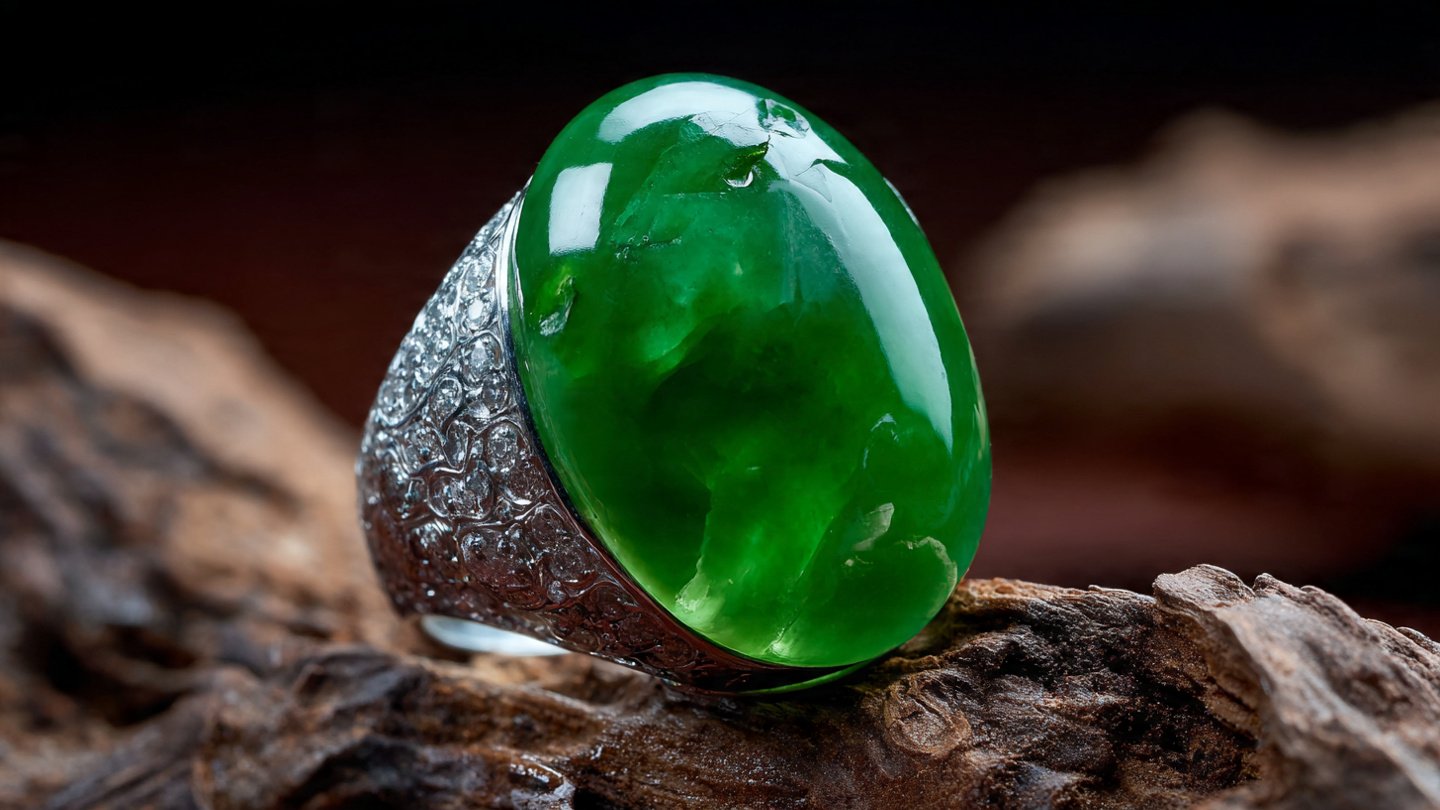
If you’ve ever wondered whether jade qualifies as a “precious stone,” you’re not alone. This question touches on gemstone classification, market value, cultural significance, and centuries of tradition. The answer might surprise you—it’s both simpler and more complex than you’d expect. Let’s unravel the fascinating story of jade’s status in the gemstone hierarchy and discover why this ancient stone defies easy categorization.
The Traditional Gemstone Classification System
To understand jade’s status, we first need to look at how gemstones have traditionally been classified.
The “Big Four” Precious Stones
Historically, the gemstone world recognized only four stones as “precious”:
- Diamond: The hardest natural material, prized for brilliance
- Ruby: Red variety of corundum, valued for its vivid color
- Sapphire: Blue (and other colored) corundum, treasured for beauty
- Emerald: Green beryl, beloved for its lush color
Everything else—including jade, opal, topaz, turquoise, and hundreds of other beautiful stones—was classified as “semi-precious.”
The Problem with This Classification
This traditional system has several significant problems:
It’s arbitrary: The distinction was made centuries ago based on European preferences and doesn’t reflect actual rarity, durability, or value.
It’s misleading: Many “semi-precious” stones are rarer and more valuable than some “precious” stones. For example, high-quality Imperial jade can be worth far more than most diamonds.
It’s culturally biased: The system reflects Western gemstone preferences while ignoring stones that are supremely important in other cultures—particularly jade in Asian cultures.
It’s commercially outdated: The modern gem market doesn’t operate according to this binary system. Value is determined by quality, rarity, demand, and individual stone characteristics.
So, Is Jade Precious or Semi-Precious?
According to the traditional Western classification system, jade is technically classified as “semi-precious.” However, this label is misleading and doesn’t reflect jade’s true status.
Here’s why the “semi-precious” label fails jade:
Jade Can Be More Valuable Than “Precious” Stones
The finest jade—particularly Imperial jadeite—regularly sells for prices that exceed most diamonds, rubies, sapphires, and emeralds:
- Imperial jade can fetch over $3 million per carat at auction
- A jade necklace sold for $27.4 million in 2014
- Exceptional jade bangles have sold for over $12 million
These prices rival or exceed the world’s most expensive “precious” gems. Calling jade “semi-precious” when it can be worth millions makes little sense.
Jade Is Extremely Rare in Fine Quality
While nephrite jade is relatively common, fine-quality jadeite—especially Imperial jade—is extraordinarily rare. The geological conditions required to produce top-grade jadeite are so specific that only one region in the world (Myanmar) consistently produces museum-quality material.
Consider this: you’re more likely to find a decent diamond than Imperial jade. Rarity alone should elevate jade’s status.
Cultural Significance Matters
In Chinese, Japanese, Korean, and other Asian cultures, jade has been the most precious stone for thousands of years—far more important than diamonds or other Western favorites. Chinese civilization has revered jade for over 5,000 years, considering it more valuable than gold.
The ancient Chinese character for jade is used in words meaning “valuable,” “beautiful,” and “precious.” In Chinese culture, jade represents virtue, beauty, immortality, and connection between heaven and earth. This cultural significance spans millennia and continues today.
Can something so profoundly valued by billions of people over thousands of years really be “semi-precious”? The Western classification system fails to account for this cultural reality.
The Modern Perspective: Moving Beyond Old Labels
Today’s gemological community and sophisticated jewelry markets increasingly reject the precious/semi-precious distinction as outdated and misleading.
What Modern Experts Say
Gemological Institute of America (GIA): The world’s leading gemological authority avoids using “precious” and “semi-precious” classifications, instead focusing on individual gem characteristics, quality factors, and market value.
Professional Appraisers: Modern appraisers evaluate stones based on quality, rarity, market demand, and condition—not arbitrary historical classifications.
High-End Jewelers: Prestigious jewelry houses treat jade according to its quality and value, not according to outdated labels. A Cartier jade piece commands prices reflecting its true worth, not its “semi-precious” label.
The New Way of Thinking
Rather than dividing stones into two arbitrary categories, modern gemology recognizes that:
- Quality matters more than type: A superb jade is worth more than a poor diamond
- Rarity is relative: Some “semi-precious” stones are rarer than “precious” ones
- Cultural context is important: Value isn’t universal or static
- Market demand drives prices: What people will pay determines value, not historical labels
Jade’s Unique Properties: Why It Deserves Respect
Beyond classification debates, jade possesses remarkable qualities that distinguish it among gemstones.
Exceptional Toughness
Jade is one of the toughest natural materials on Earth. While not the hardest (that’s diamond), jade’s interlocking crystalline structure makes it extremely resistant to breaking. This toughness—greater than steel—has made jade ideal for everything from ancient tools to modern carvings.
This durability means jade jewelry can be worn daily for generations without damage. Try that with some “precious” stones like emerald, which is far more fragile.
Unique Aesthetic Qualities
Jade possesses qualities found in few other stones:
Translucency: The way light penetrates fine jade creates a luminous, almost glowing appearance
Texture: Jade’s smooth, fine-grained texture feels luxurious and distinctive
Color depth: Jade colors seem to have depth and complexity unlike other gemstones
Versatility: Jade works beautifully in both jewelry and carvings, from delicate earrings to massive sculptures
Historical and Archaeological Importance
Jade artifacts date back over 7,000 years, making jade one of humanity’s oldest treasured materials. Archaeological finds show jade was valued by:
- Ancient Chinese civilizations (from Neolithic times)
- Maya and Olmec cultures in Central America
- Maori people of New Zealand
- Various Asian, Pacific, and American cultures
This historical pedigree spans longer than recorded use of diamonds, which only became popular as jewelry in the 15th century.
The Economic Reality: Jade as a Precious Commodity
From a purely economic perspective, jade functions as a precious commodity in the global marketplace.
Investment-Grade Status
High-quality jade is:
- Actively traded at international auctions
- Considered an investment vehicle by serious collectors
- Subject to sophisticated grading and authentication
- Priced competitively with or above “precious” gems
Major auction houses like Sotheby’s and Christie’s hold dedicated jade sales, treating it as a premier gemstone.
Market Dynamics
The jade market operates at the highest levels of the gem trade:
Hong Kong Jade Auctions: Annual jade sales move millions of dollars in merchandise
Jewelry Houses: Prestigious brands create high-jewelry pieces with jade comparable to their diamond and emerald collections
Private Collectors: Wealthy collectors pay premium prices for exceptional jade
Chinese Market: Driving unprecedented demand, with jade often preferred over Western “precious” stones
These market realities demonstrate that jade functions economically as a precious stone, regardless of historical Western classifications.
Different Types of Jade: A Spectrum of Value
It’s important to note that not all jade is equally valuable, which complicates the precious/semi-precious question.
Premium Jadeite: Precious by Any Standard
Imperial jade and other fine jadeite clearly qualify as precious by any reasonable measure:
- Extreme rarity
- Exceptional prices
- Strong market demand
- Cultural and aesthetic significance
- Investment potential
If we’re honest, top-quality jadeite deserves inclusion in any list of precious gems.
Commercial Jade: More Complex
Lower-quality nephrite and commercial-grade jadeite present a different picture:
- More abundant
- Affordable pricing
- Wide availability
- Less investment potential
This material probably fits the “semi-precious” category better, though it remains beautiful and valuable in its own right.
The Jade Paradox
This creates an interesting paradox: jade as a material spans from inexpensive to priceless. The same word “jade” describes both $10 trinkets and million-dollar masterpieces. Few other stones cover such an enormous value range.
Comparing Jade to the “Big Four”
Let’s directly compare jade to the traditional precious stones:
Jade vs. Diamond
- Rarity: Imperial jade is rarer than most diamonds
- Value: Top jade exceeds most diamond prices per carat
- Durability: Jade is tougher (though diamond is harder)
- Cultural significance: Jade equals or exceeds diamonds in many cultures
Jade vs. Ruby
- Rarity: Comparable—both are rare in fine quality
- Value: Top-tier specimens are similarly priced
- Historical importance: Jade has a longer history of use
- Geographic significance: Ruby dominates Western markets; jade dominates Eastern markets
Jade vs. Sapphire
- Color range: Both offer multiple colors
- Market value: High-end pieces are comparably priced
- Durability: Sapphire is harder; jade is tougher
- Cultural reach: Both are globally significant
Jade vs. Emerald
- Rarity: Imperial jade is rarer than most emeralds
- Fragility: Jade is far more durable than emerald
- Value: Top jade often exceeds emerald prices
- Treatment: Both often undergo enhancement, though natural specimens command premiums
These comparisons show jade holds its own against any “precious” stone.
The Verdict: Is Jade Precious?
After examining all angles, here’s the honest answer:
According to outdated Western classification: Jade is technically “semi-precious”
According to Asian cultural tradition: Jade is the most precious stone
According to market value: High-quality jade is absolutely precious
According to modern gemology: The precious/semi-precious distinction is largely meaningless
According to common sense: Anything that can be worth millions of dollars is precious
The truth is that fine jade—particularly Imperial jadeite—is precious by any meaningful definition. It’s rare, valuable, culturally significant, beautiful, and historically important. The “semi-precious” label is a historical artifact that doesn’t reflect reality.
What This Means for You
Understanding jade’s true status matters whether you’re:
Buying jade: Don’t let the “semi-precious” label fool you into thinking jade is automatically affordable. Fine jade requires substantial investment.
Selling jade: Don’t undervalue quality jade based on outdated classifications. Seek proper appraisal from experts who understand jade’s true worth.
Collecting jade: Recognize that you’re pursuing a gemstone equal in status to any “precious” stone. Build your collection with the same seriousness.
Appreciating jade: Understand that holding fine jade means holding something genuinely precious—in every sense of the word.
Conclusion
Is jade a precious stone? By any meaningful modern standard, the answer is yes—at least for fine-quality material. The traditional Western classification system that relegates jade to “semi-precious” status is outdated, culturally biased, and economically inaccurate.
Jade’s true status transcends simplistic labels. It’s a gemstone that has been precious to humanity longer than almost any other. It commands prices rivaling or exceeding traditional “precious” stones. It possesses unique qualities found in few other materials. And it continues to captivate collectors, jewelers, and admirers worldwide.
Perhaps the real lesson is this: the word “precious” shouldn’t be reserved for a arbitrary shortlist of four stones chosen by European tradition. Preciousness lies in rarity, beauty, cultural significance, and the capacity to move human hearts—qualities jade possesses in abundance.
So the next time someone tells you jade is “just semi-precious,” you can smile and share the truth: jade is precious by any definition that matters. It’s been precious for 5,000 years, it’s precious in today’s market, and it will remain precious for generations to come. The label we attach to it changes nothing about its inherent value and timeless appeal.


