

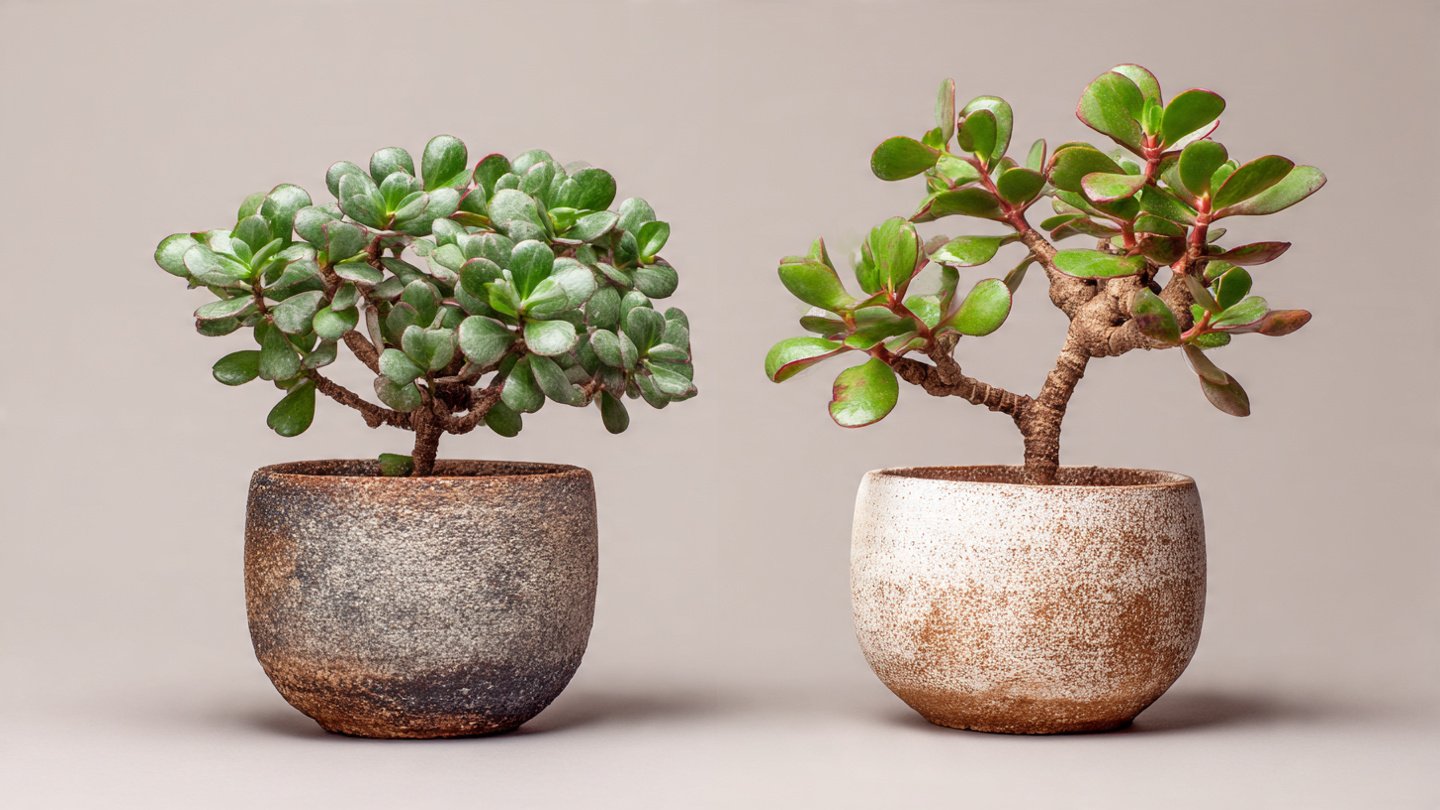
Have you ever confused a jade plant with jade stone, or wondered why they share the same name? You’re not alone. These two completely different entities—one living, one mineral—share more than just a name. They share cultural significance, visual similarities, and a fascinating history that connects them across continents and centuries.
The confusion makes sense when you consider that the jade plant earned its name specifically because its thick, glossy leaves resemble polished jade stone. But beyond this surface similarity, these two “jades” inhabit completely different worlds with distinct characteristics, uses, and care requirements.
In this comprehensive guide, you’ll discover exactly what separates jade plants from jade stones, understand their unique properties, learn their respective cultural meanings, and finally settle any confusion about these two beloved forms of “jade.”
What Exactly Is a Jade Plant
Let’s start with the living member of this duo. The jade plant is a popular succulent that has graced windowsills and gardens worldwide for generations.
Botanical Background
The jade plant’s scientific name is Crassula ovata. It belongs to the Crassulaceae family, which includes over 1,400 species of succulent plants. According to the Missouri Botanical Garden, this species originates from South Africa and Mozambique, where it grows naturally in rocky, arid regions.
Jade plants are evergreen succulents characterized by thick, woody stems, fleshy, oval-shaped leaves that store water, and small white or pink star-shaped flowers that appear in winter. Mature plants can grow up to three feet tall indoors and even larger outdoors in suitable climates.
The leaves are what earned this plant its “jade” moniker. They’re glossy, smooth, and typically deep green—remarkably similar in appearance to polished jade stone. Some varieties develop reddish edges when exposed to bright sunlight, adding another dimension to their visual appeal.
Growing and Care Requirements
Jade plants are famously easy to care for, making them perfect for beginners and busy plant parents. They thrive with minimal attention as long as you understand their basic needs.
These succulents prefer bright, indirect light but tolerate some direct sun. They need well-draining soil specifically formulated for cacti and succulents. Watering should be infrequent—only when soil is completely dry, typically every two to three weeks.
According to the American Horticultural Society, jade plants are remarkably drought-tolerant because their leaves store water. Overwatering is actually the most common cause of jade plant death, leading to root rot and fungal issues.
Temperature-wise, jade plants prefer 65-75°F during the day and slightly cooler at night. They can tolerate temperatures down to about 50°F but suffer damage below that threshold.
Cultural Significance of Jade Plants
Beyond their botanical properties, jade plants carry symbolic meaning in various cultures. In feng shui practice, jade plants represent prosperity, good luck, and financial success. Many business owners place jade plants near entrances or in the wealth corner of their establishments.
The plant’s association with wealth likely stems from its leaf shape, which some say resembles coins, and its hardy nature, symbolizing resilience and growth. Whether these beliefs have merit, they’ve certainly contributed to the jade plant’s worldwide popularity.
What Exactly Is Jade Stone
Now let’s examine the mineral counterpart. Jade stone represents one of the most culturally significant gemstones in human history.
Geological Composition
Here’s something many people don’t know: “jade stone” actually refers to two different minerals—jadeite and nephrite. Both are called jade, but they have distinct chemical compositions and properties.
According to the Gemological Institute of America, jadeite is a pyroxene mineral composed of sodium and aluminum. It’s rarer and typically more valuable than nephrite. Nephrite, on the other hand, is a calcium magnesium silicate that belongs to the amphibole mineral group.
Both types form through metamorphic processes deep within the Earth over millions of years. Jadeite forms under high-pressure, low-temperature conditions, while nephrite develops through contact metamorphism when serpentinite rocks interact with other minerals.
Physical Properties
Jade stone possesses remarkable physical characteristics that explain its historical use in tools and jewelry. Both jadeite and nephrite rank between 6 and 7 on the Mohs hardness scale, making them quite durable but not the hardest gemstones.
What makes jade truly special is its toughness. The interlocking fibrous crystal structure creates exceptional resistance to breaking—tougher than steel in some measures. This toughness allowed ancient cultures to craft jade into tools, weapons, and intricate carvings.
Jade stone comes in various colors including green (most famous), white, lavender, yellow, orange, red, and even black. The vivid green we associate with jade comes from chromium impurities in jadeite or iron in nephrite.
Cultural and Historical Importance
Jade stone holds unparalleled cultural significance, especially in Chinese, Maori, and Mesoamerican cultures. The Chinese have revered jade for over 7,000 years, considering it more valuable than gold.
According to the National Palace Museum in Taiwan, ancient Chinese believed jade possessed protective properties and could preserve the body after death. Jade burial suits made from thousands of jade pieces sewn with gold wire were created for Chinese royalty.
The Maori people of New Zealand treasure their jade (called pounamu) as sacred taonga that carry ancestral spirits. Mesoamerican cultures like the Maya and Aztec also prized jade, using it for royal adornments and religious ceremonies.
The Key Differences Between Jade Plant and Jade Stone
Now that we understand each individually, let’s examine their fundamental differences across multiple dimensions.
Living vs Non-Living
This is the most obvious difference. Jade plants are living organisms that grow, reproduce, and respond to their environment. They require water, light, and nutrients to survive. They undergo photosynthesis, produce flowers, and can propagate from leaf cuttings.
Jade stone is an inorganic mineral formed through geological processes. It doesn’t grow in the biological sense, doesn’t need care, and exists in its current form until physically altered by cutting, polishing, or breaking.
This fundamental distinction affects everything about how we interact with each type of jade.
Origin and Formation
Jade plants originated in South Africa and have been cultivated worldwide for ornamental purposes since the 1700s. Humans can propagate them easily from cuttings, growing new plants in weeks or months.
Jade stone forms over millions of years through intense geological processes involving high pressure and temperature. It’s mined from specific locations worldwide, including Myanmar, Guatemala, Russia, and New Zealand. Once extracted, no more forms in that exact location—it’s a non-renewable resource.
Physical Composition and Structure
Jade plants consist of plant cells containing water, chlorophyll, cellulose, and organic compounds. Their structure includes roots, stems, and leaves designed for photosynthesis and water storage. They’re soft, flexible, and can be damaged by rough handling.
Jade stone is composed of tightly interlocked mineral crystals forming an incredibly tough material. It’s heavy, dense, and cool to the touch. The crystalline structure gives it its characteristic luster and durability.
You can cut a jade plant leaf with scissors. Cutting jade stone requires diamond-tipped tools.
Uses and Applications
We primarily use jade plants for ornamental purposes, indoor decoration, feng shui applications, and as easy-care houseplants for beginners. Some cultures also use jade plant leaves in traditional medicine, though scientific evidence for medicinal benefits remains limited.
Jade stone serves completely different purposes including fine jewelry and adornments, carved sculptures and art pieces, traditional tools and weapons (historically), spiritual and religious objects, and investment-grade collectibles.
According to Sotheby’s auction records, exceptional jade stone pieces can sell for millions of dollars. Jade plants, while beloved, typically cost between five and fifty dollars depending on size.
Care and Maintenance Requirements
Jade plants need regular care including appropriate watering schedules, adequate lighting, occasional fertilizing, and pruning. They’re susceptible to pests like mealybugs and diseases like root rot. They can die from neglect or improper care.
Jade stone requires minimal maintenance. Clean it occasionally with mild soap and water, avoid harsh chemicals and extreme temperature changes, and store it away from harder gemstones that might scratch it. Properly cared for, jade stone lasts essentially forever.
Cultural Symbolism and Meaning
Both carry symbolic significance, but with different emphases. Jade plants symbolize growth, prosperity, new beginnings, and financial success through active nurturing. They represent potential that develops through care.
Jade stone symbolizes eternity, purity, protection, and ancestral connection through timeless endurance. It represents permanence and qualities that transcend individual lifetimes.
The jade plant’s symbolism is aspirational and forward-looking. The jade stone’s symbolism is protective and backward-looking toward tradition and ancestry.
Visual Similarities That Cause Confusion
Despite their fundamental differences, jade plants and jade stones share visual characteristics that explain the naming connection.
Color and Appearance
Both display that characteristic jade green color—deep, rich, and lustrous. Jade plant leaves have a glossy surface that catches light similarly to polished jade stone. The resemblance is particularly striking with high-quality jade plants that have thick, healthy leaves.
Some jade stone pieces, especially nephrite, have a slightly translucent quality that jade plant leaves can mimic when backlit. The color range also overlaps—both can show variations from deep green to lighter, almost whitish-green tones.
Texture and Feel
Polished jade stone has a smooth, cool-to-touch surface. Fresh jade plant leaves also feel smooth and cool, especially when well-hydrated. This tactile similarity reinforces the visual connection.
However, extended handling reveals differences. Jade stone maintains its coolness and never feels warm, while plant leaves gradually warm to body temperature. The stone is also significantly harder and heavier.
Why the Name Connection Makes Sense
Early botanists who classified and named the jade plant clearly saw the resemblance to jade stone. The name serves as instant visual shorthand—if you know what jade stone looks like, you immediately understand what the jade plant should resemble.
This naming convention appears across botany. Think of other plants named for minerals or materials they resemble: silver dollar plant, money tree, rubber plant. The jade plant follows this tradition perfectly.
Common Misconceptions and Myths
Several persistent myths and misconceptions surround both jade plants and jade stones. Let’s clear these up.
Myth: Jade Plants Are Made From Jade Stone
This sounds ridiculous when stated plainly, but some people genuinely believe jade plants contain actual jade mineral in their leaves. This misconception likely stems from the name and visual similarity.
Reality check: jade plants are biological organisms made from plant cells. They contain no jade stone mineral. The name is purely descriptive, referring to appearance only.
Myth: All Green Stones Are Jade
Many people call any green stone “jade,” but numerous other green minerals exist including serpentine, aventurine, chrysoprase, and prehnite. True jade is specifically jadeite or nephrite.
According to the International Gem Society, more than half of stones sold as jade in tourist markets are actually other green minerals. This widespread mislabeling creates massive confusion in the gemstone market.
Myth: Jade Plants Need Minimal Light
While jade plants tolerate lower light better than many succulents, they actually thrive in bright light. Insufficient light causes leggy growth, leaf drop, and prevents flowering.
The Royal Horticultural Society recommends placing jade plants in south or west-facing windows for optimal growth. They can survive in lower light but won’t reach their full potential.
Myth: Jade Stone Brings Guaranteed Luck
While jade stone holds cultural significance and symbolic meaning across many traditions, there’s no scientific evidence that owning jade guarantees good fortune or prosperity.
The value of these cultural beliefs lies in their psychological and social significance—connecting people to heritage, providing comfort, and marking important occasions. Whether jade brings literal luck remains unprovable.
How to Identify Each Correctly
When you encounter something called “jade,” here’s how to determine whether it’s plant or stone.
Quick Identification Methods
Ask yourself these simple questions. Is it growing in soil or a pot? It’s a jade plant. Is it cold and hard like rock? It’s jade stone. Does it have roots, stems, or leaves? It’s a jade plant. Can you scratch it with your fingernail? If yes, it might be a jade plant leaf; if no, it’s probably jade stone.
For jade stone versus other green stones, professional testing is really the only reliable method. Visual inspection helps, but many green minerals look similar to untrained eyes.
Handling Differences
When you pick up a jade plant, feel the weight of the pot, soil, and living tissue. The plant may shift slightly, leaves may move with gentle pressure, and you’ll sense the biological nature of what you’re holding.
When you pick up jade stone jewelry or a carving, you immediately sense the density, coolness, and absolute rigidity of stone. There’s no flexibility, no give, no sense of life—just solid, permanent mineral.
Price and Value Considerations
The economics of jade plants versus jade stones couldn’t be more different.
Jade Plant Pricing
Small jade plants typically cost five to fifteen dollars at garden centers. Medium-sized plants range from twenty to forty dollars. Large, mature specimens might reach fifty to one hundred dollars, though rarely more.
Jade plants are renewable resources—you can propagate them infinitely from cuttings. This accessibility keeps prices low and makes jade plants available to everyone regardless of budget.
Jade Stone Pricing
Jade stone pricing varies enormously based on type (jadeite vs nephrite), quality, color, transparency, size, and craftsmanship. Low-grade nephrite might sell for a few dollars per gram. Top-quality imperial jade can reach thousands of dollars per carat.
According to Christie’s auction house, a jadeite necklace sold for over 27 million dollars in 2014. The jade stone market includes both affordable pieces and investment-grade treasures that appreciate over time.
This massive price range means jade stone requires much more careful purchasing decisions and authentication compared to jade plants.
Environmental and Sustainability Aspects
Both types of jade have environmental implications worth considering.
Jade Plant Sustainability
Jade plants are highly sustainable. They propagate easily from cuttings, require minimal water compared to most plants, need no pesticides when properly cared for, and can live for decades with basic care.
They’re also excellent air-purifying plants. According to NASA’s Clean Air Study, succulents including jade plants help remove toxins from indoor air. They release oxygen at night, making them good bedroom plants.
Growing jade plants has minimal environmental impact and provides psychological benefits through human-plant interaction.
Jade Stone Mining Impact
Jade mining presents more environmental concerns. It involves landscape disruption, potential water pollution, habitat destruction in mining areas, and significant energy use in cutting and polishing.
Myanmar, the world’s primary source of jadeite, has faced particular criticism for environmental degradation and worker safety issues in jade mining regions. According to Global Witness, the jade trade in Myanmar has also funded conflict and corruption.
Ethical consumers should research jade stone sources and consider purchasing antique or secondhand jade to avoid supporting problematic mining operations.
Which “Jade” Is Right for You
Choosing between a jade plant and jade stone depends entirely on what you’re seeking.
Choose a Jade Plant If You Want
A living companion that responds to your care, low-maintenance greenery for your home, feng shui elements you can nurture and grow, an affordable entry into jade culture, something you can propagate and share with others, or connection to nature through daily interaction.
Jade plants suit renters, beginners, budget-conscious plant lovers, and anyone who enjoys the process of caring for living things.
Choose Jade Stone If You Want
A permanent heirloom to pass through generations, traditional jewelry with cultural significance, investment-grade collectibles that appreciate, spiritual or religious objects for practice, art pieces and sculptures, or connection to jade’s ancient cultural heritage.
Jade stone suits collectors, jewelry enthusiasts, those with cultural connections to jade traditions, and people seeking permanent rather than living beauty.
Why Not Both
There’s absolutely no reason you can’t enjoy both forms of jade. Many jade stone collectors also grow jade plants, finding that the combination provides both living energy and timeless permanence.
A jade plant on your desk and a jade pendant around your neck offer complementary forms of beauty and meaning. The living plant reminds you of growth and potential. The stone reminds you of endurance and tradition.
Caring for Your Jade Plant or Jade Stone
Proper care ensures both types of jade bring you joy for years to come.
Essential Jade Plant Care
Water deeply but infrequently—only when soil is bone dry. Provide bright, indirect light with some direct morning sun if possible. Use well-draining cactus or succulent soil mix. Fertilize monthly during spring and summer with diluted succulent fertilizer. Prune to maintain shape and encourage bushiness.
Watch for signs of trouble including yellowing leaves from overwatering, leggy growth from insufficient light, brown spots from fungal issues, and shriveled leaves from severe underwatering.
Essential Jade Stone Care
Clean periodically with lukewarm water and mild soap using a soft cloth. Avoid ultrasonic cleaners, steam cleaning, harsh chemicals, and extreme temperature changes. Store separately from harder gemstones that could scratch it. Have valuable pieces professionally cleaned and inspected annually.
For jade jewelry, remove before activities like exercise, cleaning, or swimming. The less wear and tear, the longer jade maintains its polish and beauty.
Final Thoughts on Jade Plants and Jade Stones
Understanding the differences between jade plants and jade stones enriches your appreciation for both. They share a name and visual similarity, but they represent completely different realms of nature—one biological, one geological. One temporary, one eternal. One growing, one enduring.
The jade plant offers accessibility, interaction, and the satisfaction of nurturing life. It brings jade’s symbolic meaning into daily practice through care and attention. Jade stone offers permanence, tradition, and connection to thousands of years of human culture. It represents values and meanings that transcend individual lifetimes.
Neither is better than the other—they simply serve different purposes and fulfill different human needs. The jade plant grows with you. The jade stone outlasts you. Both are valuable in their own distinct ways.
Whether you choose to grow a jade plant on your windowsill, wear jade stone jewelry, or embrace both forms of jade in your life, you’re participating in a tradition that spans continents and centuries. You’re connecting to the universal human appreciation for beauty, whether that beauty grows or endures.Now you know the real differences between jade plant and jade stone! Which type of jade do you prefer, and why? Share your thoughts in the comments below. If you found this comparison helpful, share this article with anyone who’s ever confused these two forms of jade. And remember—whether living or mineral, both deserve appreciation for their unique contributions to beauty and meaning in our lives!


