

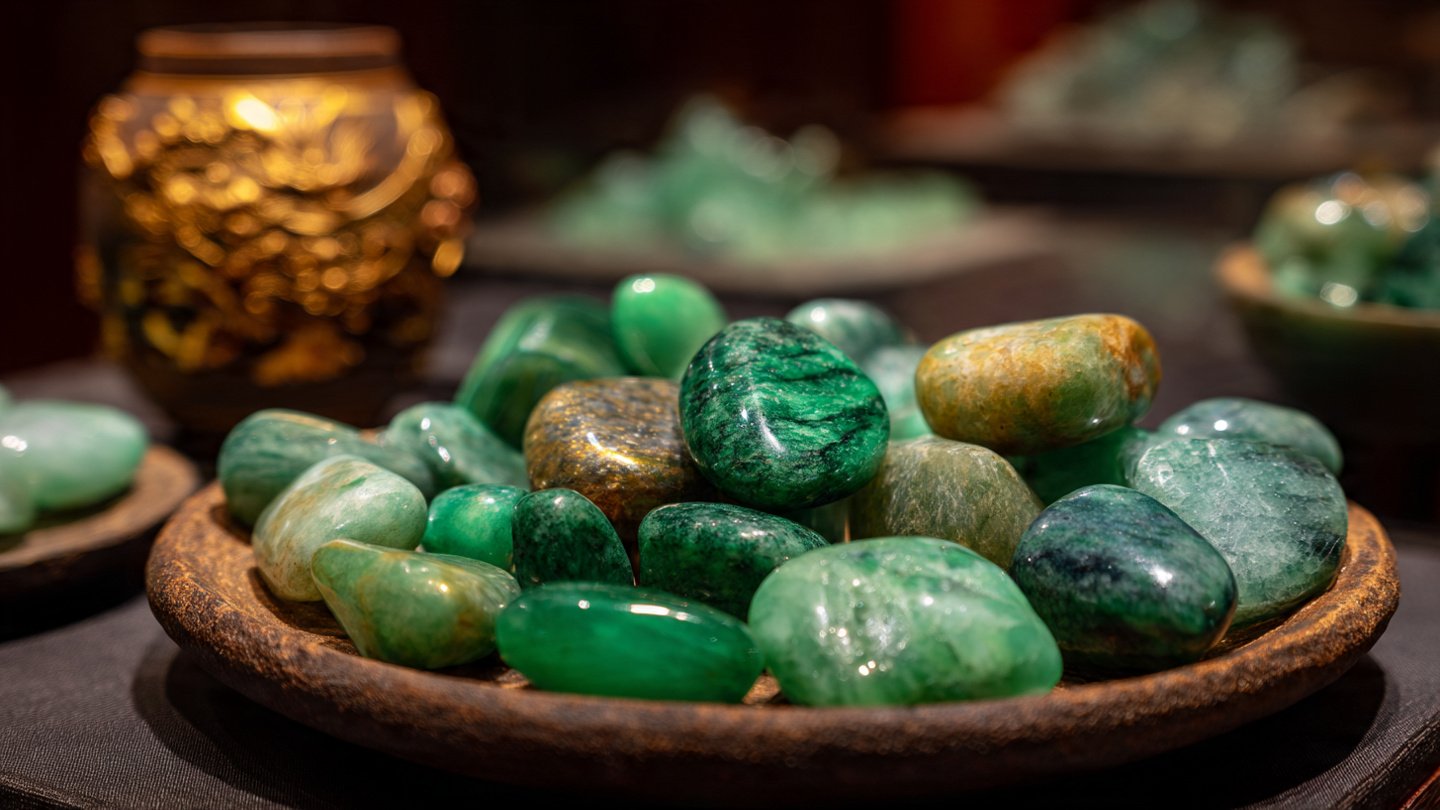
Imagine holding a stone so precious that ancient emperors valued it more than gold. That stone is jade, and its story spans thousands of years across continents, connecting civilizations through shared reverence for this extraordinary gemstone. From the imperial courts of China to the sacred temples of the Maya, jade has captivated humanity with meanings far deeper than its stunning beauty.
What Makes Jade So Special Across Cultures?
Jade isn’t just a pretty green rock. This remarkable stone encompasses two distinct minerals: jadeite and nephrite. While they differ chemically, both share exceptional toughness, a silky luster, and the ability to be carved into intricate masterpieces that have survived millennia.
The word “jade” itself comes from the Spanish term “piedra de ijada,” meaning “stone of the side” or “flank stone.” Spanish conquistadors coined this name after observing indigenous peoples holding jade against their sides to relieve pain. The Latin translation, “lapis nephriticus,” gave us the term nephrite, derived from the Greek word for kidney.
Jadeite, the rarer and more valuable variety, displays vibrant colors ranging from imperial green to lavender, white, black, and even orange. Nephrite typically appears in shades of creamy white to dark green. Both types possess remarkable durability, with jadeite reaching hardness levels of 6.5 to 7 on the Mohs scale.
Jade in Chinese Culture and Philosophy
No civilization has treasured jade more deeply than China, where this stone has been revered for over 5,000 years. The Chinese character for jade, 玉 (yù), closely resembles the character 王 (wáng), meaning king or emperor. This similarity is no coincidence.
The Stone of Heaven
Chinese culture calls jade “the stone of heaven,” believing it bridges the earthly and celestial realms. Ancient Chinese philosophy holds that jade embodies qi (气), the vital life force flowing through all living things. The stone’s luminous quality represents the connection between earth’s solidity and heaven’s brilliance.
According to the renowned philosopher Confucius, jade symbolizes eleven virtues: benevolence, justice, propriety, truth, credibility, music, loyalty, heaven, earth, morality, and intelligence. He famously stated that jade’s polish and brilliance represent purity, while its perfect compactness signifies intelligence. The pure sound it produces when struck represents music and virtue combined.
Imperial Jade Traditions
During early Chinese dynasties, jade remained exclusive to royalty and nobility. Emperors used ritual jade objects called gui tablets to communicate with supernatural forces and demonstrate imperial authority. These ceremonial pieces symbolized the emperor’s divine right to rule.
The concept of yin and yang extends to jade itself. Lighter, more translucent jade represents yin energy, offering softer, calming properties. Deeper green, opaque varieties embody yang energy, providing stronger, more active force. This duality allows jade to balance energies and promote harmony.
Chinese artisans carved jade into dragons, mountains, bats, butterflies, and peaches, each symbol carrying specific meanings. Dragons represent power and prosperity, mountains symbolize longevity, bats bring happiness, butterflies denote love and long life, and peaches represent immortality.
Jade in Chinese Funerary Practices
The Han Dynasty introduced elaborate jade burial practices. Mourners placed jade pigs in the hands of the deceased, while jade cicadas served as tongue amulets. The cicada, emerging from the earth after years underground, symbolized resurrection and cyclical rebirth.
Wealthy families created entire burial suits from jade pieces sewn together with gold thread, believing the stone would preserve the body and ensure immortality. These suits could contain thousands of individual jade plaques, requiring years to complete.
Maori Culture and Sacred Pounamu
In New Zealand, the Maori people call jade “pounamu” or “greenstone,” and it holds profound spiritual and cultural significance. The South Island itself bears the name Te Wāhi Pounamu, meaning “the place of pounamu,” reflecting the stone’s central role in Maori identity.
The Legend of Poutini and Waitaiki
Maori mythology tells of Poutini, a taniwha (supernatural water being) who fell in love with a beautiful woman named Waitaiki. Despite her marriage to Chief Tamaahua, Poutini kidnapped her and fled south. When Tamaahua pursued them relentlessly, Poutini transformed Waitaiki into pounamu and laid her in the Arahura River to keep her forever.
The chief’s anguished cry of grief, his tangi, is said to still echo through New Zealand’s mountains. All locations where pounamu is found today mark places where Poutini traveled during his flight with Waitaiki.
Types and Spiritual Meanings
Maori classify pounamu by color and translucence, naming varieties after elements of their natural world. Kahurangi, meaning “precious treasure,” is the rarest type—highly translucent with vivid light green hues. Kawakawa, named after the pepper tree leaf, displays the darkest, richest green tones.
Inanga takes its name from native whitebait fish, appearing pearly white or grey-green. Tangiwai, meaning “tears that come from great sorrow,” is translucent like glass and represents crystallized tears from the legend.
Hei-Tiki and Family Treasures
The hei-tiki, a carved pendant depicting ancestral spirits, represents one of the most recognizable Maori symbols. These pendants were believed to contain and guide family spirits, passed down through generations as taonga (treasured heirlooms).
When a family line was ending, the last male member would be buried with the hei-tiki to protect it from strangers. Later, the nearest male relative would retrieve the pendant, allowing ancestral spirits to continue guiding the family. This practice of burial and retrieval added mystique and spiritual power to these objects.
Maori tradition dictates that pounamu should be gifted rather than purchased for oneself, honoring the stone as a gift from the land. In 1997, the New Zealand government returned legal guardianship of all naturally occurring pounamu to the Ngāi Tahu tribe, recognizing their role as kaitiaki (guardians) of this precious resource.
Tools and Symbols
Beyond spiritual objects, Maori crafted pounamu into practical tools. The toki (adze) served for building and woodworking, while mere pounamu (short clubs) symbolized chieftainship and were used in warfare. These items carried great mana (spiritual power) and were considered tapu (sacred).
Peace agreements between tribes often involved exchanging valuable jade heirlooms, creating what was called a “tautau pounamu” or “door of greenstone”—a peace treaty meant to last forever.
Maya, Aztec, and Mesoamerican Jade
In Mesoamerica, jade held value exceeding gold. The Aztecs, Maya, and Olmec civilizations prized jadeite jade for over 3,000 years, developing sophisticated carving techniques and rich symbolic traditions.
The Living Stone
Ancient Mesoamericans considered jade a living stone. Its green color connected it to water, vegetation (especially young maize shoots), and the fundamental forces of life and death. The Maya associated jade with sacred breath, the vitalizing spirit that animates all living beings.
The Aztecs named jade “chalchihuitl” and associated it with the goddess Chalchiuhtlicue, “She of the Jade Skirt,” who ruled over seas, rivers, lakes, and springs. The Gulf of Mexico itself was called “Waters of Chalchiuhtlicue” because of its green color.
Color Preferences and Meanings
Different Mesoamerican cultures favored specific jade colors. The Olmecs of the Gulf Coast preferred translucent blue-green jadeite, known today as “Olmec Blue.” The Maya prized intense emerald-green stones called “Imperial Green,” while later cultures valued the full spectrum of jade colors including white, lavender, and black.
Captain Bernal Diaz del Castillo, chronicling Hernan Cortez’s conquest, recorded that Aztec Emperor Montezuma sent jade stones valued at “two loads of gold” each, demonstrating the extraordinary worth placed on this material.
Funerary and Ritual Practices
Mesoamerican burial customs centered on jade’s life-giving symbolism. Jade beads or carved pieces were placed in the mouths of the deceased, believed to capture the last breath and preserve the person’s essence. This practice appeared across Maya, Aztec, and even Egyptian cultures, suggesting universal recognition of jade’s spiritual power.
The Maya placed jade beads representing the soul at the moment of death. Some scholars interpret this as symbolic planting and rebirth of the Maize God entering the underworld. Elaborate jade masks, necklaces, earrings, and figurines accompanied nobles to the afterlife.
Jade Earspools and Sacred Portals
Maya artisans created intricate jade earflares (ornamental earspool) carved with flower petals pointing to the four cardinal directions. The central hole formed a portal or tree of life. These earspools transformed the wearer into a sacred conduit to the divine realm.
The Maya glyph for death, “och b’ih” (to enter the road), depicts a snake moving through an earflare, directly linking jade jewelry to resurrection and the soul’s journey.
Lost and Rediscovered Sources
After the Spanish conquest in the 16th century, knowledge of jade sources was lost for nearly 500 years. The Maya protected their mining locations, and subsequent generations forgot where the precious stone originated. In 1974, archaeologist Mary Lou Ridinger rediscovered ancient jade mines in Guatemala’s Motagua River valley, the primary source of Mesoamerican jadeite.
These deposits produce some of the world’s finest jadeite, including rare varieties like “Galactic Gold”—deep black jade with cubic pyrite inclusions and flecks of precious metals.
Japanese Jade Traditions
Japan’s relationship with jade extends back approximately 7,000 years to the early Jomon period. Jade served as a symbol of wealth, power, and spiritual authority. Leaders used jade in religious rituals, and it eventually became Japan’s national stone.
Scientific analysis confirms that all jade used in Japan since the Jomon period comes from the Itoigawa region, demonstrating a continuous connection to specific sacred sources. Japanese jade traditions emphasize the stone’s role in connecting humanity with divine forces and natural spirits.
Jade bracelets and ritual objects played important roles in ceremonies, with the stone representing purity, protection, and the eternal cycle of nature.
Jade in Ancient Egypt
While less prominent than in Asian cultures, ancient Egyptians incorporated jade into their spiritual practices. Like the Chinese and Maya, Egyptians placed green stones in the mouths of their dead, representing the heart chakra and eternal life force.
The green color symbolized rebirth, vegetation, and the life-giving power of the Nile. Egyptian artisans carved jade into amulets, scarabs, and ceremonial objects meant to protect the deceased on their journey through the afterlife.
Modern Western Appreciation
Jade rarely appeared in European jewelry until the late 19th century. The Art Deco period of the 1920s and 1930s marked jade’s seduction of the Western world. Designers like Cartier created exquisite pieces combining jade with diamonds, platinum, and black onyx.
Barbara Hutton, the Woolworths heiress, became one of the most famous Western jade collectors. Her 1934 Cartier jade necklace, a wedding gift from her father, sold in 1988 as “one of the most splendid jade necklaces in the world,” setting the record for jadeite jewelry prices.
Western interest grew as collectors discovered jade’s artistic and cultural significance. Today, museums worldwide showcase jade artifacts, and contemporary jewelry designers continue incorporating this timeless stone into modern creations.
Symbolic Meanings Across Cultures
Despite geographical and temporal distances, cultures worldwide ascribe remarkably similar meanings to jade:
Purity and Virtue: Chinese philosophy considers jade the embodiment of moral excellence. Its flawless appearance represents spiritual purity and ethical perfection.
Immortality and Longevity: From Chinese burial suits to Maya death masks, jade symbolizes eternal life and protection beyond death. Its incredible durability mirrors the human desire for permanence.
Prosperity and Good Fortune: Chinese merchants carry jade pieces for business luck. Mesoamericans associated jade with agricultural abundance and material wealth.
Healing and Protection: Spanish conquistadors named jade for its perceived medicinal properties. Multiple cultures believed wearing jade protected against illness, accidents, and negative energies.
Divine Connection: Whether bridging heaven and earth in China, serving as portals for Maya spirits, or housing Maori ancestors, jade facilitates communication with the supernatural realm.
Harmony and Balance: The stone’s smooth texture and pleasing appearance represent inner peace and balanced energy flow, central to Chinese feng shui and Maori spiritual practices.
Love and Relationships: Jade gifts symbolize deep affection and commitment. The stone’s enduring nature mirrors lasting love.
Identifying Genuine Jade
Given jade’s value and cultural significance, knowing how to identify authentic pieces becomes important. Here are key characteristics:
Density and Weight: Real jade feels heavier than most stones of similar size due to its dense crystal structure.
Temperature: Jade remains cool to the touch and slowly warms against skin. Imitations heat up quickly.
Sound: Gently striking two jade pieces produces a clear, musical chime. Plastic or glass creates dull thuds.
Texture: Authentic jade has a smooth, almost soapy feel with fine grain structure. Under magnification, you can see fibrous or granular patterns.
Translucency: Hold jade to light. Genuine jade displays varying translucency with depth and complexity. Fake jade often looks flat or uniformly colored.
Professional Testing: For valuable pieces, seek gemological certification. Experts use refractometers, spectroscopes, and chemical analysis to confirm authenticity.
Caring for Jade
Proper care preserves jade’s beauty and spiritual properties:
Gentle Cleaning: Wash jade with lukewarm water and mild soap. Use a soft cloth or brush. Harsh chemicals can damage the stone’s surface or treatments.
Avoid Extreme Temperatures: Sudden temperature changes may cause internal stress fractures. Remove jade before hot baths or saunas.
Storage: Keep jade separate from harder gemstones that might scratch it. Wrap in soft cloth or store in padded boxes.
Regular Wear: Many traditions encourage wearing jade regularly. Body oils naturally polish the stone and, according to believers, allow it to absorb and balance your energy.
Cleansing Rituals: Various cultures recommend energetically cleansing jade under moonlight, with sage smoke, or in flowing water to refresh its spiritual properties.
Jade Colors and Their Specific Meanings
While green jade dominates cultural imagery, jade appears in a rainbow of colors, each carrying distinct symbolism:
Green Jade: Represents growth, healing, harmony with nature, and the heart chakra. Most prized in Chinese and Maya cultures.
White Jade: Symbolizes purity, innocence, spiritual clarity, and new beginnings. Called “mutton fat jade” when creamy white.
Lavender Jade: Associated with spiritual nourishment, emotional healing, and highest aspirations. Calms anxiety and promotes peace.
Black Jade: Represents protection, grounding, and strength. Guards against negative energy and promotes self-control.
Yellow/Orange Jade: Symbolizes joy, energy, and optimism. Attracts good luck and stimulates creativity.
Blue Jade: Encourages patience, peace, and clear communication. Promotes reflection and spiritual wisdom.
Red Jade: Represents passion, vitality, and courage. Stimulates life force energy and overcomes fears.
Jade in Feng Shui and Modern Spirituality
Contemporary spiritual practices continue jade’s ancient traditions:
Feng Shui Placement: Position jade in the east sector for health and family harmony, southeast for wealth and prosperity, or center for balance and grounding.
Meditation Tools: Hold jade during meditation to deepen practice, promote emotional healing, and connect with earth energies.
Chakra Work: Green jade corresponds to the heart chakra, facilitating love, compassion, and emotional balance.
Manifestation: Many practitioners use jade to attract abundance, visualizing intentions while holding or wearing the stone.
Dream Work: Placing jade under your pillow supposedly enhances dream recall and promotes peaceful sleep, earning it the nickname “dream stone.”
Cultural Preservation and Ethical Sourcing
As global interest in jade continues, cultural sensitivity and ethical sourcing become crucial. Indigenous communities, particularly the Maori and Guatemalan Maya, work to preserve traditional knowledge and maintain control over jade resources.
The Ngāi Tahu Pounamu authentication system validates genuine New Zealand greenstone and supports traditional carvers. Similar initiatives in Guatemala help Maya communities benefit from their jade heritage rather than seeing profits flow exclusively to outside collectors.
Responsible buyers should:
- Verify authentic sources and avoid looted archaeological pieces
- Support indigenous artisans and fair trade practices
- Respect cultural traditions around jade ownership and gifting
- Learn the history and meaning behind jade pieces
- Recognize that some jade items carry sacred significance not appropriate for casual ownership
The Timeless Appeal of Jade
What makes jade universally compelling across vastly different cultures? Perhaps it’s the stone’s unique combination of strength and beauty, or the way its cool smoothness seems to embody tranquility itself.
More likely, jade resonates because it represents our highest aspirations: purity without rigidity, strength without aggression, beauty that deepens with time, and connections that transcend death. Whether you view jade through a spiritual, cultural, or aesthetic lens, this remarkable stone continues enchanting humanity as it has for millennia.
From Chinese emperors to Maori warriors, from Maya priests to modern collectors, jade bridges the gap between earth and spirit, past and present, mortality and eternity. It reminds us that some treasures truly are timeless.
Bringing Jade Into Your Life
Interested in experiencing jade’s cultural and spiritual heritage? Consider these approaches:
Visit Museums: Many major museums house stunning jade collections. The Metropolitan Museum of Art, British Museum, and National Palace Museum in Taiwan showcase exceptional pieces with cultural context.
Learn Traditional Crafts: Some cultural centers offer jade carving workshops where you can learn ancient techniques firsthand.
Choose Meaningful Pieces: Select jade jewelry or objects that resonate with your intentions, whether for healing, protection, prosperity, or simply aesthetic pleasure.
Gift Thoughtfully: Following Maori tradition, consider giving jade to loved ones rather than buying for yourself, creating meaningful connections.
Respect Sacred Items: Remember that some jade pieces, particularly those from archaeological sites or indigenous communities, carry sacred significance deserving reverence, not commercialization.
Support Ethical Sources: Purchase from reputable dealers who source jade responsibly and support traditional artisan communities.
Final Thoughts
Jade’s journey through human history reveals universal themes: our desire for beauty, our need for spiritual connection, our hope for protection and prosperity, and our quest for immortality through art and legacy.
This “stone of heaven” continues inspiring wonder, whether displayed in museum cases, worn as cherished jewelry, or carved into contemporary art. Its cross-cultural appeal demonstrates how certain natural treasures transcend boundaries, speaking to something fundamental in the human experience.
Have you experienced jade’s unique appeal? Share this article with anyone fascinated by gemstones, cultural history, or spiritual practices. Comment below about your own jade experiences or cultural traditions involving this remarkable stone. Your story might inspire others to discover jade’s timeless magic.
Whether you’re drawn to jade for its stunning beauty, rich history, cultural significance, or spiritual properties, this extraordinary stone offers something precious to everyone willing to explore its depths.
This article provides cultural and historical information about jade. While many cultures attribute spiritual or healing properties to jade, these beliefs are not scientifically proven. Always consult qualified experts for gemstone authentication and healthcare professionals for medical concerns.


