

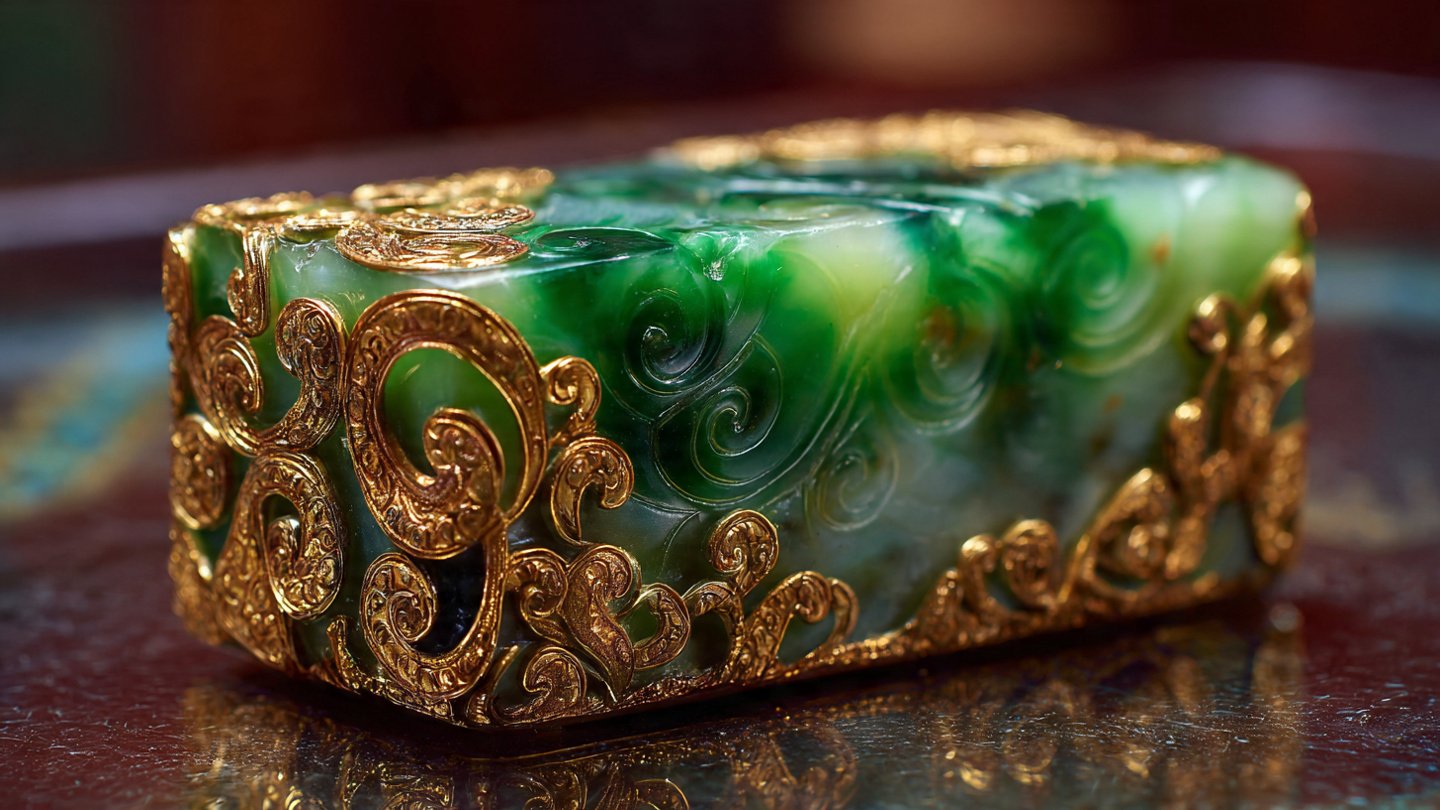
Deep in the Siberian wilderness, where winter temperatures plunge to minus 40 degrees and mountain passes freeze solid for eight months each year, miners extract one of the world’s most prized gemstones. Russian jade, particularly the legendary Siberian nephrite, has captivated collectors and jewelers for over 150 years. This comprehensive guide explores the fascinating history and unique characteristics that make Russian jade a treasured material worldwide.
The Discovery That Changed Everything
Russia’s jade story began in the 1820s when large deposits of fine green nephrite were discovered in Siberia’s Sayan Mountains near Lake Baikal. Before this discovery, Russia imported jade from China and Central Asia for centuries. The history of nephrite in Russia actually begins in the 15th century when merchants brought it from Central Asia, but local sources remained unknown until the 19th century.
The discovery transformed Russia from a jade importer to one of the world’s premier producers. What miners found exceeded expectations. The Siberian deposits contained nephrite of exceptional quality, displaying colors and translucency that would soon captivate European aristocracy.
Word of the new find spread slowly at first. Communication challenges and Russia’s vast distances meant decades passed before the full significance became apparent. By the late 19th century, the famous Russian luxury house of Fabergé was creating unmatched masterpieces in Siberian nephrite jade.
Where Russian Jade Comes From
Lake Baikal Region
Siberian nephrite mines are located in extremely remote areas in the Eastern Sayan Mountains and the Dzhida areas to the southwest of Lake Baikal, along with the Parama massif to the northeast of the lake. This region remains the heart of Russian jade production today.
The Lake Baikal area is one of Earth’s most pristine and isolated regions. Ancient and deep, Lake Baikal holds roughly 20 percent of the world’s fresh water. The mountains surrounding it host geological conditions perfect for nephrite formation.
The Sayan Mountains are geographically and geologically related to the Altai Mountains that cross northwestern China, northern Mongolia, and southwestern Russia. This connection explains similarities between Russian and Chinese jade quality. The geological belt extends across borders, creating jade deposits throughout the region.
Polar Urals and Krasnoyarsk Territory
Today, the main deposits of jade are located in Eastern Siberia, but jade is also extracted in the Polar Urals and in the Krasnoyarsk territory at Kantegirskoye and Kurtushibinskoye deposits. These additional sources supplement the primary Eastern Siberian production.
The diversity of deposits means Russian jade exhibits various characteristics depending on origin. Each location produces material with slightly different color tones, translucency levels, and inclusion patterns.
Reserve Estimates
Russian raw jade reserves are estimated at 336 tons. While this represents substantial resources, the extreme difficulty of extraction limits annual production. Remote locations, harsh climate, and challenging logistics restrict how much material reaches the market each year.
The Extreme Challenge of Mining Russian Jade
The mining of Siberian green nephrite is extremely challenging due to a combination of harsh weather conditions and extremely rugged local terrain. These aren’t ordinary mining operations. They represent some of the most demanding mineral extraction work anywhere on Earth.
Access and Transportation
The mining sites can best be accessed by helicopter in summer or by heavy duty trucks along frozen rivers in winter. No roads lead to many deposits. Helicopters provide the only reliable summer access, while winter allows travel on frozen rivers using military surplus trucks.
Explorers need to fly to Irkutsk, the nearest transitional city, and start from there, taking at least four to five days to reach the mining sites. The journey itself represents a significant undertaking before mining even begins.
Retired six-wheel army trucks are the most available and reliable transport vehicles. These rugged vehicles navigate terrain that would destroy conventional equipment. Their reliability in extreme conditions makes them indispensable for jade mining operations.
Climate Constraints
Winter temperatures in Siberian mining areas routinely drop below minus 40 degrees Celsius. Summer brings different challenges, including flooding from snowmelt and difficult muddy conditions. The operational window remains narrow, forcing miners to work intensively during accessible periods.
Snow covers deposits for most of the year. This natural protection actually helps preserve sites from erosion but severely limits working time. Crews must maximize productivity during brief summer months.
Pioneer Researchers
Russian geologist Dr. Sasha Sekerin was one of the earliest explorers of nephrite deposits in the Western and Eastern Sayan Mountains and remains a highly respected jade expert in Russia. His work mapped deposits that continue producing today.
Dr. Sekerin served as a research scientist in the Zemnoy Kory (Earth Crust) Institute in Irkutsk for over a decade until the Soviet Union fell apart, then became a nephrite jade miner. His transition from academic research to practical mining brought scientific rigor to the industry.
Distinctive Characteristics of Russian Jade
The Famous Spinach Green Color
Siberian nephrite, displaying dark “spinach green” color with distinctive black graphite inclusions, represents the most valuable green nephrite variety for Western consumers. This particular color combination became synonymous with quality Russian jade.
The deep, rich green differs from the lighter tones common in other deposits. The color saturation and depth create visual impact that collectors appreciate. Black graphite inclusions, rather than detracting from value, actually help authenticate Siberian origin.
The term “spinach green” perfectly captures the color. It’s neither bright emerald nor pale sage, but rather a deep, slightly dark green reminiscent of fresh spinach leaves. This distinctive hue makes Russian jade instantly recognizable to experienced dealers.
Translucency and Quality
Siberian nephrite is generally characterized by even color and good translucency, which can make it extremely desirable and expensive. The combination of consistent color throughout a piece with the ability to transmit light creates stunning visual effects.
When properly cut and polished, quality Russian jade glows from within. Light penetrates the stone’s surface, interacts with the fibrous crystal structure, and emerges with a soft luminescence. This quality separates premium material from ordinary jade.
Physical Properties
Nephrite is a fine-grained, calcium-rich, magnesium, iron, aluminous amphibole composed of highly intergrown, interlocking crystals with a matted or felted texture. This microscopic structure gives jade its exceptional properties.
Though this stone is not very hard with hardness from 5 to 6.5 on Mohs Scale depending on the deposit, nephrite is one of the toughest gem minerals known because of the intergrown nature of the individual crystals. Toughness and hardness are different properties. While nephrite scratches more easily than quartz, it resists breaking with remarkable effectiveness.
The interlocking fibrous structure acts like reinforcing fibers in composite materials. When force is applied, the fibers distribute stress throughout the material rather than allowing cracks to propagate. This makes nephrite extraordinarily resistant to fracture.
Color Range Beyond Green
While green dominates Russian jade production, other colors appear. White nephrite occurs in some deposits. Whites often modified with brown and light-to-medium greens are the most commonly encountered colors in Russian material.
The variety allows Russian jade to serve diverse artistic applications. Carvers can select material appropriate for specific projects, choosing from creamy whites to deep forest greens depending on the desired effect.
The Fabergé Connection
Russian jade achieved its greatest fame through association with Fabergé, the legendary jeweler to Russian imperial family. This connection elevated Siberian nephrite from a regional gemstone to an internationally recognized luxury material.
Imperial Patronage
The adoption of jade in Russia was undoubtedly aided by the fact that red and green were the official colors of the Romanov Czars. Green jade aligned perfectly with imperial preferences, ensuring royal patronage and aristocratic demand.
Green demantoid garnet, green nephrite jade and the ultra-rare, red-green color-change gemstone Alexandrite were the primary beneficiaries of this trend, with all three gems skyrocketing in popularity in pre-Revolution Czarist Russia.
Fabergé Masterpieces
Fabergé used six different types of nephrite taken from boulders found alongside Siberian sources. The workshop’s master craftsmen transformed raw jade into objets d’art that remain coveted by collectors worldwide.
The famous Pansy Egg, also called the Spinach Jade Egg, showcased Russian nephrite in an Imperial Easter Egg. Created in 1899 for Dowager Empress Maria Feodorovna, this egg demonstrated how Fabergé elevated jade to new artistic heights.
Russian jade culture is closely connected with such jewellery production as Fabergé, whose workshops combined the green stone with gold, diamonds, emeralds, and rubies. These combinations created pieces that transcended mere jewelry, becoming works of art that embodied imperial opulence.
Guilloché Enamel Techniques
Fabergé’s workshops pioneered guilloché enameling techniques that became their signature. They engraved intricate patterns into metal surfaces, then applied translucent enamel over the patterns. When combined with jade elements, these techniques produced masterpieces of unparalleled beauty.
The interplay between jade’s natural translucency and enamel’s vibrant colors created visual effects impossible with either material alone. Fabergé’s artisans understood how to maximize each material’s strengths.
Russian Jade in Modern Markets
Export to China
The Beijing Olympic Games boosted the price of green nephrite imported from Russia, especially the nice-quality rough from the Ospa deposit number 7. The 2008 Olympics created unprecedented demand for jade, driving prices dramatically higher.
After 2008, a mine-to-market green nephrite relationship formed between Russia and China, with Siberian nephrite trading and carving centers formed in Beijing, Harbin, Henan and border towns such as Dongning and Manchuria. This infrastructure facilitates the flow of Russian material to Chinese craftsmen.
Russian miners and dealers keep raising the price of nephrite rough while the Russian government limits the amount of nephrite being exported to China. Both factors have put upward pressure on prices, making Russian jade increasingly valuable.
Historical Production Levels
Before 1999, with limited average annual production of 20 tons, Siberian nephrite only supplied the Russian and European market. Production remained modest for over a century after the initial discoveries.
Between 2000 and 2002, annual production increased from about 40 tons to 100 tons. This dramatic increase reflected growing global demand and improved mining techniques.
Before 2005, mining nephrite was not actually profitable for Siberian miners due to the high mining, transportation, and processing costs, which contrasted sharply with the low price of the rough. Only after 2005 did prices rise sufficiently to make operations economically viable.
Current Market Position
It is fairly rare to find Siberian jade in the West these days because almost all of the good quality material goes straight to China, where it is highly prized. Chinese buyers dominate the market, paying premium prices for top-grade material.
This market dynamic means Western collectors face challenges acquiring quality Russian jade. Most material never reaches European or American markets, instead flowing directly to Asia where cultural appreciation and purchasing power create strong demand.
Identifying Authentic Russian Jade
Origin Verification
A lot of Siberian jade is peppered with tiny black dots of chromite which can help in positively identifying the source of unattributed pieces. These black inclusions serve as a natural signature of Siberian origin.
Chromite inclusions appear as small dark specks throughout the stone. Rather than flaws, experienced buyers recognize these as authentication markers. Their presence indicates the material likely originated in Siberian deposits.
Testing Methods
Nephrite gets its name from Greek “nephros” meaning kidney, as ancient people believed nephrite could treat kidney diseases. While this historical belief lacks scientific support, the etymology remains interesting.
Professional gemological testing measures specific gravity, refractive index, and hardness. Russian nephrite should exhibit specific gravity between 2.90 and 3.03, with hardness of 5 to 6.5 on the Mohs scale.
Spectroscopic analysis can definitively identify nephrite and distinguish it from jade imposters like serpentine. Raman spectroscopy particularly helps identify mineral composition without damaging specimens.
Common Imitations
Several materials are sometimes sold as jade. Serpentine has lower hardness and different optical properties. Dyed quartzite or marble may look superficially similar but fails basic testing.
When purchasing Russian jade, especially pieces claimed to be antique or high-quality, always request documentation from reputable gemological laboratories. The investment in proper authentication protects against costly mistakes.
Cultural Significance in Russia
Traditional Beliefs
In the 1950s and 1960s, there was a strong belief among many Siberians and Mongolians, which stemmed from tradition, that jade was part of a class of sacred objects that had life. This spiritual dimension added meaning beyond jade’s material value.
Traditional cultures in jade-producing regions developed deep connections with the stone. They attributed protective and healing properties to nephrite, incorporating it into spiritual practices and daily life.
Soviet Era Production
During the Soviet period, jade mining continued under state control. Production focused on domestic use and exports to allied nations. The centralized system maintained operations in remote Siberian locations that might otherwise have been economically unviable.
Soviet-era pieces represent an interesting collecting category. They combine traditional Russian craftsmanship with socialist-era aesthetics, creating unique objects that document a specific historical period.
Post-Soviet Renaissance
After the Soviet Union’s collapse, the jade industry underwent transformation. State enterprises privatized, and new market dynamics emerged. Miners and dealers gained freedom to negotiate directly with international buyers, particularly in China.
This transition wasn’t always smooth. Economic chaos in the 1990s disrupted operations. However, by the 2000s, the industry stabilized and began expanding to meet growing global demand.
Comparing Russian Jade with Other Sources
Russian vs. Chinese Jade
Many people believe that the geological connection between the Sayan Mountains and Altai Mountains is the reason for the similar qualities of nephrite from China and Russia. The shared geology creates similar material characteristics.
However, subtle differences exist. Russian jade often displays deeper, more saturated green colors. Chinese white “mutton fat” jade represents a different aesthetic preferred in Asian markets. Both countries produce exceptional material, but each has distinctive characteristics.
Russian vs. Canadian Jade
Canadian nephrite from British Columbia now dominates world production. Canadian jade often exhibits lighter colors ranging from yellowish-green to dark green. Russian material tends toward the distinctive spinach green with black inclusions.
Both sources produce quality material, but collectors note differences. Russian jade’s historical association with Fabergé and imperial Russia adds cachet that newer Canadian sources lack, even when physical quality is comparable.
Russian vs. New Zealand Jade
New Zealand’s pounamu holds deep cultural significance for the Maori people. The material differs from Siberian nephrite, often displaying different color tones and translucency levels. New Zealand strictly controls exploitation of its jade deposits, limiting availability.
Scientific Understanding of Russian Jade Formation
Geological Processes
Nephrite forms through metamorphism of serpentinite rocks under specific pressure and temperature conditions. The process requires the presence of calcium and magnesium-rich fluids that react with existing minerals.
In the Sayan Mountains, tectonic activity millions of years ago created ideal conditions. Ultramafic rocks underwent metamorphic transformation, concentrating tremolite-actinolite minerals into the compact, interlocking crystal structure we recognize as nephrite.
Crystal Structure
Under microscopic examination, nephrite reveals interlocking fibrous crystals aligned in random directions. This structure resembles felt or asbestos, with individual fibers interweaving throughout the material.
The random orientation means stress applied to the stone distributes evenly rather than concentrating along cleavage planes. This structural arrangement explains nephrite’s exceptional toughness despite moderate hardness.
Chemical Composition
Nephrite Jade is a rock composed essentially of a variety of amphibole, actinolite, with chemical formula Ca₂(Mg,Fe)₅Si₈O₂₂(OH)₂. The iron content influences color—higher iron produces greener stones, while lower iron results in whiter material.
Trace elements also affect appearance. Chromium contributes to the deep green colors prized in Russian jade. Graphite creates the distinctive black inclusions that help identify Siberian origin.
Uses of Russian Jade Through History
Traditional Carvings
Russian craftsmen created diverse objects from nephrite. Decorative bowls, figurines, and ornamental pieces showcased the material’s beauty. The stone’s toughness allowed intricate carving that would be impossible with more brittle materials.
Jade carving requires specialized diamond tools. Conventional cutting implements simply won’t work. This technical requirement meant jade carving remained a specialized craft requiring extensive training.
Jewelry Applications
Rings, pendants, bracelets, and earrings incorporated Russian jade throughout history. The material’s durability made it practical for daily wear jewelry, not just display pieces.
Silver settings particularly complemented jade’s green tones. Russian silversmiths developed distinctive styles that highlighted nephrite’s natural beauty while adding decorative metalwork.
Architectural Elements
While less common than smaller objects, some architectural applications utilized Russian jade. Decorative panels, inlays, and accent pieces appeared in palaces and important buildings.
The scale of these applications reflected jade’s value and the patron’s wealth. Only the most affluent could afford jade in architectural quantities.
Modern Applications
Contemporary uses include everything from traditional carvings to innovative jewelry designs. Some designers incorporate Russian jade into modern aesthetic contexts, creating pieces that honor tradition while embracing contemporary design principles.
Wellness products like jade rollers and gua sha tools have created new markets. While therapeutic claims lack robust scientific support, these products have gained popularity in skincare routines.
Caring for Russian Jade
Cleaning Methods
Clean Russian jade with warm water and mild soap. Use a soft brush to reach carved details and settings. Avoid harsh chemicals, ultrasonic cleaners, or steam cleaning, which might damage the material or its setting.
Pat dry thoroughly after washing to prevent water spots. The material itself resists water damage, but settings may be more vulnerable to moisture.
Storage Recommendations
Store jade separately from harder gemstones like diamonds or sapphires to prevent scratching. Wrap pieces in soft cloth or keep them in padded jewelry boxes.
Despite nephrite’s toughness, proper storage prevents unnecessary wear. This protects both the jade and other jewelry items from mutual damage.
Handling Precautions
Though jade is tough, it can chip if struck against hard surfaces. Remove jade rings before heavy work or activities where impact is likely.
The natural oils from skin actually benefit jade, helping maintain its luster over time. Regular wear keeps pieces looking their best, though care should be taken to avoid impacts.
Investment Potential of Russian Jade
Rarity and Value
As Russian production focuses increasingly on the Chinese market, quality pieces become rarer in Western collections. This scarcity drives value appreciation for documented Russian material.
Antique Russian jade, particularly Fabergé pieces or documented pre-Revolution items, commands premium prices at auction. These pieces combine material value with historical significance.
Authentication Importance
For investment purposes, proper documentation is crucial. Gemological certificates, provenance records, and expert authentication protect buyers and preserve value.
Undocumented pieces may be genuine but lack the verification that serious collectors require. Investment-grade pieces should include comprehensive documentation.
Market Trends
The Chinese market’s dominance affects global prices. As Chinese middle class wealth grows, demand for quality jade increases. Russian material particularly appeals to Chinese collectors who appreciate both quality and the Russia-China historical connection.
Western markets show renewed interest in Russian jade, partly driven by its association with Fabergé and imperial luxury. This creates opportunities for collectors willing to seek out quality pieces.
The Future of Russian Jade Mining
Production Challenges
Extreme mining conditions limit how much Russian jade reaches the market. Climate, access, and logistics constraints mean production likely won’t increase dramatically even if demand grows.
Labor shortages in remote Siberian locations present additional challenges. Finding workers willing to operate in such harsh environments becomes increasingly difficult.
Environmental Considerations
Mining in pristine Siberian wilderness raises environmental concerns. Operations must balance extraction with ecosystem protection. The remote locations mean environmental damage could go unnoticed, making responsible practices crucial.
Russia’s vast wilderness areas need protection. Sustainable mining practices that minimize environmental impact while allowing economic activity represent the ideal balance.
Exploration Potential
Much of Siberia remains geologically unexplored. Additional deposits likely exist in remote areas not yet surveyed. Improved exploration techniques and access could reveal new sources.
However, any new deposits would face the same extraction challenges as existing sites. Remote locations, harsh climate, and difficult logistics affect all Siberian jade operations.
Conclusion
Russian jade represents a remarkable convergence of geological wonder, cultural history, and artistic achievement. From the frozen mountains around Lake Baikal to the workshops of Fabergé, Siberian nephrite has captivated admirers for over 150 years.
The distinctive spinach green color with black graphite inclusions makes Russian jade instantly recognizable. Its exceptional quality, combining rich color with good translucency, explains why it commands premium prices in global markets.
The extreme difficulty of mining adds to Russian jade’s mystique. Accessing deposits requires helicopter flights or winter travel on frozen rivers. Operations face eight-month winters and conditions that would be unthinkable in most mining contexts. Yet miners persist because the material’s quality justifies the effort.
Fabergé’s masterpieces demonstrated Russian jade’s potential. The combination of exceptional raw material with supreme craftsmanship created objects that transcended mere jewelry, becoming cultural treasures that embody an era’s opulence and artistic ambition.
Today, Russian jade flows primarily to Chinese markets where cultural appreciation and purchasing power create strong demand. Western collectors face challenges acquiring quality material, making documented pieces increasingly valuable.
For gemstone enthusiasts, Russian jade offers a combination of beauty, toughness, and historical significance. Whether appreciating Fabergé masterpieces in museums or acquiring contemporary pieces, Russian nephrite continues captivating those who value exceptional gemstones.
The future holds both challenges and opportunities. Production constraints limit supply while demand grows. This dynamic suggests Russian jade will maintain and likely increase its value. For collectors and investors willing to seek authenticated pieces, Russian jade represents both aesthetic pleasure and potential financial appreciation.
Have you experienced the beauty of Russian jade firsthand? Share your thoughts about this remarkable gemstone in the comments! If you found this historical journey valuable, please share it with fellow gem enthusiasts to help spread appreciation for Siberian nephrite’s unique story.
Disclaimer: Gemstone values fluctuate based on market conditions. Always verify authenticity through certified gemological testing when making significant purchases.


