

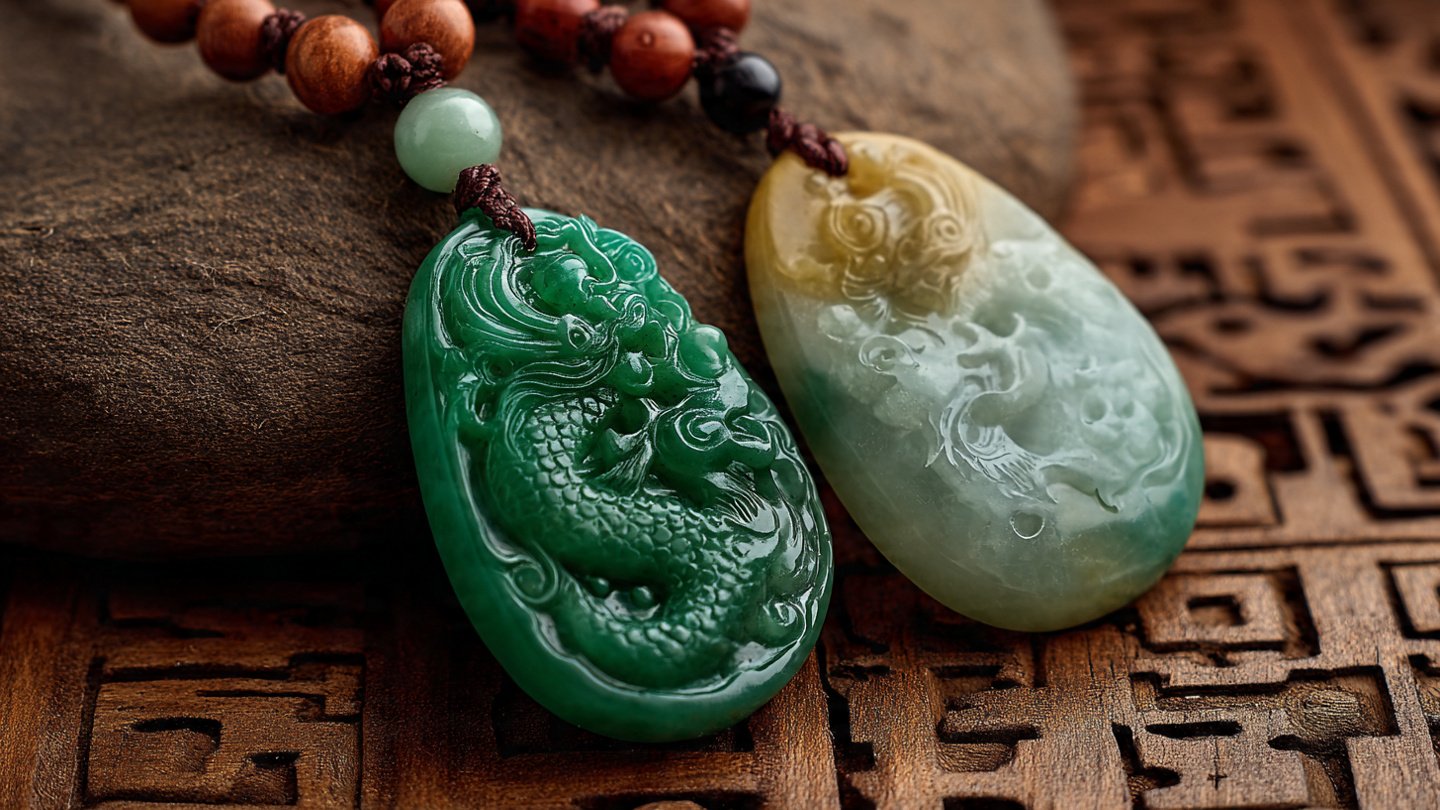
The jade world has a fascinating rivalry that spans centuries: Burmese jade versus Chinese jade. These two giants dominate global jade markets, yet they represent completely different stories in geology, history, quality, and cultural significance.
Understanding the differences between Burmese and Chinese jade transforms you from confused buyer to informed decision-maker. This comprehensive guide examines everything you need to know about these two jade powerhouses.
Understanding the Fundamental Difference
First, let’s clarify something crucial: “Burmese jade” and “Chinese jade” don’t refer to different minerals. Both countries produce jadeite and nephrite, the two minerals we call jade. The distinction lies in where the jade comes from and the characteristics typical of each source.
Myanmar (Burma) produces the world’s finest jadeite. Over 90% of commercial jadeite comes from Myanmar’s Kachin State mines. This region yields the vivid imperial green jadeite that collectors prize above all other jade varieties. When people say “Burmese jade,” they almost always mean jadeite from Myanmar.
China has historically been the world’s largest nephrite producer, particularly from regions like Xinjiang and Qinghai. Ancient Chinese jade was exclusively nephrite because China had no jadeite deposits until trade with Burma began in the 18th century. Today, “Chinese jade” can refer to nephrite from China or to jadeite imported from Myanmar and carved in China.
This geographic distinction matters enormously for pricing, quality expectations, and cultural significance. A Burmese jadeite piece commands vastly different prices than Chinese nephrite, even though both are legitimately “jade.”
Geological Origins and Formation
Myanmar’s jadeite deposits formed under extreme geological conditions. Tectonic plate collisions created the intense pressure and specific chemistry needed for jadeite formation. These deposits concentrate in the Hpakant region of Kachin State, where mining has occurred for centuries.
The unique geology of Myanmar produces jadeite with exceptional color range and quality. The presence of chromium creates the vivid greens Myanmar is famous for. Iron produces lavender hues. These geological conditions are extremely rare globally, explaining why Myanmar dominates jadeite production.
Chinese nephrite deposits formed differently, through metamorphism of magnesium-rich rocks. These deposits occur in several Chinese provinces, with Xinjiang’s Hetian region being most famous. The Kunlun Mountains have produced nephrite for over 4,000 years.
The geological differences create distinct characteristics. Jadeite has a more granular structure with higher density (specific gravity around 3.34). Nephrite has a fibrous, interlocking structure and lower density (specific gravity around 2.95). These structural differences affect durability, translucency, and visual appeal.
Historical and Cultural Significance
China’s jade history extends back over 7,000 years. Ancient Chinese civilization revered jade as the “Stone of Heaven,” attributing moral virtues and spiritual powers to it. Confucius wrote about jade’s qualities representing noble character traits.
For millennia, Chinese jade meant nephrite exclusively. The ancient Chinese had no access to jadeite until trading relationships with Burma developed during the Qing Dynasty (1644-1912). This historical nephrite tradition continues influencing Chinese jade preferences today.
Myanmar’s jadeite mining accelerated dramatically in the 18th century when Chinese merchants discovered the exceptional quality of Burmese stones. The influx of vivid green jadeite revolutionized Chinese jade culture. Imperial courts quickly adopted jadeite for the most prestigious pieces.
The cultural dynamic created an interesting situation: Myanmar produces the stones, but China provides the largest market and most skilled carvers. This symbiotic relationship shapes the modern jade industry. Chinese cultural knowledge combined with Burmese geological gifts creates the jade pieces collectors prize most.
Quality and Grading Differences
Jadeite from Myanmar achieves quality levels impossible for nephrite. The finest imperial jadeite exhibits vivid, evenly distributed emerald green color with semi-transparent clarity. This combination of intensity, purity, and translucency never occurs in nephrite.
Myanmar jadeite quality varies enormously from the same deposits. A single boulder might contain sections ranging from gem quality to industrial grade. Experienced buyers examine rough jadeite carefully, looking for windows that reveal internal quality.
Chinese nephrite, while beautiful, cannot match top jadeite’s translucency or color intensity. The best nephrite shows pure white (“mutton fat” jade) or rich green, but always with lower translucency than comparable jadeite. Nephrite’s fibrous structure creates different visual effects—softer, more subtle appearance rather than jadeite’s crystalline brilliance.
The ABC grading system applies primarily to jadeite. Type A (natural), Type B (polymer-impregnated), and Type C (dyed) classifications matter tremendously for Myanmar jadeite pricing. Chinese nephrite faces fewer treatment concerns, though drying and waxing occur.
Within Myanmar jadeite, quality grades include imperial (vivid green, semi-transparent), commercial (good color but less translucent), utility (opaque, used for carvings), and industrial (lowest quality). These grades create price differences of 1,000% or more between pieces from the same source.
Color Variations and Characteristics
Myanmar jadeite offers the jade world’s widest color palette. Imperial green remains most valuable, but lavender, white, red, yellow, and black jadeite all come from Myanmar. The famous “three-color jade” combining green, lavender, and white in single pieces is exclusively Burmese jadeite.
The vivid saturation achievable in Myanmar jadeite is unmatched. That intense emerald green exists nowhere else in the jade world. The chromium content creating this color occurs only under Myanmar’s specific geological conditions.
Chinese nephrite traditionally appears in green and white varieties. The prized “mutton fat” jade from Xinjiang shows creamy white coloration with subtle yellow undertones. Chinese nephrite greens tend toward olive, spinach green, or grayish-green rather than the vivid hues of jadeite.
Color distribution differs characteristically. Jadeite often shows color concentrated in patches or veins within lighter material. Nephrite typically displays more even, though less intense, color distribution. These patterns help identify which type and origin you’re examining.
The translucency factor separates them dramatically. Fine Myanmar jadeite glows when backlit, light penetrating deeply and creating ethereal effects. Even the finest Chinese nephrite remains more opaque, light penetrating only at thin edges.
Market Value and Pricing
Myanmar jadeite commands the jade market’s highest prices by far. A small piece of top imperial jadeite can sell for millions of dollars. The record auction price for jadeite reached $27.4 million for a necklace sold at Sotheby’s Hong Kong.
Price ranges for Myanmar jadeite vary enormously by quality. Low-quality opaque jadeite might sell for $10-50 per piece. Mid-grade commercial jadeite runs $100-$1,000 per piece. Fine quality reaches $1,000-$10,000. Exceptional imperial jade sells for $10,000-$100,000+ per piece, with museum-quality pieces reaching millions.
Chinese nephrite pricing runs dramatically lower for comparable sizes. Fine Hetian white jade might cost $500-$5,000 for pieces that would cost ten times more in comparable jadeite quality. The best antique Chinese nephrite carvings can reach six figures based on historical significance and craftsmanship, but raw material value stays lower than jadeite.
Several factors create this pricing disparity. Rarity plays a major role—gem-quality jadeite is extraordinarily rare while nephrite is more abundant. The visual impact of vivid jadeite versus subtle nephrite affects desirability. Market demand, driven largely by Chinese and Asian collectors, strongly favors fine jadeite.
Investment potential differs significantly. Top-quality Myanmar jadeite has shown consistent appreciation over decades. Chinese nephrite makes a more modest investment, appreciating slowly if at all except for exceptional antique pieces.
Mining and Production Methods
Myanmar’s jade mining industry operates under challenging conditions. Artisanal miners work dangerous pits and tunnels in Kachin State. Larger operations use heavy equipment, but much mining remains labor-intensive and hazardous.
The Myanmar government conducts formal jade auctions called “empoules” where dealers bid on numbered lots of rough jadeite. These auctions are legendary in the jade world, with fortunes won and lost based on whether boulders contain the quality their exteriors suggest.
Political instability and conflict in Myanmar’s jade regions create supply uncertainties. Mining operations sometimes halt due to fighting between government forces and ethnic armies. These disruptions affect global jadeite availability and pricing.
Chinese nephrite mining is more industrialized and regulated in accessible regions like Xinjiang. River mining for Hetian jade involves extracting stones from riverbeds where centuries of erosion have concentrated the best material. Mountain mining requires more equipment and infrastructure.
Environmental concerns affect both countries’ mining. Myanmar’s jade industry has faced criticism for environmental damage and labor conditions. Chinese operations face similar environmental scrutiny, leading to tighter regulations and reduced production from some sources.
Treatment and Enhancement Differences
Myanmar jadeite faces more treatment concerns than Chinese nephrite. The enormous value differences between natural and treated jadeite create strong incentives for enhancement. Type B treatment (bleaching and polymer impregnation) can make low-quality jadeite look much better, commanding higher prices until detected.
Type C treatment (dyeing) attempts to imitate valuable colors, particularly imperial green. Sophisticated dyeing can fool inexperienced buyers, though gemological testing reliably detects it. These treatments originated as jadeite values soared, making enhancement financially worthwhile.
Chinese nephrite undergoes fewer problematic treatments. Waxing to improve surface appearance is common and generally accepted. Dyeing occurs but less frequently than with jadeite because the lower values make sophisticated treatment less profitable.
The authentication requirements differ accordingly. Expensive Myanmar jadeite absolutely requires certification from reputable gemological laboratories. The treatment detection complexity and financial stakes make professional testing non-negotiable for quality pieces.
Chinese nephrite needs less rigorous authentication for moderate-value pieces. Visual examination by knowledgeable buyers often suffices for common nephrite items. Only expensive antique pieces or exceptional quality material justifies laboratory certification costs.
Carving and Craftsmanship Traditions
Chinese carvers have developed jade craftsmanship over thousands of years. Traditional Chinese jade carving is an art form involving meticulous planning, skilled execution, and deep cultural knowledge. Master carvers serve years of apprenticeship learning techniques passed through generations.
The Chinese approach treats jade as precious material deserving maximum respect. Carvers plan pieces carefully to maximize color use, minimize waste, and create harmonious designs. Traditional motifs include dragons, phoenixes, Buddhist symbols, and classical Chinese scenes.
Myanmar produces the raw material but historically lacked the carving tradition. Most fine jadeite goes to China for processing. Chinese carving centers like Guangzhou, Yangzhou, and others transform rough Myanmar jadeite into finished masterpieces.
This geographic separation creates interesting market dynamics. Myanmar controls supply of the finest raw material. China controls processing and the primary market. The two countries’ relationship significantly impacts global jade availability and pricing.
Modern carving increasingly uses mechanical tools alongside traditional hand techniques. Computer-assisted design helps plan complex pieces. However, the finest work still requires master carvers’ hand skills that machines cannot replicate.
Identification Tips for Buyers
Distinguishing Burmese jadeite from Chinese nephrite requires understanding key characteristics. Jadeite has higher density, so it feels heavier for its size. When tapped gently, jadeite produces a clear, musical ring while nephrite sounds duller.
Visual examination reveals important clues. Jadeite shows more granular structure under magnification, while nephrite displays fibrous interlocking crystals. Jadeite achieves higher translucency—light penetrates deeply in fine pieces. Nephrite remains more opaque even in thin sections.
Color intensity provides another indicator. If you see vivid, saturated green, you’re almost certainly looking at jadeite, likely Burmese. Chinese nephrite greens are softer, more olive or grayish. The famous imperial green exists only in Myanmar jadeite.
Surface polish differs characteristically. Jadeite takes an extremely high, glassy polish. Nephrite’s fibrous structure creates a somewhat softer, more waxy luster. Both can be beautiful, but the finish quality differs noticeably.
Testing specific gravity provides scientific confirmation. Jadeite’s density around 3.34 versus nephrite’s around 2.95 creates measurable differences. Simple suspension tests in water can indicate which type you have, though precision equipment gives definitive answers.
Market Trends and Future Outlook
Myanmar jadeite supply concerns grow as primary deposits deplete. The richest sections of Hpakant mines have been extensively worked. New finds become rarer. This supply constraint supports long-term price appreciation for quality material.
Political instability in Myanmar creates additional supply uncertainties. Conflict in Kachin State, where jadeite mining concentrates, periodically disrupts production. International sanctions and ethical concerns about Myanmar jade mining further complicate supply chains.
Chinese demand continues driving the market. Growing wealth in China means more collectors competing for limited top-quality jadeite. This demand shows no signs of weakening despite economic fluctuations.
Chinese nephrite maintains steady demand based on cultural significance rather than investment speculation. The historical connection between Chinese culture and nephrite ensures continued appreciation, though not at jadeite’s dramatic appreciation rates.
Environmental and ethical concerns increasingly influence buying decisions. Consumers want transparency about mining conditions and environmental impact. This trend may favor Chinese nephrite from regulated operations over jadeite from conflict-affected Myanmar regions.
Younger collectors show different preferences than traditional buyers. Some embrace nephrite’s subtlety and historical significance. Others seek jadeite’s vivid colors and modern aesthetic. These generational shifts will shape future demand patterns.
Investment Considerations
Myanmar jadeite offers higher potential returns but greater risks. Top-quality pieces have appreciated dramatically over decades. However, authentication challenges, treatment prevalence, and market volatility create significant risks. Only the finest natural jadeite makes sound investments.
Chinese nephrite provides more stable, modest investment potential. Appreciation occurs slowly but steadily for exceptional pieces, particularly antique carvings with historical provenance. The lower entry prices make nephrite accessible to more collectors.
Liquidity differs between the two. Fine jadeite has more active markets and easier resale through auction houses and specialized dealers. Nephrite markets are smaller, making quick sales at fair prices more challenging.
Authentication requirements affect investment viability. The cost and complexity of certifying jadeite add to investment overhead. These costs matter less for very expensive pieces but significantly impact more modest investments.
Portfolio diversification might include both types. Jadeite provides growth potential while nephrite offers stability and cultural appreciation. Balanced approaches spread risk while capturing different market opportunities.
Cultural Preferences and Regional Markets
Chinese collectors remain the dominant force in jade markets. Their cultural connection to jade, growing wealth, and historical appreciation create strong demand. Chinese preferences heavily influence global jade values and trends.
Within China, preferences split between jadeite and nephrite. Older, traditional collectors often prefer nephrite for its historical significance. Younger collectors frequently favor jadeite’s vivid colors and modern appeal. Both markets remain strong.
Western collectors typically prefer jadeite when choosing jade investments. The visual impact and clearer value propositions appeal to collectors less connected to jade’s cultural significance. Nephrite’s subtlety often goes underappreciated in Western markets.
Southeast Asian markets, particularly Singapore and Myanmar itself, show strong jadeite preference. Geographic proximity to Myanmar and significant Chinese diaspora populations create robust demand for quality jadeite.
Regional preferences affect pricing and availability. Pieces popular in Asian markets might sell slowly in Western venues and vice versa. Understanding these regional dynamics helps buyers find better values.
Care and Maintenance Differences
Both jadeite and nephrite are durable, but they require different care approaches. Jadeite’s higher hardness (6.5-7 on Mohs scale) makes it slightly more scratch-resistant than nephrite (6-6.5). However, both can chip or crack if struck.
Cleaning methods are similar for both types. Warm water with mild soap works well. Avoid harsh chemicals, ultrasonic cleaners for treated jadeite, and extreme temperature changes. Soft brushes remove dirt from carved details.
Storage should protect from impacts and scratches. Wrap pieces separately in soft cloth. Keep away from harder gemstones that might scratch jade. Avoid prolonged sun exposure, which can affect treated jadeite and some nephrite dyes.
Wearing jade jewelry requires reasonable caution. Remove jade rings before heavy work. Protect bangles from impacts against hard surfaces. The brittleness that allows fine carving also means jade can chip if struck.
Periodic inspection catches problems early. Check jewelry settings for looseness. Examine pieces for new chips or cracks. Seek professional help immediately if damage appears—some damage can be repaired or disguised through skillful re-carving.
Making Your Choice
Choose Myanmar jadeite if you prioritize vivid colors and translucency, seek investment-grade pieces with appreciation potential, have sufficient budget for quality material, appreciate modern aesthetic appeal, or want recognized prestige value.
Choose Chinese nephrite if you value historical and cultural significance, prefer subtle beauty over vivid impact, work with more modest budgets, collect antique jade or traditional carvings, or want lower authentication concerns.
Consider both types for a well-rounded collection. They represent different aspects of jade’s appeal—jadeite for its visual drama and rarity, nephrite for its cultural depth and historical connections. Owning both provides broader appreciation of jade’s diversity.
Your choice should align with personal preferences, budget realities, and collecting goals. Don’t buy jadeite just because it’s more expensive if nephrite’s aesthetic appeals more to you. Conversely, don’t settle for nephrite if you truly want jadeite’s vivid colors.
Common Myths and Misconceptions
Myth: All Burmese jade is valuable. Reality: Myanmar produces jadeite ranging from industrial grade worth pennies to museum pieces worth millions. Origin alone doesn’t determine value—quality does.
Myth: Chinese jade is always nephrite. Reality: Much “Chinese jade” is actually Myanmar jadeite imported to China for carving and sale. The location where you buy doesn’t determine the jade type or origin.
Myth: Older jade is always better. Reality: Age matters for antiques with historical significance, but geological age is identical—both formed millions of years ago. Recent fine jadeite often exceeds antique nephrite in value.
Myth: Jade never breaks. Reality: Both jadeite and nephrite are tough but can chip or crack. The toughness that allows fine carving also creates fracture points if struck.
Myth: All green jade is jadeite. Reality: Both jadeite and nephrite come in green varieties. Color alone doesn’t determine which type you have—testing does.
Conclusion: Two Paths to Jade Excellence
The Burmese versus Chinese jade comparison isn’t about determining a winner. Both represent excellence in different ways. Myanmar provides geology’s finest jadeite while China offers cultural heritage and nephrite traditions spanning millennia.
Myanmar jadeite captures attention with vivid colors, high translucency, and dramatic visual impact. It dominates investment-grade jade markets and commands premium prices. For collectors seeking the finest jadeite, Myanmar remains the source.
Chinese nephrite offers cultural depth, historical significance, and subtle beauty. Its lower prices make fine jade accessible to more collectors. For those appreciating jade’s cultural and historical dimensions, Chinese nephrite provides authentic connections to ancient traditions.
The modern jade world benefits from both sources. Myanmar’s geological gifts combined with Chinese craftsmanship and cultural knowledge create the masterpieces collectors treasure. Understanding both types enriches your appreciation regardless of which you choose.
Your jade journey might begin with one type and expand to embrace both. Many collectors start with jadeite’s visual appeal, then develop appreciation for nephrite’s subtlety and history. Others travel the opposite direction. Both paths lead to deeper understanding and enjoyment.
What’s your preference between Burmese jadeite and Chinese nephrite? Do you own pieces from both sources? Share your experiences and preferences in the comments below. If this comparison helped clarify the differences, please share it with fellow jade enthusiasts. Your insights and questions help our community grow and learn together!
Disclaimer: Jade quality, pricing, and market conditions vary significantly. This article provides educational information based on general market observations and gemological research. Always verify jade authenticity through independent testing for valuable purchases. Political situations in Myanmar evolve and may affect jade mining and availability. Consult current sources and professional gemologists before making significant jade investments.


