

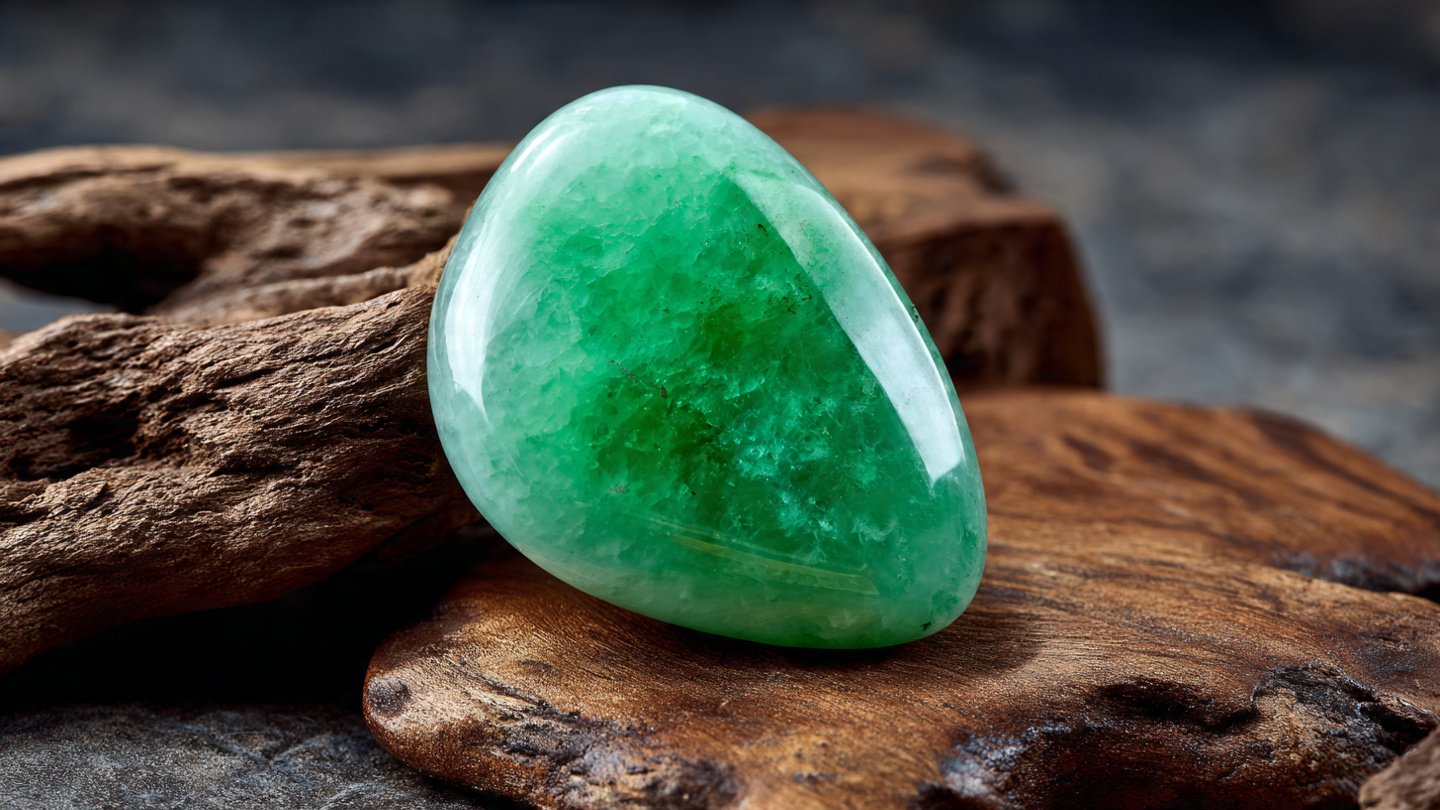
Už ste niekedy držali kúsok nefritu a čudovali sa, prečo jeden vyzerá identický s druhým, ale stojí desaťkrát viac? Tajomstvo okolitých nefritových ocenení zmätie aj skúsených zberateľov. Na rozdiel od diamantov so štandardizovanými 4C, nefritové oceňovanie zahŕňa jemné nuansy, ktoré sa väčšina ľudí nikdy nenaučí rozpoznať.
Tu sa zaujímavá časť: dva nefritové kusy sediace vedľa seba v displeji môžu vyzerať prakticky identické s netrénovaným okom, napriek tomu jeden príkaz $500, zatiaľ čo druhý sťahuje $50 000. Pochopenie toho, čo vytvára tento dramatický rozdiel hodnoty chráni vaše investície a premieňa vás z príležitostného kupujúceho na vedomého zberateľa.
Táto príručka odhaľuje kritické faktory, ktoré určujú nefraktickú hodnotu v roku 2025. Zistíte, prečo cisársky nefund predáva viac za karát ako diamanty, ako liečba môže zničiť 90% kameňa stojí, a ktoré špecifické vlastnosti oddeľujú múzeum-kvalitné kúsky od komerčného neda.
Či už uvažujete o svojom prvom nefritovom nákupe alebo budovanie serióznej kolekcie, zvládnutie týchto faktorov oceňovania zaisťuje, že nikdy preplatiť a vždy rozpoznať skutočnú kvalitu.
Jade Typ: Nadácia hodnoty
Pred vyhodnotením akejkoľvek inej charakteristiky musíte odpovedať na jednu zásadnú otázku: Je jadeit alebo nefrit? Toto jediné rozlíšenie vytvára najdramatickejšie hodnotové rozdiely na nefritovom trhu.
Jadeite: Vzácna a cenná rozmanitosť
Jadeite sa vytvára pod extrémnym geologickým tlakom a vytvára tesne zablokovanú kryštalickú štruktúru, ktorá vytvára výnimočné farby a priesvitnosť. Tento minerál patrí do skupiny s pyroxénom a ako primárne zložky obsahuje sodík a hliník.
Rarity poháňa nedeite a prémiové ceny. Kvalitný materiál pochádza predovšetkým z Mjanmarska (predtým z Barmy) s obmedzenými zásobami v Guatemale, Japonsku a Kalifornii. Mjanmarsko dodáva svetu najlepšie neideite, najmä legendárny cisársky zelená odroda, ktorá prikazuje astronomické ceny.
Podľa Gemological Institute of America, jemné-kvalitné jadeite patrí medzi najdrahšie drahokamy na karát na svete. Múzeum-grade cisársky nedeit môže prekročiť $100 000 na karát, s výnimočnými kusmi dosahujúcimi ešte vyššie hodnoty na aukcii.
Jadeite je tvrdosť 6,5 až 7 na Mohsovej stupnici. Jej tesná krištáľová štruktúra vytvára sklenený, sklovitý lesk, ktorý chytí krásne svetlo. Premium nedeit zobrazuje pozoruhodnú priesvitnosť—Zdá sa, že najlepšie kúsky žiaria zvnútra, keď sú podsvietené.
Rozsah farieb nastavuje jadeit od seba. Okrem slávnych zelenín sa tento minerál prirodzene vyskytuje v levanduli, bielej, žltej, oranžovej, červenej, modrej a čiernej. Každá farba sleduje vlastnú cenovú štruktúru založenú na rarite a dopyte na trhu.
Nefrite: Historický poklad
Nefrite nesie 7000-ročnú históriu ľudského ocenenia. Tento minerál patrí do skupiny obojživelníkov, ktoré tvoria kamene bohaté na vápnik a horčík. Jeho vláknitá kryštalická štruktúra vytvára výnimočnú pevnosť—Nefrite sa radí medzi najtvrdšie materiály prírody.
Starovekí čínski cisári ocenili nefritu za tisícročia predtým, ako Jadeite vstúpil do Číny okolo 18. storočia. Slávna hodvábna cesta obchodovala s nefrite po celej Ázii a do Európy, ktorým sa vytvoril nefritový legendárny status po celom svete.
Nefrite zaznamenáva mierne mäkšie ako nefrit pri 6 až 6,5 na Mohsovej stupnici. Avšak, jeho prepojenie vláknitá štruktúra robí neuveriteľne odolný voči rozbitiu—v mnohých prípadoch viac ako jadeite. Vďaka tejto húževnatosti bol Nefrite ideálny pre nástroje, zbrane a zložité rezbárske práce v starovekých kultúrach.
Farebne, nefrite zvyčajne zobrazuje zelené od bledého seladonu až po hlboký špenát zelený, spolu s bielymi, sivé, hnedé a čierne odrody. Najcennejší nefrit je "mutton fat nefrit"—krémová biela až bledožltá odroda, ktorá čínske zberatelia cenu nad mnohými jadeitových farieb.
Podľa Medzinárodnej Gem Society sa kvalita nefritu zvyčajne pohybuje od $10 až $1 000 na karát, s výnimočným dosiahnutím baraního tuku $100 až $500 za karát. To zvyšuje prístupnosť nefritu a zároveň ponúka investičný potenciál pre špičkové triedy.
Britská Kolumbia produkuje niektoré zo svetových najlepších nefrite dnes. BC jade má silný dopyt po jeho konzistentné kvality a hlboké zelené farby.
Farba: ovládač najviditeľnejšej hodnoty
Farba je jedným z najvplyvnejších faktorov v nefritovom ocenení. Najmä pre jadeit, správna farba môže násobiť hodnotu tisíce percent.
Pochopenie farebných komponentov
Gemológovia hodnotia nefraktickú farbu pomocou troch odlišných komponentov, ktoré spolupracujú.
Hue odkazuje na skutočný názov farby—zelená, levanduľová, biela, žltá alebo iné. Čisté odtiene bez sekundárnych odtieňov províziu ceny. Napríklad čistá zelená bez hnedého alebo sivého podtónu je oveľa vyššia ako žltozelená.
Nasýtenie meria intenzitu alebo čistotu farby. Živá intenzívna saturácia vytvára maximálnu hodnotu. Slabé, vyplavené farby výrazne znižujú hodnotu. Berte saturáciu ako rozdiel medzi žiarivou smaragdovou zelenou a bledou, vodnatou zelenou.
Tón indikuje ľahkosť alebo tmu farby. Stredne až stredne tmavé tóny zvyčajne zabezpečujú najvyššie ceny. Veľmi ľahké tóny sa objavujú vyplavené, zatiaľ čo extrémne tmavé tóny sa môžu zdať čierne a bez života.
Podľa nefritových odborníkov perfektné skóre vo všetkých troch komponentoch vytvára exponenciálne vyššie hodnoty ako kusy vynikajúce len v jednej alebo dvoch oblastiach.
Cisárska zelená: Kráľ farieb
Imperial nede predstavuje vrchol jadeitovej farby. Táto živá smaragdová zelená s výnimočnou priesvitnosťou prikazuje najvyššie ceny v drahokamovom svete.
Prečo je cisárska zelená výnimočná? Farba musí byť čistá, intenzívna zelená bez hnedej, šedej alebo žlté odtiene. Tieň by mal evokovať najlepšie smaragdy—Bohatý, živý a živý. Distribúcia musí byť rovnomerná v celom kameni bez šľahania alebo záplat.
GIA poznamenáva, že čínsky kráľovský dvor raz zachoval stály poriadok pre všetky dostupné imperiálne nefritové materiály. Tento historický dopyt v kombinácii s extrémnou raritou vedie moderné ceny k stratosférickej úrovni.
Aktuálne údaje o trhu ukazujú, že imperial jade siaha od $500 až viac $100 000 na karát v závislosti od kvality. Výnimočné ukážky múzea sa na dražbe predali za milióny.
Levanduľa Jade: Romantická alternatíva
Levanduľová jadeite radí ako jeden z nefritových najvzácnejších a najcennejších farieb. Tento mäkký fialový ružový hue evokuje pokoj a zostáva neustále populárny na ázijských trhoch.
Kvalitný levanduľový nede v súčasnosti náklady $200 až $1,400 na karát podľa trhových údajov. Cena odráža skutočný nedostatok—levanduľová jadeita sa vytvára za veľmi špecifických geologických podmienok, ktoré sa vyskytujú zriedkavo.
Intenzita farieb poháňa levanduľové nefritové ceny dramaticky. Bledá, vyplavená levanduľa sa predáva v blízkosti spodného dosahu. Bohatá, nasýtená levanduľa s dobrou priesvitnosťou sa približuje k hornej hranici. Najcennejšie kusy zobrazujú stálu farbu v celej bez záplat alebo zón.
White and Mutton Fat Jade
Biela jade má hlboký kultúrny význam, najmä na čínskych trhoch. Kvalitný biely nedeit zvyčajne náklady $50 až $500 za karát v závislosti od priesvitnosti.
Nefrit—ten krémový biely až bledožltý nefrit—napriek tomu, že je nefrite, prikazuje prémiové ceny. Podľa tradičnej čínskej estetiky, baranie tuk stelesňuje čistotu a dokonalosť. Najlepšie kusy zobrazujú mäkký, teplý tón s vynikajúcou priesvitnosťou a takmer mastný lesk.
Výnimočné baranie tuk môže dosiahnuť $250 až $500 za karát, súťažiť so strednou jadeite. Čínski zberatelia si často cenia top baraní tuk nad mnohými jadeitovými farbami.
Distribúcia farieb a uniformita
Okrem konkrétneho odtieňu, ako farba distribuuje po celom kameni dramaticky ovplyvňuje hodnotu. Uniformný, dokonca aj farba v celom príkaze prémiové ceny. Mottled alebo patchy farba výrazne znižuje hodnotu.
Some pieces display attractive combinations of colors—for instance, white with green accents. These “bi-color” or “multi-color” pieces can be valuable if the colors complement each other and show clear boundaries. However, muddy transitions or unattractive combinations reduce worth.
Jade experts note that color consistency becomes increasingly important as price points rise. For investment-grade pieces over $10,000, color must be nearly flawless in distribution.
Translucency: The Glow Within
While color catches the eye first, translucency often separates good jade from exceptional jade. This characteristic refers to how light penetrates and interacts with the stone.
Grading Translucency Levels
Gemologists grade jade translucency from opaque to transparent. Opaque jade blocks light completely—you cannot see through it at all even when backlit. This represents the lowest translucency grade.
Semi-translucent jade allows some light penetration. When you hold it to a light source, you can see the glow within but cannot see through to objects behind it. This represents mid-grade translucency.
Translucent jade allows significant light passage. The stone glows beautifully when backlit, and you can see vague shapes through thinner sections. This represents high-grade translucency.
Semi-transparent jade approaches transparency. Light passes through easily, and you can see through the stone although not crystal clear. The finest imperial jade often achieves this level.
According to jade evaluation standards, translucency affects value as dramatically as color. Two pieces with identical color can differ by thousands of dollars per carat based solely on translucency differences.
The “Life” in Jade
Experienced collectors talk about jade having “life” or “spirit”—they’re referring primarily to translucency. When you hold quality jade to light, it seems to glow from within. The stone appears alive, almost liquid.
This internal glow comes from light penetrating the stone, interacting with its crystalline structure, and emerging with a soft, diffused quality. Opaque jade lacks this magical quality entirely.
Testing translucency requires proper lighting. Hold jade pieces against a bright light source—sunlight works perfectly. Quality pieces show light passing through with an even, beautiful glow. Dead, opaque stones block light completely.
For bangles specifically, quality pieces glow when you hold them up to light. You should see the light shining through the walls, creating a luminous quality that opaque bangles completely lack.
Translucency and Color Interaction
Translucency and color work together to create value. The finest imperial jade combines vivid green color with exceptional translucency—a rare and valuable combination.
Interestingly, very dark colors make high translucency difficult to achieve. Dark green or black jade might be translucent in thin sections but appear opaque in thicker pieces. This physical reality affects pricing for darker jade colors.
White and lavender jade benefit tremendously from high translucency. These lighter colors allow easier light transmission, and the finest pieces approach transparency while maintaining color saturation.
Texture: The Feel of Quality
Texture refers to jade’s internal crystal structure and surface quality. This factor significantly impacts both value and desirability.
Crystal Size and Structure
Fine texture means microscopic crystals packed so tightly you cannot see individual grains even under magnification. This creates jade’s characteristic smooth, silky feel.
According to jade quality experts, texture actually ranks as the most important factor for jadeite specifically. The tightest crystal structure creates what dealers call “old mine” appearance—a reference to legendary deposits that produced the finest historical pieces.
Coarse texture shows visible crystalline structure or fibrous patterns. While still genuine jade, coarse texture significantly reduces value compared to fine-grained pieces. Under magnification, you can see individual crystals or fibers rather than a uniform, smooth appearance.
Medium texture falls between these extremes. Individual crystals are visible under magnification but not to the naked eye. This represents acceptable quality for mid-range jade but not investment-grade material.
Surface Polish and Luster
Texture directly affects how well jade takes a polish. Fine-textured jade accepts an exceptional polish, creating a mirror-like surface that reflects undistorted images.
Run your finger across quality jade—it should feel almost like touching silk or fine porcelain. The surface should be perfectly smooth without any granular or rough sensation. This tactile quality comes from fine texture accepting superior polish.
Coarse-textured jade feels slightly rough or granular even when polished. The surface may show tiny pits or irregularities. These textural defects reduce value substantially.
Luster refers to how light reflects from the surface. Jadeite’s fine texture creates vitreous (glassy) luster when properly polished. Nephrite’s fibrous structure creates resinous to waxy luster. Both should appear bright and attractive.
Texture Evaluation Techniques
Professional evaluation uses microscopic examination to assess texture. Gemologists examine the internal structure under magnification, measuring crystal size and distribution.
For buyers without microscopes, visual and tactile examination provides good indicators. Look at the polished surface under bright light. Does it show mirror-like reflections? Any graininess visible suggests coarser texture.
Touch the stone. Quality jade feels silky smooth. Any roughness or graininess you can feel indicates texture problems.
High-quality jade photographs should show smooth, uniform appearance without visible grain structure. If you can see crystalline texture in photos, the piece likely has coarser texture reducing its value.
Treatment Status: Natural vs Enhanced
Treatment status dramatically affects jade value—often more than any other single factor except type. Understanding the grading system protects you from paying natural jade prices for treated material.
Type A Jade: Completely Natural
Type A jade contains no chemical treatments whatsoever. The stone may have a thin wax coating applied after polishing—this traditional treatment is acceptable and doesn’t affect the Type A designation.
According to Federal Trade Commission guidelines and international gemological standards, only Type A jade maintains full value and appreciates over time. This is the only grade serious collectors and investors should consider.
Type A jade shows its true, natural color. Any color you see formed naturally during the stone’s geological formation. Texture and translucency are entirely natural as well.
Reputable dealers provide certification confirming Type A status from recognized gemological laboratories. Always insist on this documentation for significant purchases.
Type B Jade: Bleached and Impregnated
Type B jade undergoes acid bleaching to remove impurities, followed by polymer injection to fill microscopic cracks. This process improves appearance short-term but weakens the stone’s structure.
The bleaching process involves soaking jade in hydrochloric or sulfuric acid. This removes brown stains and inferior color, leaving the stone lighter and cleaner-looking. However, the acid also creates microscopic cracks throughout the structure.
To stabilize the weakened stone, manufacturers place it in a vacuum chamber and inject polymer resins. This fills the cracks and creates a smooth finish. Some sources note the polymer can change appearance and reduce quality over time.
Value drops 70-90% compared to equivalent Type A jade. According to the International Gem Society, Type B treatments can fail over time, with polymers yellowing and the stone deteriorating.
The GIA emphasizes that Type B jade requires special care and may not last as long as natural material. Full disclosure is required by law when selling Type B jade.
Type C Jade: Artificially Dyed
Type C jade receives artificial dye to enhance or change color. Usually this combines with Type B treatments—bleaching, polymer injection, then dyeing. The industry calls this “B+C jade.”
Dyes can create unrealistic colors or enhance natural but weak colors. The dyeing process is detrimental to jade, weakening its structure further and potentially causing color to fade or change over time.
Type C jade has virtually no investment value. The artificial color and weakened structure mean the piece will not appreciate and may actually deteriorate with time.
Detection requires professional testing. UV fluorescence, spectroscopy, and microscopic examination can identify dyes that visual inspection might miss.
Why Treatment Matters
Natural, untreated Type A jade is the only category that appreciates in value like gold. Grade A jadeite from quality sources has shown consistent appreciation over decades.
Treated jade not only starts at drastically reduced value but continues losing worth as treatments fail. Polymers yellow, dyes fade, and the weakened structure may develop visible cracks or deterioration.
For jewelry meant to be worn daily and passed to future generations, only Type A jade makes sense. The durability and lasting beauty justify the higher initial investment.
When buying jade, always ask about treatment status directly. Evasive answers or unwillingness to provide written certification should raise immediate red flags.
Clarity: Evaluating Imperfections
Unlike many gemstones where clarity (freedom from inclusions) dominates value considerations, jade evaluation treats clarity differently.
Types of Imperfections
Natural jade contains various types of inclusions and imperfections formed during geological creation.
Internal inclusions consist of other minerals trapped within the jade during formation. These might appear as dark spots, clouds, or crystals. Small, inconspicuous inclusions have minimal impact on value. Large, obvious inclusions reduce worth significantly.
Fractures and cracks represent the most serious clarity issues. Any visible fracture dramatically reduces value because it weakens the stone and may expand over time. Even hairline fractures invisible without magnification affect durability.
Color zoning occurs when color distributes unevenly, creating distinct areas of different shades. While technically not an inclusion, uneven color zones reduce value compared to uniform color throughout.
Clarity Standards for Jade
Jade clarity standards differ from diamonds or sapphires. Small inclusions don’t necessarily reduce value dramatically if the stone otherwise exhibits excellent color, translucency, and texture.
However, fractures carry severe value penalties. Any crack visible to the naked eye disqualifies jade from investment grade regardless of other qualities. According to the GIA, fractures can strongly affect value even in otherwise exceptional material.
The key is whether imperfections are visible and whether they impact durability or appearance. Tiny inclusions visible only under magnification might reduce value by 10-20%. Large, obvious inclusions can reduce value by 50% or more.
Clean jade with no visible inclusions commands premium prices, all other factors being equal. But remember that color, translucency, and texture typically outweigh clarity in jade valuation.
Evaluating Clarity
Examine jade under bright, direct lighting. Look through the stone at various angles. Any cracks should become visible as light refracts through them differently than through solid jade.
Use a jeweler’s loupe for closer examination. Check for surface-reaching fractures that might expand. Look for inclusion patterns that might indicate treatments rather than natural formation.
For bangles specifically, examine the entire circle carefully. Fractures anywhere in the bangle create breakage risk and dramatically reduce value. Never buy a fractured bangle regardless of price.
Professional gemologists use microscopes and specialized lighting to map inclusions and fractures. For expensive pieces, this professional evaluation justifies its cost by ensuring you understand exactly what you’re buying.
Size and Weight: Bigger Means Exponentially More Valuable
Jade pricing doesn’t scale linearly with size. Larger pieces of quality jade cost exponentially more per carat because finding large, high-quality material grows increasingly difficult.
The Size Premium
A 50-carat imperial jade cabochon doesn’t cost twice what a 25-carat stone costs—it might cost five or ten times as much. This reflects the rarity of finding large pieces of consistent, high quality.
According to the GIA, value of cabochons, beads, and bangle bracelets rises with increased size, with all other quality factors being equal. For top-quality imperial jadeite, slight differences in size can make large differences in value.
The size premium grows more pronounced at higher quality levels. Commercial-grade jade shows minimal size premium—large pieces cost only moderately more per carat than small ones. Investment-grade jade shows dramatic size premiums.
Jade Bangles: The Ultimate Size Challenge
Jade bangles command particular premiums because they must be carved from a single piece without joints. The jade boulder must be large enough to accommodate the bangle diameter plus wall thickness—rare in top-quality material.
When carvers fashion a bangle from a single piece of rough, tremendous weight loss results. For this reason, hololith bangles (carved from one piece) cost far more than bangles consisting of several pieces joined by precious-metal hinges.
A quality imperial jade bangle might weigh 50-60 grams. Finding a boulder of consistent imperial-quality material large enough to carve such a bangle presents enormous challenges. This scarcity drives prices into hundreds of thousands of dollars.
Carvings vs. Cabochons
Carved jade pieces are valued by piece, not carat. Artistry and provenance become the major value factors for carvings.
Master carvers can transform good jade into museum-quality art pieces worth many times the raw material cost. Traditional Chinese motifs—dragons, phoenixes, Buddha figures, lotus flowers—carry cultural significance enhancing value beyond the stone itself.
Large carvings require substantial raw material. A detailed sculpture might weigh several pounds, meaning the raw jade boulder must be massive. Finding such large pieces in quality material is exceptionally rare.
Size Considerations for Buyers
For jewelry purposes, moderate sizes often offer the best value. A 5-carat pendant of exceptional quality costs less than a 50-carat pendant while still showcasing the jade’s beauty.
Investment buyers might target larger pieces specifically for the size premium. If you can afford a 30-carat imperial jade cabochon, it likely appreciates faster than several 5-carat stones of equivalent quality.
For nephrite, size affects value less dramatically in most cases according to industry data. The larger supply of nephrite means big pieces are easier to source than with jadeite.
Origin and Provenance: Where Jade Comes From
The source of jade affects both value and authenticity. Certain origins command premium prices based on historical production of exceptional material.
Myanmar: The Imperial Source
Myanmar (formerly Burma) produces the world’s finest jadeite. Burmese jadeite, particularly imperial green, remains the most expensive and sought-after jade globally.
The jadeite deposits found in Myanmar’s northern regions are the source of the highest quality jadeite in the world, with Chinese sources documenting this quality as far back as the 10th century.
Burmese jade entered China around the late 1700s. Late 18th and early 19th century Chinese carvers created masterpieces from this material that remain unsurpassed today.
Political instability in Myanmar has affected supply chains recently. Environmental regulations and mining restrictions further limit availability of top-quality Burmese material. These supply constraints contribute to price increases for high-quality Burmese jadeite.
Other Jadeite Sources
Guatemala produces rare blue jadeite highly valued by collectors. The ancient Maya and Aztec peoples prized Guatemalan jadeite, calling it “quetzal jade” for its bright green color.
Russian sources supply apple green-colored jadeite at some localities, along with fine translucent, chromium-rich material from the Kantegir River in West Sayan.
California’s San Benito County produces jadeite in lenses and nodules within chert formations, showing various colors. While historically significant, California jadeite rarely reaches the quality of Burmese material.
Japan produces some jadeite, though quantities and quality cannot compete with Myanmar deposits.
Nephrite Sources
For nephrite, British Columbia in Canada ranks among the finest sources. BC jade enjoys strong reputation for consistent quality and attractive deep green colors.
Chinese Hetian jade, especially mutton fat variety, remains highly prized. However, Chinese nephrite production from the Kunlun Mountains in Western China is shrinking according to industry reports.
Russian nephrite from Siberia supplies significant quantities. In the 1860s, Russia discovered its own jade deposits after importing from China for centuries. Today, the main deposits are located in Eastern Siberia, though jade is also extracted in the Polar Urals and Krasnoyarsk territory.
New Zealand’s pounamu (nephrite) holds cultural significance for the Māori people. Authentic pounamu carries deep cultural value and often fetches premium prices beyond pure material worth.
Provenance and Documentation
Provenance refers to the documented history of a specific jade piece. Items with clear provenance—especially pieces from famous collections or with historical significance—command substantial premiums.
Imperial jade pieces from Qing Dynasty royal collections sell for millions at auction. The historical significance and documented provenance add enormous value beyond the material itself.
For modern pieces, certification documenting origin from recognized sources adds value and buyer confidence. A certificate stating “Burmese jadeite” from a reputable laboratory supports higher pricing than uncertified material.
Craftsmanship: Artistry Adds Value
The skill applied to transforming raw jade into finished pieces dramatically impacts final value. Master craftsmanship can multiply worth many times over.
Traditional Carving Mastery
Jade carving in China represents a 7,000-year-old tradition. According to historical sources, working jade presents enormous challenges—it’s as hard as bronze and iron, requiring tremendous strength and deep understanding of its texture and color.
Master carvers spend years learning to read jade’s internal structure. They must understand where fractures might hide, how color distributes, and which carving approach best showcases each unique piece.
Traditional tools evolved from quartz to red sand (hardness 7.5) during the Song dynasty. By 1939, Peking jade carvers used six different abrasives: quartz, almandine garnet, corundum, carborundum, diamond, and a medium combining both carborundum and calcareous silt.
The abrasion method remains essential today. Despite modern technology, jade’s toughness requires patient, skilled work to achieve intricate details and smooth finish.
Traditional Motifs and Symbolism
Chinese jade carvings carry deep symbolic meaning. Understanding these traditional motifs helps evaluate cultural value.
Dragons represent imperial power, strength, and good fortune. Dragon carvings on jade connect the owner with these powerful symbolic attributes.
Phoenixes symbolize virtue, grace, and renewal. Often paired with dragons to represent perfect balance.
Buddha figures convey spiritual enlightenment and peace. Buddhist imagery on jade appeals strongly to spiritual collectors.
Lotus flowers represent purity rising from muddy waters—a powerful metaphor in Buddhist and Chinese philosophy.
The bi disk (circular disk with central hole) carries enormous spiritual significance. Confucius mentioned jade’s virtue, and the bi shape represents the connection between heaven and earth.
Modern Craftsmanship Value
Contemporary master carvers continue this tradition, creating pieces that blend ancient techniques with modern tools and designs.
Quality craftsmanship shows in several ways. Surfaces should be perfectly smooth without tool marks or rough patches. Details should be crisp and precise, whether depicting dragon scales or lotus petals.
Proportions matter tremendously. Well-designed carvings show balanced, harmonious proportions that please the eye. Awkward proportions or poor design reduce value regardless of material quality.
Polish quality indicates craftsmanship level. Superior artisans achieve mirror-like polish that enhances the jade’s natural luster. Poor polishing leaves surfaces dull or uneven.
According to jade experts, experienced artisans wouldn’t spend time crafting masterpieces from poor quality jade—the intrinsic value would be too low. Conversely, if craftsmanship is detailed and fine, it typically indicates more valuable material.
Cultural Significance: Beyond Material Value
Jade’s worth extends far beyond physical properties. Cultural significance, particularly in Chinese society, adds value that purely material assessment cannot capture.
Chinese Cultural Heritage
Jade has been integral to Chinese culture for over 7,000 years. The philosopher Confucius reportedly described jade as embodying eleven virtues: benevolence, righteousness, wisdom, courage, propriety, loyalty, honesty, grace, intelligence, shame, and endurance.
In Chinese, the character 玉 (yù) designates jade and more generally means beauty and preciousness. This character appears very similar to 王 (wáng), meaning king—a linguistic connection reflecting jade’s association with royalty and power.
During the Han dynasty (206 BCE – 220 CE), the royal family and prominent lords were buried entirely encased in jade burial suits sewn with gold thread. They believed jade would preserve the body and the souls attached to it—a testament to jade’s perceived spiritual power.
According to Chinese tradition, jade symbolizes balance in feng shui and is revered for healing properties. It’s believed to balance the body’s processes, remove toxins, and bring good fortune.
Jade as Status Symbol
Throughout Chinese history, jade ownership indicated status and refinement. Imperial collections contained thousands of jade pieces, with emperors spending hours contemplating their jade artifacts.
The Qing Dynasty Emperor Qianlong was obsessed with jade, building the most extensive known collection during his reign. He composed 800 poems and songs about jade, according to historical sources.
Modern Chinese culture continues this jade appreciation. The rising middle class in China drove a tenfold price increase from 2000 to 2010 for the finest “mutton fat” jade. Wealthy Chinese collectors pay record prices at international auctions.
Jade jewelry remains a popular gift for significant life events—births, weddings, coming of age. A jade bangle traditionally given when a Chinese girl reaches adulthood carries sentimental value far beyond its monetary worth.
Investment and Collecting Culture
The combination of material rarity, cultural significance, and investment potential creates strong collector demand. Serious collectors view premium jade as tangible assets that appreciate independently of stock market fluctuations.
Major auction houses regularly feature jade in their Asian art sales. The 2014 sale of the Hutton-Mdivani jadeite necklace for $27.4 million demonstrates jade’s investment potential. More recently, exceptional jade pieces have sold for over $31 million at major auctions.
However, jade markets can be illiquid compared to gold or diamonds. Selling high-end jade requires finding educated buyers willing to pay fair value—this might take weeks, months, or longer.
Cultural knowledge enhances collecting success. Understanding Chinese symbolism, historical context, and traditional aesthetics helps identify pieces with maximum cultural significance.
Market Trends Affecting Value
Current market dynamics influence jade values beyond traditional quality factors. Understanding these trends helps buyers make informed decisions.
Supply Constraints
Myanmar’s political instability has disrupted jadeite supplies in recent years. Environmental regulations and mining restrictions further limit availability of top-quality material from the world’s primary source.
These supply constraints directly impact pricing. As high-quality Burmese jadeite becomes scarcer, prices for existing pieces rise. The finite supply means no new material can enter the market to satisfy growing demand.
For nephrite, British Columbia remains a stable source, though the finest quality material grows harder to find. Russian deposits continue producing, but quality varies by specific location.
Growing Global Demand
While Chinese and broader Asian markets continue driving jade demand, interest has spread globally. Western collectors increasingly appreciate jade’s beauty and cultural significance.
This expanding market creates upward price pressure, especially for investment-grade pieces. When buyer pools grow while supply stays constant or shrinks, prices naturally rise.
The International Gem Society notes that fine-quality jade from Myanmar remains among the most expensive gemstones per carat, reflecting this strong global demand.
Authentication Technology
Improved testing technology helps buyers verify authenticity and treatment status more reliably. Infrared spectroscopy now provides the most accurate test for detecting polymer in jadeite.
This technological advancement benefits serious buyers by reducing risks. However, it also means treated jade increasingly gets caught and properly disclosed, reducing the pool of material that can be misrepresented.
Professional gemological laboratories provide increasingly sophisticated testing and certification. This transparency benefits the market overall by building trust between buyers and sellers.
Practical Evaluation Strategy
Knowing these factors theoretically helps, but applying them practically requires systematic approach.
Step-by-Step Evaluation Process
First, determine the type. Is it jadeite or nephrite? This fundamental distinction must be established before assessing other factors. For significant purchases, insist on laboratory certification confirming type.
Second, evaluate treatment status. Request written certification documenting whether the jade is Type A, B, or C. Never purchase expensive jade without this documentation from a recognized laboratory.
Third, assess color. Examine the hue, saturation, and tone under natural daylight if possible. Check for uniformity throughout the piece. Compare the color to reference materials or other pieces to calibrate your judgment.
Fourth, test translucency. Hold the piece up to bright light. Does it glow from within? Can you see light passing through? Compare translucency against other jade pieces to develop reference points.
Fifth, examine texture. Look at the surface under bright light. Does it show mirror-like polish? Feel the surface—quality jade feels silky smooth. Use a loupe if available to check for visible grain structure.
Sixth, check for clarity issues. Look for fractures, cracks, or obvious inclusions. Any visible fracture should disqualify the piece from serious consideration unless priced accordingly.
Seventh, consider size and craftsmanship. Is the piece large enough to command size premium? Does the craftsmanship justify higher pricing? Look at design quality, polish, and overall execution.
Eighth, verify origin and provenance if claimed. If a seller claims Burmese jadeite, request documentation. Provenance documentation adds both confidence and value.
Questions to Ask Sellers
Professional dealers welcome educated questions. Ask these specifics:
- Is this jadeite or nephrite?
- What is the treatment status? (Request Type A, B, or C designation)
- Where does this jade originate?
- Can you provide laboratory certification?
- What is your return policy?
- How long have you specialized in jade?
- Can you explain the quality factors in this specific piece?
Evasive answers or unwillingness to provide documentation should raise red flags. Legitimate dealers gladly provide certificates and detailed information.
Building Your Knowledge
Become an educated buyer through consistent exposure to jade. Visit museums to see authenticated historical pieces and understand quality benchmarks. Attend gem shows where you can examine jade from multiple dealers side by side.
Handle as many pieces as possible to develop tactile familiarity with quality jade. The silky feel of fine-textured jade, the weight, the cool touch—these physical characteristics become recognizable with experience.
Study books by recognized experts. Read articles from gemological organizations. Join online communities focused on jade collecting where enthusiasts share experiences and knowledge.
Start with modest purchases while learning. Buy quality nephrite in the $100-$500 range to practice evaluation skills. As knowledge grows, gradually increase budgets toward jadeite pieces.
Final Thoughts on Jade Valuation
Understanding jade value requires appreciating its complex nature. Multiple factors work together, each influencing the others to create overall worth.
The knowledge you’ve gained here—distinguishing types, recognizing quality factors, understanding treatments, and knowing market dynamics—protects you from overpaying while helping you recognize genuine value.
Remember that jade transcends pure monetary value. This gemstone carries millennia of human cultural heritage. Whether you own a $50 nephrite pendant or a $50,000 imperial jadeite ring, you’re connecting with something ancient, meaningful, and beautiful.
Start slowly, study continuously, and buy from reputable sources. The $200 piece you choose carefully after research brings more satisfaction than a $2,000 piece bought impulsively without knowledge.
Every jade piece tells a story. Learn to read that story through the factors affecting its value, and your appreciation deepens immeasurably.
Take Action on Your Jade Journey
Ready to apply this knowledge? Start by visiting reputable jade dealers to examine pieces in person. Compare different quality levels side by side to train your eye for the subtle differences separating exceptional jade from merely good jade.
Share this guide with anyone considering jade purchases—knowledge protects buyers and supports fair dealing throughout the jade market. Comment below with your questions or experiences. What challenges have you faced evaluating jade? Which factors do you find hardest to assess?
Join jade collecting communities online. Connect with fellow enthusiasts who share your passion. The collective knowledge helps everyone avoid expensive mistakes while celebrating great finds.
Remember: jade rewards patient study. Invest time learning before investing money buying. Ask questions, demand authentication, and purchase pieces that genuinely speak to you. That approach builds collections bringing lasting joy while holding value across generations.
Your jade journey starts with knowledge. Use these valuation factors as your guide, trust your developing judgment, and enjoy discovering this remarkable gemstone’s endless fascination.


