

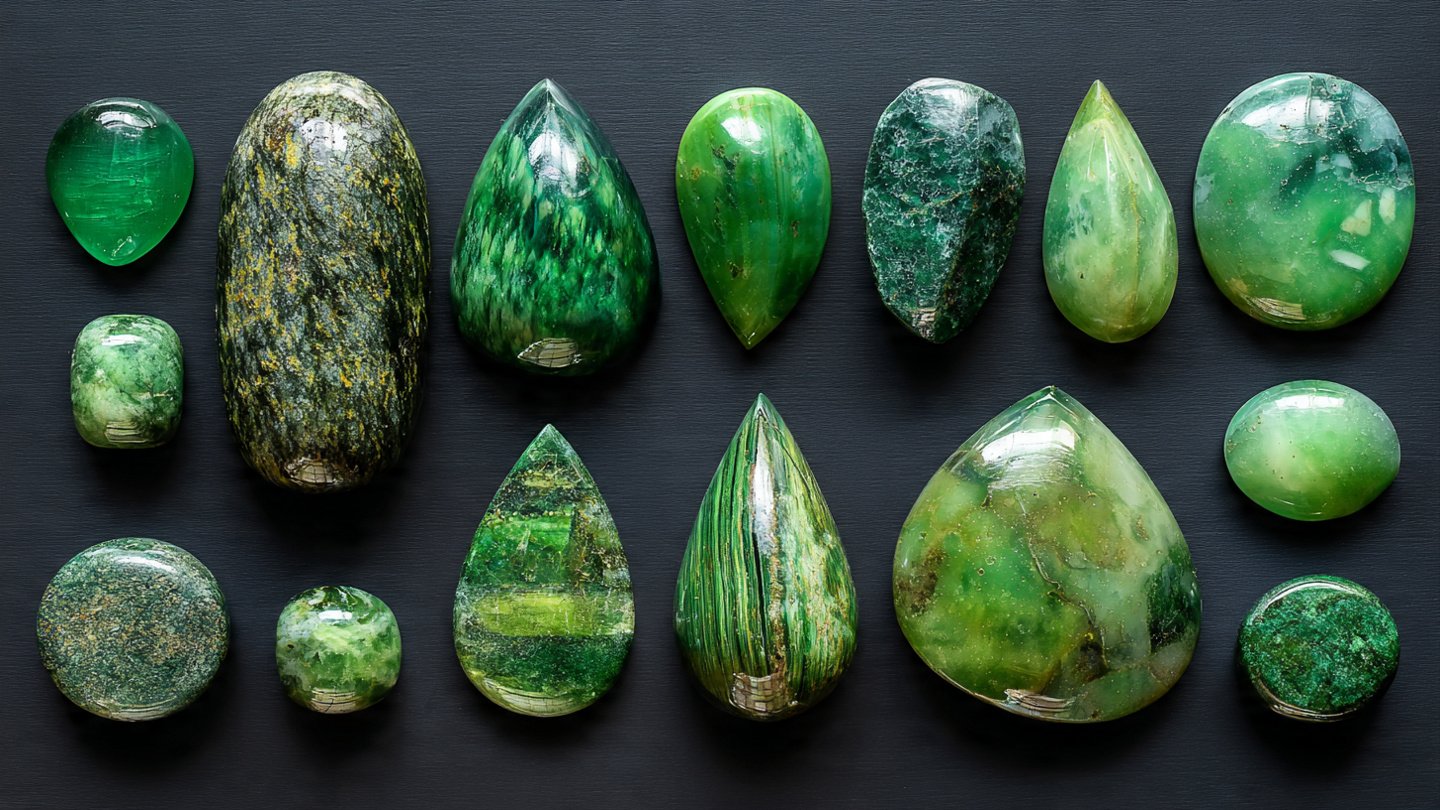
Walking through a gem market or browsing online jewelry stores, you’ll encounter countless “jade” pieces that aren’t actually jade at all. The confusion is understandable—dozens of green stones look remarkably similar to authentic jade, and many sellers either don’t know the difference or deliberately mislead buyers.
This mix-up isn’t just a modern problem. For thousands of years, collectors, artisans, and traders have confused various green minerals with jade. Some of these stones are valuable in their own right, while others are marketed deceptively to command jade’s premium prices.
In this comprehensive guide, we’ll explore the most common green stones mistaken for jade, teach you reliable identification methods, and help you become a more informed buyer. Whether you’re shopping for jewelry, building a collection, or simply curious about that “jade” bracelet you own, this information will prove invaluable.
Understanding Authentic Jade First
Before identifying imposters, we need to understand what real jade actually is. This might surprise you: only two minerals qualify as genuine jade—nephrite and jadeite. That’s it. Everything else, no matter how similar it looks, is technically not jade.
Nephrite jade consists of calcium magnesium silicate and ranges from creamy white to dark green, even black. It’s been treasured for over 7,000 years across multiple cultures. The Gemological Institute of America confirms that nephrite has a hardness of 6-6.5 on the Mohs scale and specific gravity between 2.90-3.03.
Jadeite, composed of sodium aluminum silicate, is rarer and typically more valuable. It displays vibrant colors including emerald green, lavender, red, yellow, and white. Imperial jadeite, the most prized variety, shows an intense emerald green that commands astronomical prices at auction. Jadeite rates 6.5-7 on the Mohs scale with specific gravity of 3.30-3.38.
Both types share exceptional toughness due to their interlocking crystalline structure. This makes jade incredibly durable—ancient civilizations fashioned it into tools and weapons because it resisted breaking better than most stones. Real jade feels cool to the touch initially, produces a musical tone when struck, and possesses a characteristic oily to vitreous luster.
Now let’s meet the green stones that constantly get mistaken for these precious minerals.
Serpentine: The Classic Jade Imposter
If there’s a hall of fame for green stones mistaken for jade, serpentine would have a permanent spot. This magnesium silicate mineral has fooled buyers for centuries and continues to dominate the “fake jade” market today.
Why the Confusion Happens
Serpentine displays colors ranging from pale green to deep forest green, often with darker veining that mimics jade’s natural patterns. The waxy luster looks nearly identical to nephrite jade at first glance. Many serpentine varieties even share jade’s smooth, polished appearance, making visual distinction difficult without experience.
The stone gets marketed under misleading names like “new jade,” “Korean jade,” “Transvaal jade,” “olive jade,” and “serpentine jade.” These names deliberately create confusion, implying the stone is a jade variety when it’s not.
How to Tell Them Apart
The hardness test provides the clearest distinction. Serpentine rates only 2.5-5.5 on the Mohs scale—significantly softer than jade’s 6-7. You can scratch serpentine with a steel knife or even a copper coin in some cases, while jade resists these materials. However, this test damages the stone, so use it only when appropriate.
Specific gravity offers a non-destructive test. Serpentine weighs 2.44-2.62, noticeably lighter than jade when you hold similar-sized pieces. According to the International Gem Society, experienced handlers can detect this weight difference immediately, though beginners may need a scale for accurate measurement.
Serpentine feels slightly greasier or soapier to the touch compared to jade’s smoother texture. When tapped together, serpentine pieces produce a dull thud rather than jade’s clear, resonant musical tone. Under magnification, serpentine often reveals a fibrous or scaly texture different from jade’s fine-grained uniformity.
Serpentine’s True Worth
Here’s an important perspective: serpentine isn’t worthless or “bad.” It’s a beautiful stone that makes attractive, affordable jewelry and carvings. Quality serpentine pieces have their own market and appeal. The problem arises only when unscrupulous sellers pass it off as jade, charging premium prices for a much less expensive material.
Aventurine: The Sparkling Deceiver
Green aventurine ranks second among green stones mistaken for jade. This quartz variety floods tourist markets worldwide, often labeled as “Indian jade” or sold simply as “jade” to unsuspecting buyers.
The Telltale Sparkle
Aventurine’s most distinctive feature should actually prevent confusion—its aventurescence, a glittery shimmer caused by included minerals like fuchsite mica or hematite. Look at aventurine under direct light and you’ll see thousands of tiny sparkles that catch and reflect light. Real jade never displays this sparkly quality.
Yet many buyers miss this obvious clue, especially in dim market stalls or when viewing small polished pieces. The overall green color and smooth polish distract from the sparkle, particularly when buyers lack experience handling jade.
Identification Methods
Beyond the sparkle test, aventurine shows other distinguishing characteristics. The specific gravity (2.64-2.69) falls well below jade’s range, making aventurine feel noticeably lighter in hand. While the hardness (6.5-7 on Mohs scale) matches jade, aventurine’s internal structure differs completely.
Under magnification, aventurine reveals quartz’s characteristic glassy, granular texture rather than jade’s interlocking fibrous structure. The sound test also works—tap two aventurine pieces together and you hear a dull sound typical of ordinary quartz, not jade’s clear, bell-like tone.
Color distribution provides another clue. Aventurine typically shows more uniform color throughout, while jade often displays subtle variations, sometimes with mottling or color zoning that creates visual interest and depth.
Aventurine’s Place in the Market
Aventurine is genuinely attractive and has legitimate uses in jewelry and decorative items. Its affordability makes it excellent for large pieces like worry stones, spheres, and statement jewelry. The problem isn’t aventurine itself but sellers who misrepresent it as more valuable jade.
Chrysoprase: The Premium Pretender
Chrysoprase occupies unique territory among green stones mistaken for jade because high-quality specimens actually command respectable prices of their own. This apple-green variety of chalcedony can rival jadeite in beauty and sometimes in value.
What Makes It Special
Chrysoprase displays a bright, almost neon apple-green color that can look remarkably similar to high-quality jadeite, particularly imperial jade. The color comes from nickel content, while jadeite’s green derives from chromium—different sources producing similar results.
Top-quality Australian chrysoprase pieces have sold for hundreds or even thousands of dollars, particularly in the early 20th century when chrysoprase enjoyed peak popularity. Even today, the finest specimens command premium prices, making the distinction between chrysoprase and jade more about accuracy than value difference.
Distinguishing Features
The color uniformity offers the first clue. Chrysoprase typically shows very consistent color throughout, lacking the natural variations and zoning common in jadeite. The bright apple-green appears almost too perfect, while even high-grade jadeite usually shows some color variation.
According to research by the Mineralogical Society of America, chrysoprase color can fade with prolonged sun exposure or heat—something true jadeite never does. This property helps identify older chrysoprase pieces that may have lightened over decades, revealing their true identity.
The specific gravity test proves definitive. Chrysoprase weighs 2.58-2.64, significantly lighter than jadeite’s 3.30-3.38. Pick up a piece of each, and the weight difference becomes immediately apparent. Under microscopic examination, chrysoprase reveals quartz’s microcrystalline structure, distinctly different from jadeite’s interlocking pyroxene crystals.
The sound test helps too. Chrysoprase produces a duller sound when tapped compared to jadeite’s clear, resonant tone. This test requires practice to distinguish subtle differences, but experienced collectors rely on it as a quick preliminary screening method.
Prehnite: The Pale Imitator
Prehnite flies under the radar compared to serpentine and aventurine, but it regularly gets confused with lighter green or yellowish jade varieties. This calcium aluminum silicate mineral deserves attention from anyone learning to identify jade.
Visual Characteristics
Prehnite typically appears more translucent than most jade, with colors ranging from pale yellowish-green to darker green. The translucency allows light to pass through, creating a soft glow that some find attractive but differs from jade’s typical opacity.
When backlit, prehnite often shows a characteristic botryoidal (grape-like) internal structure—rounded, bubble-like formations visible through the stone. Jade maintains a more linear, fibrous internal structure that looks completely different under the same lighting conditions.
Testing Methods
The hardness provides one distinction point. Prehnite rates 6-6.5 on the Mohs scale, slightly softer than jadeite though overlapping with nephrite’s range. The specific gravity (2.80-2.95) falls between nephrite and jadeite, making this measurement less useful for identification.
According to the Gemological Institute of America, prehnite displays a refractive index (1.611-1.669) different from both jade types, though measuring this requires specialized gemological equipment. For practical purposes, most people rely on visual examination and the sound test.
Prehnite often contains distinctive black or white inclusions that appear needle-like or crystalline under magnification. While jade can have inclusions, they present differently in character and distribution. The overall “feel” differs too—prehnite tends to warm up faster in your hand compared to jade’s famous coolness.
Grossular Garnet: The South African Mystery
Massive green grossular garnet, often called “Transvaal jade” or “hydrogrossular garnet,” represents one of the more challenging green stones mistaken for jade. Its similarity to nephrite has fooled many experienced collectors over the years.
The Identification Challenge
This garnet variety’s specific gravity (3.36-3.55) actually overlaps with jadeite’s range, making the standard weight test unreliable. The Mohs hardness (6.5-7.5) also falls within jade’s range, eliminating another common testing method. These overlapping properties explain why confusion persists.
The color, texture, and overall appearance can closely mimic nephrite jade, particularly South African specimens with darker green hues and smooth, massive (non-crystalline) structure. Even some professional jewelers have been fooled without proper testing equipment.
Professional Testing Required
Grossular garnet often contains distinctive black chromite inclusions appearing as spots or patches that look different from jade’s typical inclusions under magnification. However, definitively distinguishing high-quality grossular garnet from jade usually requires professional gemological testing.
The refractive index differs significantly at 1.720-1.734 compared to jade’s 1.600-1.688, but measuring this requires a refractometer. According to the Journal of Gemmology, infrared spectroscopy provides definitive identification by showing characteristic garnet absorption patterns distinct from jade.
For consumers, the practical takeaway is simple: when considering a significant purchase of what appears to be jade, especially if the color and appearance suggest South African origin, professional authentication becomes essential. The similarities are simply too close for casual inspection.
Dyed and Treated Materials: The Deceptive Category
Among all green stones mistaken for jade, artificially colored materials represent the most troubling category. These aren’t natural look-alikes but deliberately manipulated stones designed to deceive buyers.
Common Dyed Materials
Unscrupulous sellers dye various materials green to imitate jade, including white or pale quartzite, marble, soapstone, and even chalcedony. The results can look convincing at first glance, especially to inexperienced buyers browsing market stalls or online auctions.
Dyed stones typically show unnaturally vibrant, uniform color lacking jade’s characteristic subtle variations. The dye concentrates in cracks, fractures, and more porous areas, creating uneven color intensity visible under magnification. This uneven distribution is the primary giveaway.
Detection Methods
The acetone test can reveal dye treatment, though it’s somewhat destructive. Dab a cotton swab moistened with nail polish remover (acetone) on an inconspicuous area. If green color transfers to the swab, you’ve identified a dyed stone. Real jade shows no color transfer. Use this test cautiously as it may violate return policies.
Many dyed materials fluoresce under UV light due to the dyes used, while natural jade typically doesn’t fluoresce (though some jadeite can show weak fluorescence). A UV flashlight provides a quick, non-destructive preliminary test that works in most cases.
According to testing protocols from the American Gem Trade Association, dyed stones display different absorption patterns under spectroscopic analysis. Professional testing facilities use this method for definitive identification, particularly important for valuable purchases.
Polymer and Plastic Imitations
Even more concerning are complete imitations made from plastic, resin, or polymer materials, sometimes with jade powder mixed in to add weight and credibility. These represent the lowest form of deception in the jade market.
Polymer imitations feel warm to the touch rather than cool, are suspiciously lightweight, and may show mold marks or air bubbles under magnification. The hot point test—carefully touching a heated needle to an inconspicuous spot—causes plastic to melt or produce acrid smell, while stone won’t react. However, this permanently damages the piece.
Simple Home Tests for Jade Authentication
While professional testing provides certainty, several home tests help screen green stones mistaken for jade before investing in laboratory analysis.
The Cool Touch Test
Real jade feels distinctly cool when you first touch it to your cheek or wrist—cooler than most stones including many substitutes. This coolness comes from jade’s high thermal conductivity. The stone warms slowly from body heat, then feels cool again after setting it aside briefly.
Practice this test with known jade samples to calibrate your perception. Most plastics and resins feel warmer initially, while some stones like serpentine and aventurine don’t maintain coolness as long as authentic jade.
The Sound Test
Gently tap two jade pieces together or tap one piece with a small wooden stick. Authentic jade produces a clear, resonant, almost musical tone that sustains briefly. Most jade substitutes produce duller, flatter sounds.
This test requires practice and comparison samples for reference. Record the sound of known jade pieces, then compare suspected pieces against these recordings. The difference becomes obvious once you’ve trained your ear.
The Scratch Test
Jade’s hardness (6-7 on Mohs scale) means it resists scratching by steel. Try scratching an inconspicuous area with a steel knife. Jade won’t scratch, while softer materials like serpentine will show obvious damage. This test is destructive, so only use it when appropriate and with permission.
For less destructive testing, try scratching the stone with glass (hardness 5.5). Real jade should scratch glass without being damaged itself, while softer substitutes won’t scratch glass or will show damage.
The Density Test
This requires a precise scale and small water container. Weigh the stone in air, then suspended in water. Calculate specific gravity using the formula: (weight in air) ÷ (weight in air – weight in water). True jade falls within specific ranges: nephrite 2.90-3.03, jadeite 3.30-3.38.
This scientific test provides objective data, though it requires careful measurement and calculation. Many online calculators automate the math once you input the measurements.
Professional Authentication: When and How
Home tests provide useful screening, but certain situations demand professional gemological examination.
When to Seek Professional Testing
Consider professional authentication when purchasing jade valued over $500, insuring jade jewelry, verifying inherited pieces, settling estates, or questioning the authenticity of pieces you already own. The testing cost ($50-200 per item typically) is modest insurance against costly mistakes.
Professional gemological laboratories use sophisticated equipment including refractometers, spectroscopes, microscopes, and specific gravity measurement tools. Certified gemologists combine instrumental analysis with years of experience examining thousands of specimens.
Choosing a Testing Laboratory
Reputable options include the Gemological Institute of America (GIA), American Gemological Laboratories (AGL), Swiss Gemmological Institute (SSEF), and local certified gemologists. According to the Better Business Bureau, always verify credentials and ask about turnaround times and fees upfront.
Professional reports document the stone’s identity, any treatments detected, quality characteristics, and sometimes estimated value. These documents prove invaluable for insurance claims, estate settlements, and potential resale. They provide legal protection and peace of mind worth the testing investment.
Smart Shopping Strategies
Armed with knowledge about green stones mistaken for jade, let’s discuss practical purchasing strategies that protect you from fraud and disappointment.
Buy from Reputable Sources
Established jewelers with gemological credentials, certified dealers, reputable auction houses, and well-reviewed online retailers offer your best protection. While prices may be higher, you’re paying for authenticity guarantees, return policies, and accountability.
Avoid impulse purchases from street vendors, flea markets, tourist traps, or social media sellers without verifiable credentials. The “great deal” often proves too good to be true, leaving you with expensive serpentine or dyed quartzite.
Request Documentation
For purchases over $200, insist on written documentation specifying whether the stone is nephrite or jadeite, any treatments applied, origin information, and quality characteristics. Reputable dealers provide this documentation readily and welcome questions.
For significant purchases, require certification from recognized gemological laboratories. Be wary of sellers who refuse certification requests, become defensive about authentication, or pressure quick decisions before you can verify authenticity.
Learn Market Prices
Research current jade values before shopping. High-quality jadeite commands thousands to millions for exceptional pieces. Nephrite is generally more affordable but still commands respectable prices for quality specimens. If prices seem dramatically low, question why.
Understanding market values helps you recognize both overpriced substitutes and suspiciously cheap “jade” that probably isn’t authentic. Knowledge protects your wallet and improves purchasing confidence.
Ask Direct Questions
Don’t hesitate to question sellers: Is this nephrite or jadeite? Has it been treated or dyed? What is the origin? Can you provide certification? How long is the return period? Honest dealers welcome questions and provide detailed, patient answers.
Vague responses, defensive reactions, or evasive answers raise red flags. Professional dealers understand educated customers and appreciate serious buyers who ask informed questions.
Appreciating Jade Alternatives
Here’s an important perspective shift: not every green stone deserves rejection simply because it isn’t jade. Many jade alternatives possess genuine beauty and value when properly identified and fairly priced.
Serpentine makes gorgeous, affordable jewelry and carvings. Aventurine offers beautiful sparkle that jade doesn’t provide. Chrysoprase rivals jade in beauty and value. Prehnite’s soft translucency creates elegant, subtle pieces. Each material has unique properties worth appreciating.
Consider building a collection that celebrates various green minerals rather than focusing solely on authentic jade. This approach removes authentication anxiety while expanding your appreciation for Earth’s mineral diversity. You’ll discover beauty and interest in stones you might have previously dismissed.
The key is knowing what you’re buying, paying appropriate prices, and valuing each material for its own characteristics rather than as a jade substitute. This mindset transforms shopping from a minefield of potential fraud into an enjoyable exploration of geological variety.
Final Thoughts on Green Stone Identification
Understanding green stones mistaken for jade empowers you as a buyer, collector, and appreciator of natural minerals. This knowledge protects you from fraud, helps you make informed decisions, and deepens your appreciation for Earth’s remarkable diversity of green minerals.
Remember these essential points: Only nephrite and jadeite qualify as true jade. Many beautiful stones resemble jade but have different properties and values. Simple tests provide preliminary screening, while professional testing offers certainty for valuable purchases. Reputable dealers, proper documentation, and healthy skepticism protect you from deception. Every green mineral has its own worth when properly identified and honestly sold.
The green stone market will always present challenges, but informed buyers make better decisions and help discourage fraudulent practices. Whether pursuing authentic jade or appreciating beautiful alternatives, knowledge transforms you from a potential victim into a confident, educated buyer.
Have you encountered green stones mistaken for jade in your collecting or shopping experience? Share your stories in the comments below! If this guide helped you understand jade identification better, please share it with friends and fellow collectors. Your engagement helps spread accurate information and protects others from making costly mistakes. Got a specific stone you need help identifying? Drop a comment with details and let’s figure it out together!
For more gemstone identification guides, collecting tips, and jewelry insights, consider subscribing to our newsletter. Stay informed, shop wisely, and enjoy the fascinating world of minerals and gemstones!
Disclaimer: This article provides educational information about jade and similar green stones based on gemological research from institutions like the Gemological Institute of America, International Gem Society, and peer-reviewed publications. For definitive authentication of valuable stones, always consult a certified gemologist. Individual stone characteristics vary, and no single test provides absolute certainty without professional examination using proper equipment.


