

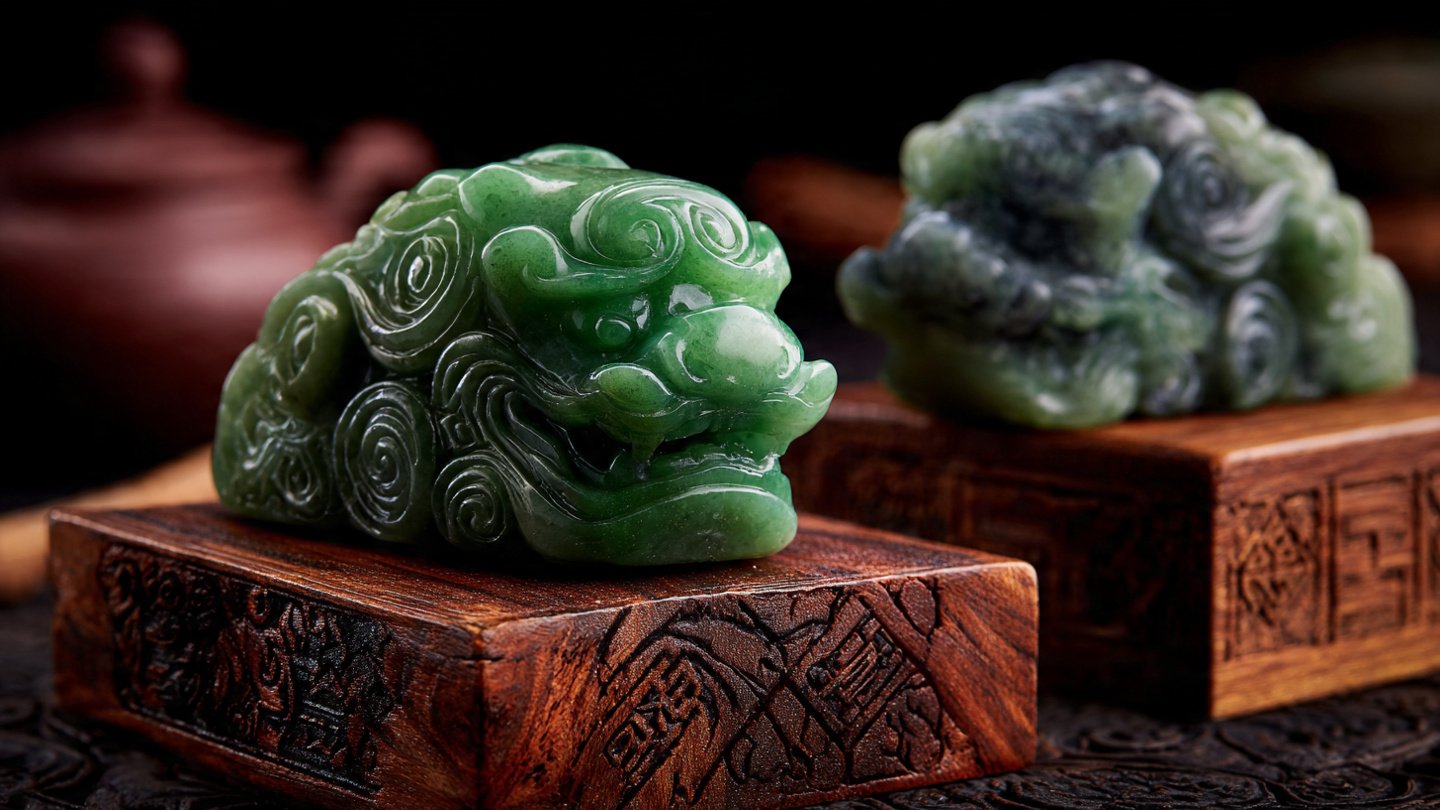
If you’ve ever held a piece of jade jewelry or admired a jade carving, you might have wondered about its value. The answer to “how much is jade worth?” isn’t straightforward—jade prices can range from just a few dollars to tens of millions. Yes, you read that right: millions of dollars for a single piece. Understanding what makes jade valuable can help you appreciate this ancient gemstone and make informed decisions whether you’re buying, selling, or simply curious.
The Wide World of Jade Prices
Let’s start with the big picture. Jade prices vary more dramatically than almost any other gemstone:
Low-End Jade: $5 to $100 per piece for small items like pendants or beads. These are typically lower-quality nephrite or treated jadeite with poor color, transparency, and texture.
Mid-Range Jade: $100 to $10,000 for good quality jade jewelry and carvings. This includes decent nephrite pieces and commercial-grade jadeite with acceptable color and transparency.
High-Quality Jade: $10,000 to $100,000+ for fine jade jewelry. These pieces feature excellent jadeite with good color, transparency, and craftsmanship.
Museum-Quality Imperial Jade: $100,000 to millions of dollars. The finest Imperial jade jadeite can sell for over $3 million per carat at auction, making it more valuable than diamonds.
This enormous price range exists because jade quality varies tremendously, and unlike diamonds, there’s no standardized grading system universally recognized across the industry.
What Determines Jade’s Value?
Several key factors influence how much a jade stone is worth. Understanding these will help you evaluate jade more accurately.
1. Type of Jade: Jadeite vs. Nephrite
The first major factor is whether the jade is jadeite or nephrite. These are two completely different minerals, both called “jade,” but with vastly different values.
Jadeite is significantly rarer and more valuable. All the most expensive jade pieces in the world are jadeite. High-quality jadeite can cost thousands per carat, with Imperial jade reaching astronomical prices. Jadeite comes primarily from Myanmar (Burma), with smaller deposits in Guatemala, Japan, and California.
Nephrite is more common and generally less expensive, though fine nephrite can still command respectable prices, especially in Chinese markets where it has cultural significance. Quality nephrite typically ranges from $10 to $1,000 per piece, with exceptional antique carvings worth more. Nephrite is found in China, Russia, New Zealand, Canada, and other locations worldwide.
2. Color: The Green Standard
Color is arguably the most important factor in determining jade’s value. Here’s how different colors rank in terms of value:
Imperial Green: The holy grail of jade. This vivid, emerald-green jadeite with excellent transparency can be worth $10,000 to over $3 million per carat. The color must be intense, uniform, and free from any brown or gray undertones.
Lavender/Violet: Fine lavender jadeite has become increasingly valuable, with top specimens fetching $5,000 to $50,000 per piece for jewelry items.
Apple Green: Bright, translucent green jadeite can range from $1,000 to $100,000+ depending on quality.
Red Jade: Natural untreated red jadeite is rare and valuable, typically worth $1,000 to $50,000 per piece.
White Jade: “Mutton fat” white jade is highly prized in Chinese markets, with fine pieces worth $500 to $20,000+.
Yellow Jade: Good quality yellow jade ranges from $500 to $10,000 per piece.
Black and Brown Jade: Generally the least expensive, ranging from $50 to $2,000 for quality pieces.
The color should be even and consistent throughout the stone. Mottled or uneven coloring significantly reduces value.
3. Transparency (Translucency)
The best jade has a quality called “translucency”—the ability to allow light to pass through. Jade transparency is graded on a scale:
Transparent: Light passes through clearly (very rare and extremely valuable)
Semi-transparent: You can see the outline of objects through the jade (highly valuable)
Translucent: Light penetrates the stone, giving it a glowing appearance (valuable)
Semi-translucent: Some light passes through at the edges (moderate value)
Opaque: No light passes through (lower value)
A piece of Imperial green jade that’s also highly translucent can be worth 10 to 100 times more than opaque jade of the same color.
4. Texture
Jade texture refers to the fineness and uniformity of the crystal structure. Fine-grained jade with a smooth, even texture is more valuable. Texture is often described as:
Fine: Smooth, almost glassy appearance (most valuable)
Medium: Slightly grainy but still smooth (good value)
Coarse: Visibly grainy or rough (lower value)
The finest jade has a texture so smooth it feels almost buttery to the touch and displays a beautiful luster when polished.
5. Size and Cut
Larger pieces of high-quality jade are exponentially more valuable because large, flawless jade is rare. However, size alone doesn’t determine value—a small piece of Imperial jade is worth more than a large piece of low-quality jade.
The cut and shape also matter. Well-proportioned, symmetrical pieces command higher prices. Traditional shapes like bangles (bracelets), pendants, and cabochons are standard. Bangles carved from a single piece of jade are particularly valuable because they require a large, flawless stone.
6. Clarity
Like other gemstones, jade with fewer inclusions, cracks, or blemishes is more valuable. The finest jade should be free from:
- Black spots or inclusions
- Visible cracks or fractures
- Cloudiness or haziness
- Color variations or staining
Even tiny imperfections can dramatically reduce jade’s value, especially in high-grade material.
7. Treatment and Enhancement
This is crucial: treated jade is worth significantly less than natural, untreated jade. The jade industry recognizes three grades:
Type A (Grade A): Natural, untreated jade. Only surface waxing is allowed. This is the most valuable and what serious collectors seek.
Type B: Jade that has been chemically bleached and impregnated with polymer resin to improve clarity and color. Worth 50-90% less than Type A.
Type C: Jade that has been dyed to improve color. Sometimes also bleached and resin-filled (making it both B and C). Worth 90-95% less than Type A.
Type B+C: Bleached, resin-filled, AND dyed. Least valuable, often worth only a few dollars.
Always ask if jade has been treated. Reputable dealers should provide this information. Many inexpensive jade pieces on the market are Type B or C.
8. Craftsmanship and Artistry
For jade carvings, the skill and artistry of the carver significantly impacts value. Antique jade carvings by master artisans can be worth millions, even if the jade material itself is modest quality. Factors include:
- Intricacy and detail of the carving
- Historical significance
- Cultural importance
- Artist’s reputation
- Age and provenance
Modern jewelry design also affects value. A beautifully designed jade piece by a renowned jeweler commands premium prices.
Real-World Jade Prices: What to Expect
Let’s look at realistic price ranges for common jade items:
Jade Beads: $5-$50 each for commercial quality; $100-$5,000 each for fine jadeite beads
Jade Bangles: $50-$500 for nephrite or lower-quality jadeite; $5,000-$50,000 for good jadeite; $100,000-$2 million+ for Imperial jade bangles
Jade Pendants: $20-$200 for small commercial pieces; $500-$10,000 for quality jadeite pendants; $20,000+ for exceptional pieces
Jade Rings: $100-$1,000 for nephrite or commercial jadeite; $2,000-$50,000 for fine jadeite rings
Jade Carvings: $50-$500 for small modern carvings; $1,000-$100,000+ for fine pieces; millions for antique masterpieces
Jade Cabochons (loose stones): $10-$100 per piece for commercial quality; $500-$50,000 for fine jadeite; $100,000+ per carat for Imperial jade
Record-Breaking Jade Sales
To understand just how valuable jade can be, consider these auction records:
- A jade necklace sold at Sotheby’s in 2014 for $27.4 million
- The “Hutton-Mdivani” jade bangle bracelet sold for $12.8 million in 1997
- A pair of Imperial jade earrings sold for over $12 million
- A jade pendant sold at Christie’s for $9.3 million
These prices rival or exceed the most expensive diamonds and colored gemstones, demonstrating jade’s position among the world’s most precious materials.
Geographic Price Variations
Jade prices vary significantly by location:
Hong Kong and Myanmar: Center of the high-end jadeite market, with the highest prices for Imperial jade
Mainland China: Strong market for both jadeite and nephrite, with cultural premium adding value
Western Markets: Generally lower prices than Asian markets, especially for nephrite
Tourist Markets: Often inflated prices for lower-quality or treated jade targeting unknowing buyers
How to Assess Jade Value When Buying
If you’re considering purchasing jade, here are practical tips:
- Buy from reputable dealers who provide certificates of authenticity and treatment disclosure
- Request certification from recognized gemological laboratories like GIA (Gemological Institute of America)
- Learn to recognize quality by viewing many pieces and comparing them
- Ask about treatment: Any reputable seller should freely disclose if jade is Type A, B, or C
- Be skeptical of bargains: If the price seems too good to be true, it probably is. Fine jade is never cheap
- Compare prices: Look at multiple dealers to understand the market
- Consider appraisal: For expensive pieces, hire an independent appraiser
Why Such a Wide Price Range?
You might wonder why jade prices vary more than most gemstones. Several factors explain this:
Lack of standardization: Unlike diamonds, there’s no universal grading system for jade
Cultural factors: Jade is more valuable in Asian markets due to cultural significance
Complexity: Jade quality depends on multiple factors that interact in complex ways
Treatment prevalence: The market is flooded with treated jade, making natural jade rarer and more valuable
Subjective appreciation: Beauty in jade is somewhat subjective, especially regarding color preferences
Investment Potential
Is jade a good investment? High-quality, natural jadeite has historically appreciated well, especially Imperial jade. However, investing in jade requires:
- Significant expertise to identify quality and authenticity
- Access to certified, untreated material
- Understanding of market trends
- Long-term holding perspective
- Proper documentation and provenance
For most people, jade is better appreciated as jewelry or art rather than purely as investment.
Conclusion
So, how much is a jade stone worth? The answer depends on a complex interplay of factors: type, color, transparency, texture, size, clarity, treatment, and craftsmanship. A piece of jade can be worth $5 or $5 million—or anywhere in between.
The most important takeaway is this: don’t judge jade by appearance alone. Two pieces that look similar to the untrained eye might differ in value by thousands of dollars. The finest jade combines exceptional color, superior transparency, fine texture, and natural origin—a rare combination that commands premium prices.
Whether you’re buying jade jewelry as a gift, starting a collection, or investing in fine pieces, take time to educate yourself. Learn to recognize quality, buy from reputable sources, and always request certification for valuable pieces. With knowledge and careful selection, you can find jade that offers both beauty and value—a treasure that has captivated humanity for thousands of years and continues to do so today.


