

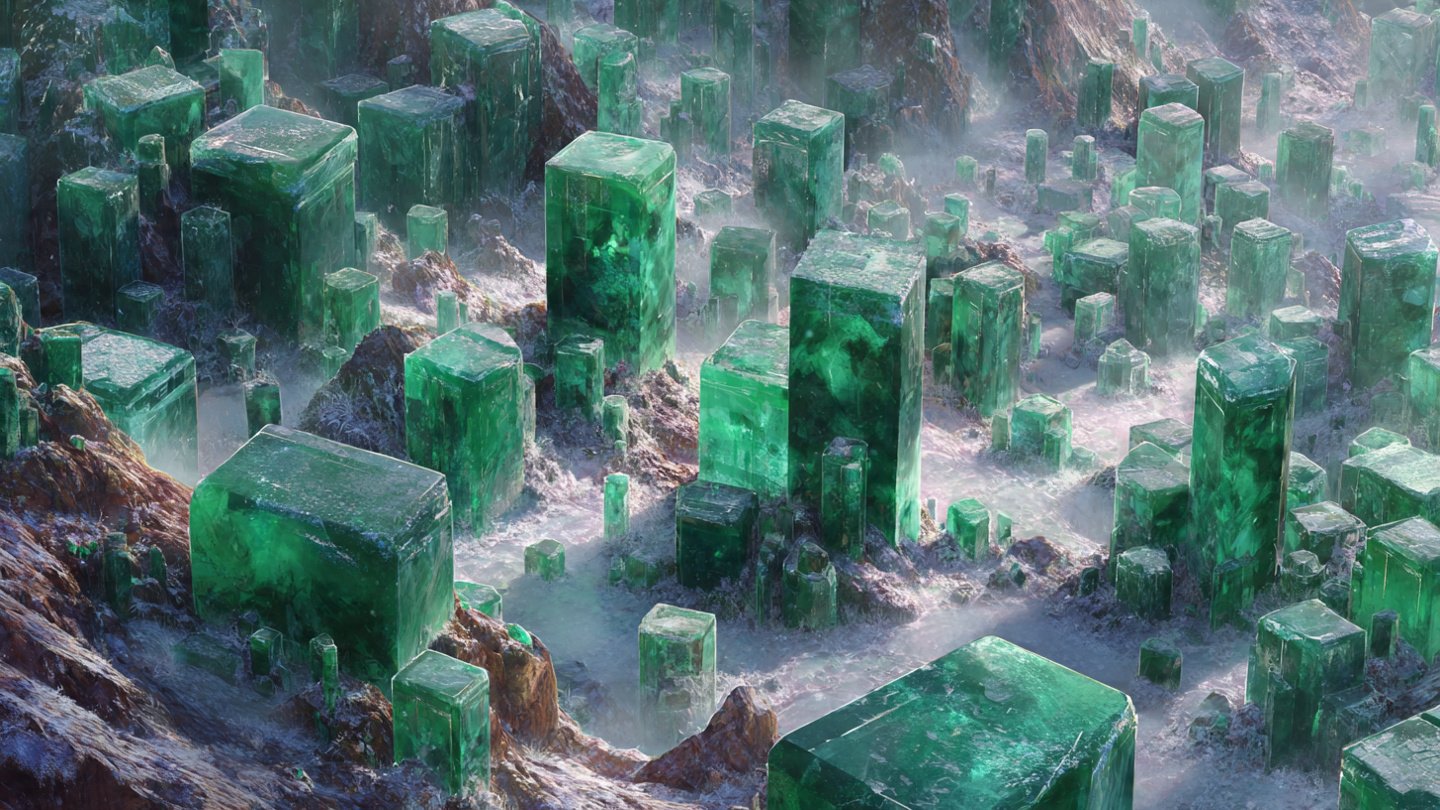
Jade has captivated civilizations for over 7,000 years, and its journey from deep within the earth to beautiful jewelry and carvings is fascinating. But where exactly does this precious stone come from? The answer takes us on a global adventure, from the rugged mountains of Myanmar to the rivers of New Zealand, and from ancient Chinese mines to remote valleys in Central America. Let’s explore the world’s jade deposits and discover what makes each location unique.
Understanding Jade Geography: Two Stones, Different Places
Before we map out jade’s locations, it’s important to remember that “jade” refers to two distinct minerals: jadeite and nephrite. These two types form under different geological conditions and are therefore found in different parts of the world.
Jadeite forms under extremely high pressure and relatively low temperature conditions, typically in subduction zones where tectonic plates collide. This makes jadeite deposits rare and geographically limited.
Nephrite forms under different conditions and is found in metamorphic rocks. It’s more widely distributed across the globe and has been discovered in numerous countries.
Understanding this distinction helps explain why certain regions produce certain types of jade.
Myanmar (Burma): The Crown Jewel of Jade Sources
Myanmar, particularly the Kachin State in northern Myanmar, is the world’s most important source of jadeite—especially the highly prized Imperial jade. The jade mines near the town of Hpakan (also spelled Phakant) have been producing jade for centuries and remain the primary source of fine-quality jadeite today.
The Hpakan Jade Mines
The Hpakan region sits in a remote, mountainous area about 350 miles north of Mandalay. This area produces approximately 70% of the world’s jadeite supply. The geological conditions here are perfect for jadeite formation—the collision between the Indian and Eurasian tectonic plates created the intense pressure needed to form this precious stone.
Mining in Myanmar ranges from small-scale artisanal operations to large industrial mines. During the dry season, thousands of miners work the jade fields, searching for boulders that might contain valuable green treasure. Some jade is found in primary deposits (still in the original rock formation), while much is recovered from river gravels where erosion has deposited it over millennia.
The finest Imperial jade—that mesmerizing emerald green that commands millions—comes almost exclusively from Myanmar. The country’s jade industry is deeply intertwined with its culture and economy, though it faces challenges related to environmental concerns and political complexity.
Other Myanmar Jade Areas
Beyond Hpakan, other notable Myanmar jade-producing areas include:
- Tawmaw: Known for producing lighter green and lavender jadeite
- Hweka: Yields various colors including green and white jadeite
- Mamon: Produces both jadeite and some nephrite
China: The Ancient Jade Empire
China has the longest continuous history of jade use, spanning over 5,000 years. Interestingly, historical Chinese jade was primarily nephrite, not jadeite. Chinese craftsmen didn’t encounter jadeite until it was imported from Myanmar in the 18th century.
Nephrite Deposits in China
Xinjiang Province: The most famous Chinese jade comes from Xinjiang in far western China, particularly from two areas:
- Hotan (Khotan): This region along the Silk Road has produced the famous “Hotan jade” for millennia. Much of this jade is found as river pebbles in the Yurungkash (White Jade River) and Karakash (Black Jade River). Hotan nephrite is renowned for its fine texture and subtle colors, especially the prized white “mutton fat” jade.
- Kunlun Mountains: These mountains contain primary nephrite deposits that feed the rivers below.
Liaoning Province: In northeastern China, nephrite deposits are found near the city of Xiuyan. Xiuyan jade has been mined for centuries and includes various colors from green to yellow to white.
Qinghai Province: More recently discovered deposits produce nephrite in various colors, including white, green, and an attractive pale yellow-green variety.
Chinese jade deposits have been extensively mined over thousands of years, and some traditional sources are now depleted. However, new deposits continue to be discovered as geological surveys expand.
Russia: The Siberian Treasure
Russia contains some of the world’s most significant nephrite deposits, particularly in Siberia. Russian jade has gained international recognition for its quality and beautiful colors.
Major Russian Jade Locations
Siberia (Eastern Sayan Mountains): The primary Russian jade deposits are located in this remote, mountainous region. The area produces:
- Deep green nephrite of excellent quality
- Lighter green varieties
- Distinctive “spinach jade” with dark green color
- White and cream-colored nephrite
The harsh Siberian climate makes mining challenging, with operations typically limited to the short summer months. Despite these difficulties, Russian jade has become increasingly important in the international market.
Polar Urals: This region produces high-quality nephrite known for its toughness and attractive green colors.
Russian nephrite is particularly valued for its fine texture and rich colors. Large quantities are exported to China, where it’s highly appreciated for carving and jewelry.
New Zealand: The Maori Treasure (Pounamu)
New Zealand’s South Island contains important nephrite deposits that hold profound cultural significance for the indigenous Maori people, who call it “pounamu” or “greenstone.”
South Island Jade Locations
West Coast: The primary jade deposits are found along the west coast of the South Island, particularly in:
- Arahura River: The most important traditional source, considered especially sacred by Maori
- Hokitika area: Rivers and beaches yield jade pebbles and boulders
- Westland region: Multiple rivers carry jade from mountain deposits
New Zealand nephrite comes in several distinct varieties:
- Kawakawa: Deep green, translucent jade
- Inanga: Pale, almost whitish-green variety
- Totoweka: Green with black spots or streaks
- Tangiwai: Translucent, bowenite (a jade-like stone)
In New Zealand, jade collecting is regulated to protect this culturally significant resource. Maori continue traditional jade carving, creating items that carry deep spiritual and cultural meaning.
Guatemala: Ancient Maya Jade
Guatemala is one of the few sources of jadeite outside of Asia and has historical significance as the source of jade for ancient Maya and Olmec civilizations.
The Motagua Valley
The Motagua River valley in central Guatemala contains jadeite deposits that were used by Pre-Columbian civilizations for over 3,000 years. After the Spanish conquest, knowledge of these jade sources was lost for centuries until they were rediscovered in the 1950s and 1960s.
Guatemalan jadeite occurs in various colors:
- Blue-green (distinctive Olmec blue)
- Apple green
- Black
- White with green mottling
- Lavender (rare)
The jade here forms in serpentinite rocks and is often found as boulders in rivers. While Guatemalan jadeite doesn’t typically reach the quality of the finest Myanmar Imperial jade, it produces attractive stones with historical significance.
Canada: The North American Source
Canada has emerged as a significant nephrite producer, with deposits in British Columbia.
British Columbia Jade
Northern British Columbia: The primary Canadian jade deposits are located in:
- Dease Lake area: Produces large quantities of nephrite
- Cassiar region: Known for “Canadian jade” in various green shades
- Fraser River valley: Historical jade finds
Canadian nephrite is typically:
- Medium to dark green
- Tough and durable (excellent for carving)
- Found in large boulders, sometimes weighing several tons
- Generally more affordable than Asian jade
Canada produces considerable nephrite tonnage, much of which is exported to China for carving. Canadian jade is valued for its toughness and ability to hold fine detail in carvings.
United States: Small but Notable Sources
The United States has limited jade deposits, with most being nephrite.
American Jade Locations
California:
- Monterey County: Produces nephrite in various shades of green
- Mendocino County: Coastal areas yield jade from serpentine rock
- Some jadeite has been found, though rarely of gem quality
Wyoming: The state gemstone is nephrite jade, found primarily in:
- Crooks Creek area: Green nephrite
- Lander region: Various colors including black and green
Alaska:
- Jade Mountain: Near Kotzebue, produces nephrite
- Various locations produce jade, often recovered from glacial deposits
American jade is generally considered semi-precious rather than gem-quality, though attractive specimens are found and appreciated by collectors.
Other Notable Jade Locations
Japan: Small jadeite deposits in Niigata Prefecture and Itoigawa region. Japanese jade is culturally significant though deposits are limited.
Mexico: Nephrite deposits in various states, used by Pre-Columbian cultures.
Australia: Nephrite deposits in New South Wales and other areas, producing green to black jade.
Poland: Historical nephrite sources in the Silesian region.
Switzerland: Small Alpine jadeite deposits, mostly of historical interest.
Korea: Limited nephrite deposits, historically important in Korean culture.
Brazil: Some nephrite deposits discovered in recent decades.
How Jade is Found: From Earth to Hand
Understanding where jade is found also means understanding how it’s discovered and extracted.
Primary Deposits
Primary jade deposits are where the jade formed originally, still embedded in the host rock (usually serpentinite or metamorphic rock). Mining primary deposits involves:
- Geological surveys to locate jade-bearing formations
- Excavation of rock containing jade
- Extraction of jade from surrounding material
Secondary Deposits (Alluvial)
Much jade is found in secondary deposits—rivers, streams, and ancient riverbeds where water erosion has freed jade from its host rock and deposited it as boulders and pebbles. These alluvial deposits have been the traditional source for much of history.
Searching river gravels for jade continues today, particularly in Myanmar, China, and New Zealand. Experienced collectors can often identify jade among river rocks by its distinctive weight, texture, and appearance.
The Geological Story: Why Jade Forms Where It Does
Jade doesn’t form randomly. Both jadeite and nephrite require specific geological conditions:
Jadeite Formation: Requires high pressure and moderate temperature, typically in subduction zones where oceanic crust plunges beneath continental crust. This explains why jadeite is rare and found mainly in Myanmar and Guatemala—areas with appropriate tectonic history.
Nephrite Formation: Forms when ultramafic rocks (like serpentinite) undergo metamorphism. This can occur in various geological settings, explaining nephrite’s wider distribution.
Understanding these geological requirements helps explain why jade hunters continue searching in specific regions while knowing that truly world-class jadeite deposits remain exceptionally rare.
Modern Exploration and Future Sources
Geological surveys continue worldwide, occasionally discovering new jade deposits. Modern exploration techniques including:
- Satellite imagery analysis
- Geochemical surveying
- Advanced geological mapping
- Remote sensing technology
These tools help identify promising areas, though finding gem-quality jade still requires traditional prospecting, geological knowledge, and considerable luck.
Environmental and Social Considerations
Jade mining, particularly in Myanmar, faces environmental and social challenges. The industry must balance:
- Economic benefits to mining communities
- Environmental protection
- Worker safety
- Sustainable extraction practices
- Cultural and historical preservation
Responsible sourcing has become increasingly important to conscious consumers and ethical jewelers.
Conclusion
Jade is truly a global gemstone, found on multiple continents in diverse environments—from tropical Myanmar to frozen Siberia, from New Zealand’s sacred rivers to Guatemala’s ancient Maya valleys. Each location produces jade with unique characteristics, influenced by local geology and carrying regional cultural significance.
Myanmar remains the undisputed champion for fine jadeite, particularly Imperial jade, while sources like Russia, Canada, China, and New Zealand produce excellent nephrite. Smaller deposits worldwide add to jade’s fascinating geographical story.
Whether you’re holding a piece of vivid green Myanmar jadeite, creamy white Hotan nephrite, or sacred New Zealand pounamu, you’re connecting with a stone that has journeyed from deep within the earth, shaped by extraordinary geological forces, and touched by human hands across cultures and millennia. That’s the magic of jade—it’s not just beautiful, it’s a tangible link to our planet’s geology and human history.


