

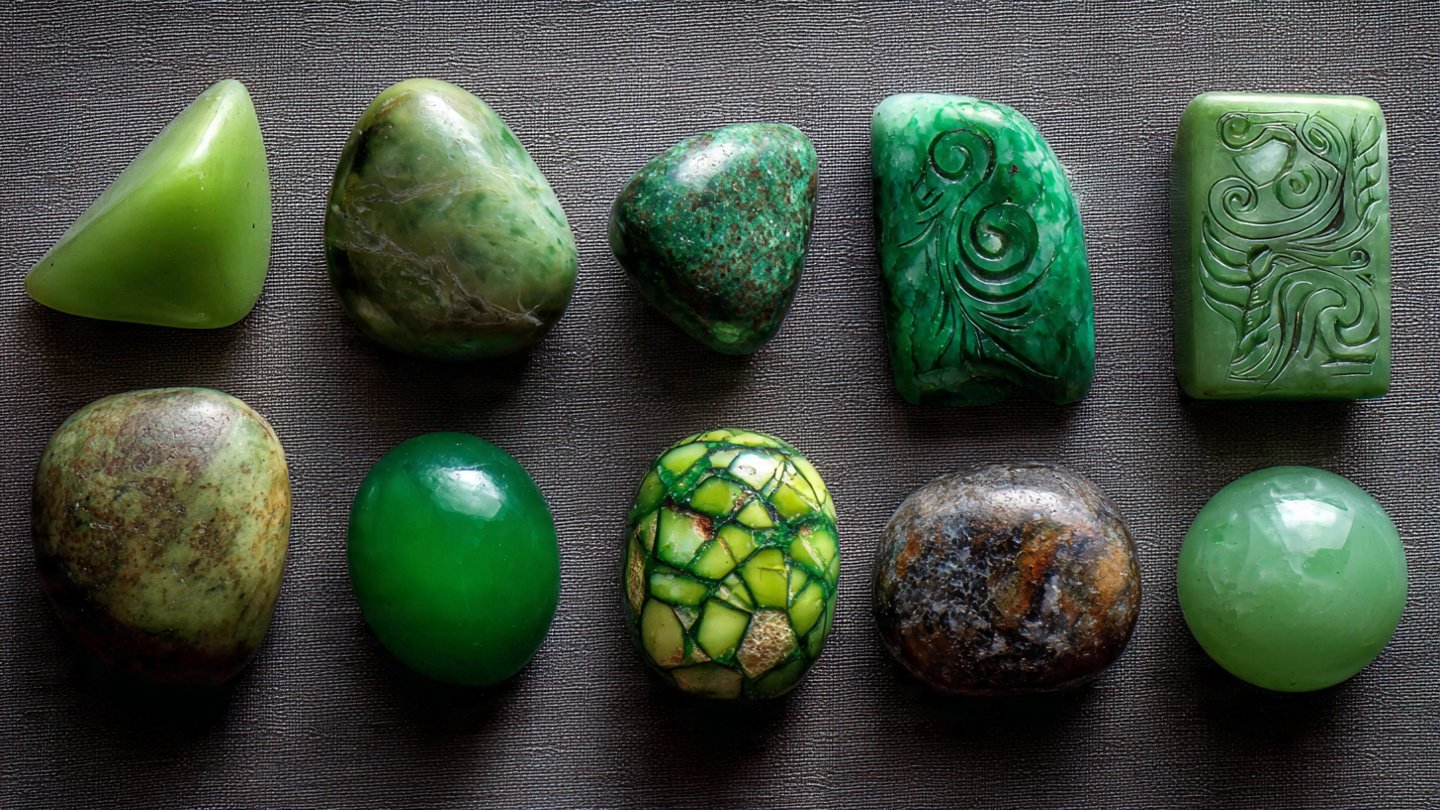
The Two Main Families of Jade You Need to Know
Hold on to your gemstone knowledge—here’s something that surprises most people: jade isn’t actually a single stone. That beautiful green gem you’ve admired for years? It could be one of two completely different minerals that just happen to share the same name.
For thousands of years, humanity believed all jade was the same material. Then in 1863, French mineralogist Alexis Damour made a discovery that changed everything. What everyone called “jade” was actually two distinct minerals with different chemical compositions, different hardness levels, and different values.
Let’s explore the fascinating world of jade types, from the rarest imperial green jadeite to the creamy “mutton fat” nephrite, and discover why these stones have captivated cultures worldwide for millennia.
Understanding Jadeite and Nephrite
Before diving into specific varieties, you need to understand the fundamental difference between these two jade families. Think of them as cousins who share a family name but have completely different personalities.
Jadeite: The Precious One
Jadeite is a sodium aluminum silicate that belongs to the pyroxene mineral family. It’s the harder, rarer, and more valuable of the two jades. On the Mohs hardness scale, jadeite ranks 6.5 to 7—comparable to quartz and significantly harder than most metals.
What makes jadeite special? Its rarity. Jadeite deposits exist in fewer than twelve locations worldwide, making it exceptionally precious. The stone forms under extreme pressure and temperature conditions where tectonic plates collide, creating the perfect geological “sweet spot” for jadeite crystallization.
The finest jadeite displays a translucent quality that allows light to pass through, creating an almost glowing effect. This translucency, combined with vivid colors, makes top-quality jadeite more expensive per carat than diamonds at major auction houses.
Nephrite: The Ancient One
Nephrite is a calcium magnesium silicate from the amphibole mineral family. Specifically, it’s a mixture of tremolite and actinolite minerals. While slightly softer than jadeite (ranking 6 to 6.5 on the Mohs scale), nephrite possesses remarkable toughness that made it humanity’s tool of choice for thousands of years.
Nephrite is significantly more common than jadeite, with deposits found on every continent except Antarctica. This abundance made it accessible to ancient civilizations worldwide, from China to New Zealand to North America.
The stone’s toughness comes from its physical structure—interlocking fibrous crystals that create a dense, resistant material. This structure makes nephrite incredibly difficult to break, even tougher than steel in some respects. Ancient toolmakers valued this property, creating axes and chisels that could fell massive trees and carve intricate designs.
Imperial Jade: The Ultimate Prize
Imperial jade represents the pinnacle of jadeite quality. This translucent, emerald-green variety commands astronomical prices and continues to captivate collectors worldwide.
What qualifies as imperial jade? The stone must display several specific characteristics:
Intense emerald green color resulting from chromium content, creating a vibrant hue that seems to glow from within. The color should be rich, saturated, and evenly distributed without dark or light patches.
High translucency allowing light to penetrate and illuminate the stone’s interior. When you hold imperial jade to light, you should see a soft glow that makes the stone appear almost alive.
Fine texture with densely packed, microscopic crystals that create a smooth, glassy surface. This fine texture contributes to the stone’s lustrous appearance and feels silky to the touch.
Even color distribution without mottling, spotting, or zoning. The green should flow uniformly throughout the piece.
A single high-quality imperial jade cabochon can sell for hundreds of thousands of dollars. In 2014, a jade necklace featuring 27 imperial jade beads sold at auction for $27 million, setting records and demonstrating the stone’s enduring value in the gemstone market.
Myanmar (Burma) produces virtually all imperial jade, particularly from the Hpakant region in Kachin State. This area has supplied China’s elite with the finest jadeite for centuries and remains the world’s primary source for top-quality material.
Green Jadeite Varieties
Beyond imperial jade, jadeite comes in various green shades, each with distinct characteristics and values.
Apple Green Jade
Apple green jadeite ranges from light mint to saturated deep green. This variety lacks the translucency of imperial jade but offers beautiful color at more accessible prices. The name perfectly describes its appearance—imagine the bright, fresh green of a Granny Smith apple frozen in stone.
Apple green jade was commonly used in ancient Maya civilization, particularly for ceremonial objects and jewelry. Modern carvers appreciate its vibrant color and workability, creating everything from delicate pendants to substantial carved figures.
Spinach Jade
Spinach jade displays a darker green color, often with distinctive black graphite inclusions creating an interesting mottled appearance. Russian (Siberian) nephrite often shows this characteristic coloring, earning it the nickname “spinach jade.”
While some might consider the dark inclusions flaws, many collectors prize them as natural patterns that make each piece unique. Traditional Chinese artisans particularly valued spinach jade for carved screens and decorative objects where the color variations created visual interest.
Moss in Snow Jade
This poetic name describes jadeite or nephrite with light green coloring interspersed with white or translucent areas. The effect resembles moss growing on snow or delicate vegetation patterns frozen in ice.
Carvers often use the natural color distribution in moss in snow jade to create scenic carvings. A skilled artisan might position the white areas as sky or water, with green sections representing landscape elements, creating miniature natural scenes within the stone itself.
White Jade: The Symbol of Purity
White jade, particularly nephrite, holds special significance in Chinese culture. The finest variety, known as “mutton fat jade” for its creamy, almost greasy appearance, was reserved for emperors and the highest nobility.
Mutton Fat Jade
Mutton fat jade (羊脂玉 in Chinese) represents the most prized nephrite variety. This creamy white nephrite has unique density and a subtle translucency that creates a soft glow. The stone’s surface develops a distinctive oily sheen when polished, giving it the appearance of rendered mutton fat—hence the name.
Chinese emperors believed mutton fat jade represented absolute purity and used it for the most important ceremonial objects. The legendary jade seal of the Chinese Empire, used by successive dynasties to legitimize their rule, was reportedly carved from mutton fat jade.
The primary source for this exceptional material is the Hotan (Khotan) region in Xinjiang Province, China. For over 5,000 years, the White Jade River (Yurungkash) and Black Jade River (Karakash) in this area have yielded nephrite prized above gold or silver.
Snow White Jade
Beyond mutton fat jade, other white nephrite varieties exist with slightly less translucency but still beautiful appearance. These stones range from pure white to slightly off-white or cream colored.
White jade symbolizes purity, serenity, and innocence in Chinese philosophy. It’s frequently given as gifts for weddings, births, and other important life transitions. The stone is believed to help people release negative thoughts and emotions while promoting inner peace.
Lavender Jade: The Modern Discovery
Lavender jadeite displays delicate purple to lilac hues that have made it increasingly popular in contemporary jewelry. This variety combines jadeite’s durability with a romantic color palette that appeals to modern tastes.
Interestingly, lavender jade was relatively unknown until recent decades. While ancient Chinese artisans occasionally encountered purple jadeite, it remained rare until modern mining techniques exposed new deposits. The variety gained prominence in the late 20th century and has become highly sought after for fine jewelry.
The purple coloration results from manganese and iron content within the jadeite. The best lavender jade displays an even, saturated purple without grey or brown undertones. Translucent lavender jade with fine texture commands premium prices, though it generally costs less than imperial green.
Lavender jade jewelry offers a distinctive alternative to traditional green jade while maintaining all of jadeite’s durability and spiritual significance. Modern designers create stunning pieces that showcase the stone’s unique color, from simple solitaire pendants to elaborate carved ornaments.
Black Jade: The Protective Stone
Black jade exists in both jadeite and nephrite forms, though nephrite black jade is more common. This variety ranges from true black to very dark green that appears black except under strong light.
Nephrite Black Jade
Nephrite black jade gets its color from high iron content in the actinolite component. The Black Jade River in Xinjiang, China, has supplied this material for millennia.
Traditional Chinese medicine practitioners believe black jade possesses protective properties. The stone supposedly absorbs negative energy and shields the wearer from harm. Many people wear black jade jewelry specifically for protection rather than pure aesthetic appeal.
Carved black jade creates dramatic contrast when combined with lighter stones in composite pieces. Traditional Chinese artisans often created landscape scenes using different jade colors, positioning black jade as mountains or earth elements.
Jadeite Black Jade
Black jadeite is rarer than nephrite black jade and often contains flecks of other minerals that create interesting patterns. Some black jadeite contains enough included minerals to create a speckled or mottled appearance.
Myanmar produces black jadeite alongside its famous green varieties. While less valuable than imperial green, high-quality black jadeite with fine texture and deep, even color commands respectable prices.
Olmec Blue Jade: The Ancient Mystery
Olmec blue jade represents one of the most fascinating jade varieties. This translucent blue jadeite held immense spiritual significance for the Olmec civilization (1500-400 BCE), predating the Maya in Mesoamerica.
The blue color results from specific mineral content and formation conditions. Olmec blue jade ranges from light sky blue to deeper azure shades, often with slight grey or green undertones.
For the Olmec people, blue jade represented water, rain, and the underworld. The stone symbolized the serpent’s renewal cycle—snakes turn bluish before shedding their skin, connecting the color to transformation and rebirth.
Olmec blue jade sources remained lost for centuries after the civilization’s collapse. Modern researchers finally identified the deposits in Guatemala’s highlands through painstaking archaeological investigation. Geological dating revealed these southern Motagua Valley deposits are approximately 40 million years older than northern jade sources.
Today, Olmec blue jade is highly prized by collectors interested in pre-Columbian art and history. Contemporary artisans create stunning jewelry pieces that honor ancient traditions while appealing to modern aesthetics.
Red and Orange Jade
Red and orange jadeite varieties surprise people who associate jade only with green. These warm-colored stones offer vibrant alternatives while maintaining jadeite’s exceptional durability.
Red Jadeite
Red jadeite owes its coloring to iron oxide staining and can range from bright red-orange to deeper burgundy shades. The finest red jadeite displays intense, even color without brown or dull areas.
Confusingly, red jadeite is sometimes called “Burmese ruby” because of its similar color to actual rubies from Myanmar. However, the two stones are completely different minerals. Jadeite is significantly tougher than ruby and won’t cleave (split along crystal planes) the way corundum gems can.
In Chinese symbolism, red jade represents passion, vitality, and courage. It’s associated with fire element energy and believed to promote confidence and life force.
Orange Jadeite
Orange jadeite varies from pale peach to vivid tangerine orange. This variety often features uneven color distribution, with brighter and paler areas creating natural patterns carvers can exploit for artistic effect.
Myanmar produces the finest orange jadeite, though it remains relatively uncommon compared to green varieties. Because of its rarity and striking appearance, high-quality orange jadeite commands premium prices.
Yellow Jade Varieties
Yellow jade exists in both jadeite and nephrite forms, ranging from pale lemon to deep golden amber tones.
Jadeite Yellow
Yellow jadeite displays colors from light yellow-green to rich golden yellow. The finest specimens show saturated, even color without brown or grey zones.
Iron content creates yellow coloration in jadeite. The intensity depends on iron concentration and the specific formation conditions. Translucent yellow jadeite with fine texture is particularly valuable.
Nephrite Yellow
Yellow nephrite ranges from pale cream to deep honey tones. Chinese artisans traditionally valued yellow nephrite for carved ornaments and scholar’s objects.
In Chinese five-element philosophy, yellow jade represents earth element energy. It symbolizes stability, nourishment, and grounding. Yellow jade items are often given to students or people embarking on new business ventures.
Brown Jade: The Earth Stone
Brown jade might sound unappealing, but quality examples display rich, warm tones that create beautiful jewelry and carvings.
Brown jadeite and nephrite get their coloring from iron content and organic material inclusions. Colors range from light tan to deep chocolate brown, sometimes with interesting banding or mottling patterns.
Traditional carvers often use brown jade for animal figures, particularly earth-dwelling creatures like bears or badgers. The color naturally suits these subjects and creates warmth and accessibility in carved pieces.
While brown jade generally costs less than vibrant green or lavender varieties, the best examples with fine texture and attractive color find appreciative markets. Some collectors specifically seek brown jade for its earthy, grounding aesthetic.
Guatemala Jade: The Maya Sacred Stone
Guatemala produces distinctive jadeite that sustained the ancient Maya civilization. This jade comes in multiple colors, though green varieties dominated Maya religious and cultural practices.
Maya Imperial Jade
Similar to Asian imperial jade, Maya imperial jade displays brilliant translucent green color. However, Guatemala jade often has slightly different characteristics than Burmese material due to distinct geological formation.
The Maya valued green jade above gold, considering it sacred. Jade represented water, breath, and life force solidified into permanent form. When you breathed on polished jade, moisture condensed on its cool surface—the Maya interpreted this as proof the stone was alive.
Ancient Maya craftsmen created spectacular jade artifacts despite lacking metal tools. Using jade dust as abrasive and wooden implements, they carved intricate masks, ornaments, and ceremonial objects that remain stunning today.
Lavender and Black Guatemala Jade
Guatemala also produces lavender and black jadeite, though ancient Maya encountered these varieties less frequently than green. Hurricane Mitch in 1998 exposed new jade deposits, including previously undiscovered lavender jade veins.
Modern Guatemalan jade artisans create jewelry honoring ancient Maya traditions while incorporating contemporary design sensibilities. Authentic Guatemala jade comes with documentation verifying its source, protecting buyers from imitation products.
Russian Jade: The Siberian Treasure
Russia’s Sayan Mountains contain significant nephrite deposits discovered in the 19th century. Siberian jade displays characteristic dark green color, often with black graphite inclusions creating distinctive patterns.
Russian nephrite typically shows less translucency than finest Chinese or Canadian material. The grain size is coarser, and the stone often contains additional minerals like diopside, sulfides, and mica. Bauxite inclusions serve as characteristic markers identifying Russian jade.
Despite these differences, Russia produces substantial quantities of nephrite, including some high-quality pieces. Russian jade entered Chinese markets alongside domestic material and remains popular for carvings and jewelry.
The chemical composition of Russian jadeite differs slightly from Myanmar material, with relatively high calcium and iron content. However, quality Russian jadeite can be difficult to distinguish from Burmese without laboratory testing.
Canadian Jade: The New World Source
Canada, particularly British Columbia, has emerged as a major nephrite producer in recent decades. Canadian jade is known for its rich green color and good translucency, qualities that have made it increasingly popular internationally.
British Columbia Nephrite
The Cassiar and Dease Lake regions in British Columbia contain large nephrite deposits. Canadian jade ranges from light to dark green, with the finest specimens displaying attractive translucency and even color.
Canadian jade mining employs modern equipment and practices, creating a steady supply of quality material. The stone is exported worldwide, with significant quantities going to China and other Asian markets where jade carving traditions thrive.
British Columbia nephrite offers excellent value—it provides beautiful color and good quality at prices more accessible than rare jadeite varieties. Many contemporary jade jewelry pieces use Canadian nephrite as an attractive, durable, and affordable option.
Polar Jade
Some Canadian nephrite is marketed as “polar jade” due to its northern origin. This marketing name doesn’t indicate different material but emphasizes the stone’s Canadian source and association with pristine northern environments.
New Zealand Pounamu: The Māori Treasure
New Zealand’s nephrite jade, called pounamu or greenstone, holds profound cultural significance for the Māori people. This jade differs slightly from mainland Asian varieties due to unique formation conditions.
Pounamu ranges from dark green to nearly black, with several recognized varieties including kawakawa (dark green), kahurangi (translucent light green), īnanga (silvery-white to grey-green), and tangiwai (a bowenite variety).
The South Island of New Zealand was traditionally called Te Wai Pounamu—”the waters of greenstone”—indicating how central this stone was to Māori identity. For Māori, pounamu represents connection to ancestors, spiritual power (mana), and cultural heritage.
Māori artisans traditionally carved pounamu into tools, weapons, and ornaments using techniques passed down through generations. Today, authentic pounamu carvings remain important cultural items and popular souvenirs that connect visitors to New Zealand’s indigenous heritage.
Australian Jade: The Southern Source
Australia, particularly South Australia’s Cowell region, contains significant nephrite deposits. Australian jade occurs in marble formations dating back 1,000 to 2,500 million years.
The Cowell deposit, discovered in 1965, contains over 100 separate jade occurrences within approximately 10 square kilometers. Originally estimated at 80,000 tonnes of nephrite, this deposit has exported tons of jade, mainly to Asian markets.
Australian nephrite displays various green shades and has been used for both carving and jewelry. While Australia produces no jadeite, its nephrite output makes it an important player in the global jade market.
Chinese Jade: The Ancient Standard
China’s relationship with jade spans over 8,000 years, making it the longest continuous jade culture on Earth. While China imports massive quantities of jadeite from Myanmar, it also has domestic jade sources.
Xinjiang Nephrite
The Xinjiang region (formerly Turkestan) has supplied nephrite jade for millennia. The ancient Silk Road cities of Khotan and Yarkand served as jade trading centers where river-collected pebbles and mined material flowed toward China’s imperial courts.
Xinjiang jade ranges from creamy white (mutton fat jade) to dark green and black. The finest white jade from this region was reserved for emperors and remains among the most valuable nephrite varieties.
Qinghai Jade
Qinghai Province produces nephrite jade that ranks second in quality to Xinjiang material. Qinghai jade often displays attractive white to light green colors and has become increasingly important as Xinjiang deposits have been depleted.
California Jade: The American Treasure
California contains several jadeite deposits, making it one of the few North American jadeite sources. Both nephrite and jadeite occur in California, though in relatively small quantities compared to major Asian deposits.
California jadeite varies from white to green, with some pieces displaying attractive translucency. While California jade rarely reaches imperial quality, collectible specimens attract interest from American jade enthusiasts and rockhounds.
The state’s nephrite deposits, particularly in Monterey County, produce dark green to black material. California jade often ends up in collections or small-scale jewelry production rather than industrial-scale carving operations.
Japanese Jade: The Island Source
Japan has jadeite deposits in Niigata and Itoigawa regions. Japanese jade typically shows white, pale green, or lavender colors and was historically used for tools and ornaments by ancient Japanese cultures.
Archaeological evidence shows jade use in Japan dating back thousands of years, though the practice largely disappeared during historical periods when other materials gained preference. Modern interest in Japanese jade has revived, with local artisans creating contemporary pieces that honor ancient traditions.
Kazakhstan Jade
Kazakhstan produces both jadeite and nephrite, though in smaller quantities than major sources like Myanmar or Canada. Kazakh jade displays various colors including green, white, and yellow.
The country’s jade deposits remain relatively underdeveloped compared to established sources, though exploration continues. Some Kazakh jade enters international markets, particularly trading into neighboring China.
How to Identify Jade Types
Distinguishing between jade varieties requires knowledge and sometimes professional testing. Here are some practical approaches:
Visual Inspection
Color provides the first clue. Jadeite displays more intense, varied colors than nephrite. Imperial green, lavender, orange, and red appear almost exclusively in jadeite, while creamy white “mutton fat” indicates nephrite.
Translucency differs between types. Jadeite can be highly translucent or even semi-transparent, while nephrite typically appears more opaque with less light transmission.
Surface luster varies subtly. Jadeite shows a glassy, vitreous luster when polished. Nephrite displays a slightly greasier, more waxed appearance.
Texture and Feel
Jadeite feels cooler to the touch initially due to its higher thermal conductivity. Nephrite warms more quickly when held.
Texture differences require experience to detect. Fine-grained jadeite has an incredibly smooth, glassy feel. Nephrite’s fibrous structure creates a slightly different tactile sensation, though the difference is subtle.
Professional Testing
Specific gravity testing reliably distinguishes jadeite (density 3.30-3.38) from nephrite (density 2.90-3.03). This requires specialized equipment and should be performed by qualified gemologists.
Refractive index measurements provide another reliable test. Jadeite shows RI of 1.66-1.68, while nephrite ranges from 1.60-1.63.
Spectroscopic analysis definitively identifies jade type and can even determine specific sources. However, this advanced testing requires laboratory facilities.
The Authentication Challenge
Treatments and imitations complicate jade identification. Many jade pieces have been dyed, bleached, or polymer-impregnated to improve appearance. These treatments aren’t always visible to the naked eye.
Common jade imitations include serpentine, vesuvianite, chrysoprase, and various glass products. Some imitations fool even experienced buyers without proper testing.
When purchasing valuable jade, always obtain certification from recognized gemological laboratories. Reputable sources provide documentation verifying authenticity, type, and any treatments applied.
Jade Treatment Types
The jade market classifies jadeite into three types based on treatments applied:
Type A Jade is completely natural jadeite with no treatments except surface waxing. This represents the most valuable category and what serious collectors seek.
Type B Jade has been chemically bleached to remove discoloration, then polymer-impregnated to improve transparency and add stability. This treatment significantly reduces value and durability.
Type C Jade has been dyed to enhance or change color, sometimes combined with Type B treatments. Type C jade costs considerably less than natural material and may fade over time.
Understanding these distinctions protects buyers from overpaying for treated material marketed as natural jade. Always ask about treatments when purchasing jade jewelry or carvings.
The Global Jade Trade
Myanmar dominates the jadeite market, producing approximately 70% of the world’s high-quality jadeite. Virtually all this material flows to China, where jade culture runs deepest.
China’s jade market is enormous—worth billions of dollars annually. The country imports raw jade from Myanmar, Canada, Russia, and other sources, then processes it into jewelry and art objects distributed worldwide.
Hong Kong serves as a major jade trading hub where rough material is bought and sold, often at massive auctions where single boulders can sell for millions of dollars.
Auction houses like Sotheby’s and Christie’s regularly feature important jade pieces that set price records. The jade market’s top end rivals the most expensive colored gemstones in per-carat value.
Caring for Your Jade
Proper care ensures jade jewelry and carvings remain beautiful for generations:
Clean gently using lukewarm water and soft cloth. Avoid harsh chemicals, ultrasonic cleaners, or steam cleaning that might damage treated jade or cause thermal shock.
Store carefully to prevent scratching. While jade is tough, it can be scratched by harder materials like diamond or sapphire. Wrap jade pieces individually in soft cloth.
Avoid extreme temperatures and rapid temperature changes that might cause internal stress or cracking, particularly in treated jade.
Wear regularly if possible. Natural skin oils actually benefit jade, gradually enhancing its luster and creating an attractive patina. Many cultures believe regular wearing transfers the wearer’s energy to the stone, increasing its spiritual power.
Have valuable pieces checked periodically by qualified gemologists. They can identify any developing issues and recommend appropriate conservation measures.
Why Jade Types Matter
Understanding jade varieties enriches appreciation for this remarkable material. Each type carries its own history, cultural significance, and aesthetic appeal.
Imperial jade represents the pinnacle of rarity and beauty, commanding prices that reflect centuries of cultural reverence. Mutton fat nephrite embodies ancient Chinese philosophical ideals about purity and nobility.
Guatemala jade connects us to Maya civilization and demonstrates how different cultures independently recognized jade’s special qualities. New Zealand pounamu maintains living cultural traditions that stretch back centuries.
Modern jade sources like Canada and Russia show how geological exploration continues revealing new deposits of this ancient material.
Whether you’re a collector, jewelry enthusiast, or simply someone fascinated by gems and minerals, knowledge about jade types helps you make informed decisions and deepens your connection to this timeless stone.
Conclusion: Jade’s Enduring Legacy
From imperial green jadeite commanding millions per carat to humble nephrite tools crafted thousands of years ago, jade encompasses an astonishing range of materials, colors, and cultural meanings.
The fundamental division between jadeite and nephrite—two completely different minerals sharing one name—surprises most people. Yet this geological quirk reflects jade’s complexity and the long history of human engagement with this stone.
Each jade variety tells stories. Olmec blue jade speaks of ancient civilizations and spiritual beliefs. Russian spinach jade reflects harsh Siberian environments and modern mining industries. Lavender jadeite represents recent discoveries that continue expanding our understanding of what jade can be.
The global distribution of jade deposits—from Myanmar’s mountains to Canada’s wilderness, from China’s ancient rivers to Guatemala’s highlands—demonstrates Earth’s remarkable geological diversity. The same basic processes, operating under different conditions, create materials that are chemically distinct yet share jade’s fundamental toughness and beauty.
Today’s jade market balances ancient cultural values with modern commercial realities. Chinese collectors still prize imperial jade as their ancestors did centuries ago. Meanwhile, new markets emerge as people worldwide discover jade’s unique combination of durability, beauty, and spiritual resonance.
The next time you see jade jewelry or a carved ornament, take a moment to consider which type you’re viewing. Is it rare jadeite or common nephrite? What color variety? Where might it have originated? Each piece represents millions of years of geological processes, centuries of cultural tradition, and the skill of artisans who transformed raw stone into enduring art.
That’s the remarkable story of jade types found worldwide—a tale still being written as new deposits are discovered, new treatments developed, and new generations of people fall under jade’s timeless spell.
Are you a jade enthusiast or collector? Share your favorite jade variety in the comments below! If you found this guide helpful, please share it with others interested in gemstones and mineralogy. And if you’re considering purchasing jade, remember to ask about type, source, and treatments to ensure you’re getting authentic material worth your investment.


