

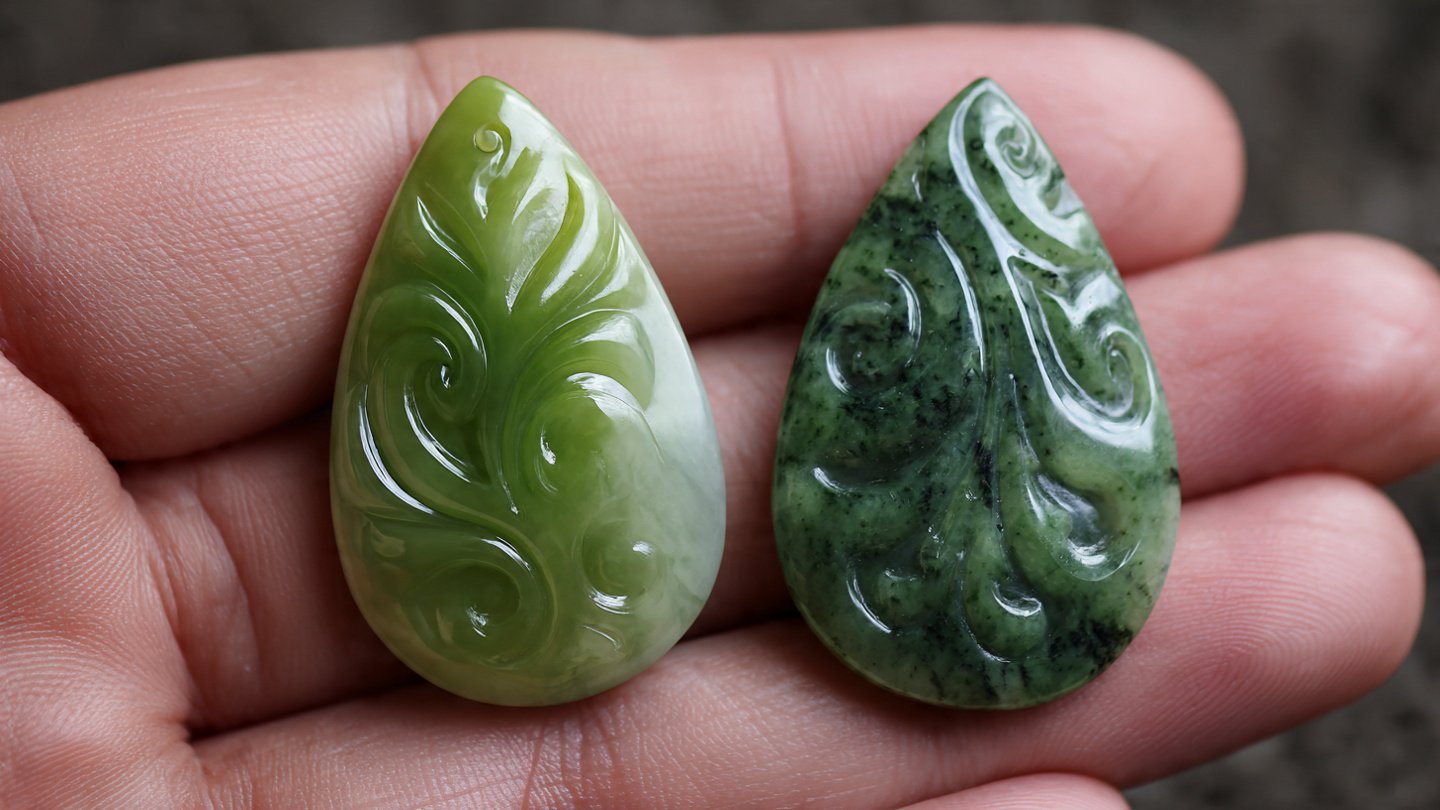
Jade’s reputation for toughness is legendary. Ancient civilizations carved intricate tools and weapons from jade because it withstood constant use. Warriors trusted jade more than metals. This durability comes from specific physical properties that make jade uniquely resistant to damage.
Yet most people don’t understand what actually makes jade so durable. They assume hardness alone explains jade’s legendary strength. The truth is more fascinating. Jade owes its toughness to a combination of hardness, density, and crystal structure working together.
Understanding jade’s physical properties helps you choose better jewelry, care for pieces properly, and appreciate why ancient peoples treasured this stone. Let me explain the science behind jade’s remarkable durability.
What Is Hardness and How We Measure It
Hardness measures how well a material resists scratching and abrasion. Gemologists use the Mohs hardness scale, which ranges from 1 (softest) to 10 (hardest).
Diamond rates 10—the absolute hardest natural material. Sapphire and ruby rate 9. Topaz rates 8. Jade falls between 6 and 7, depending on which type you’re examining.
This scale can mislead people. The numbers don’t represent proportional differences. Diamond (10) isn’t just slightly harder than sapphire (9). Diamond is exponentially harder. The jump from 6 to 7 is much smaller than from 9 to 10.
Hardness measures resistance to scratching specifically. A harder material scratches a softer one. Jade’s moderate hardness means common materials can scratch it if you’re not careful. However, jade resists most everyday contact without damage because of its overall durability.
Think of hardness as one component of durability. It matters, but it’s not the whole story.
Jadeite Hardness Compared to Nephrite
The two jade types have slightly different hardness ratings, which affects how you should care for them.
Jadeite ranks 6.5 to 7 on the Mohs scale. It’s the harder of the two jade varieties. This extra hardness comes from its denser crystal structure. Jadeite’s sodium and aluminum composition creates tightly packed minerals that resist scratching more effectively.
Nephrite ranks 6 to 6.5 on the Mohs scale. It’s slightly softer than jadeite. However, this doesn’t make nephrite inferior for jewelry. The story gets more interesting when we examine toughness.
A 0.5-point difference on the Mohs scale represents a meaningful but not dramatic difference. Both types resist everyday scratching. You’re unlikely to scratch either jade during normal wear.
The real distinction appears when comparing hardness to toughness. This is where jade’s legend truly comes alive.
Toughness Trumps Hardness for Jade
Here’s the secret most people don’t know: jade’s toughness, not its hardness, makes it legendary.
Toughness measures resistance to breakage and cracking. A tough material resists shattering even when struck forcefully. Hardness and toughness are completely different properties.
Diamond is extraordinarily hard but relatively brittle. Strike a diamond wrong and it shatters. Ancient warriors never chose diamond for weapons—they chose jade.
Nephrite is actually tougher than jadeite, despite being slightly softer. This superior toughness comes from nephrite’s interlocking crystal structure. The crystals interlock like fingers, distributing stress throughout the stone rather than concentrating it at single points.
This crystal arrangement means nephrite resists breakage remarkably well. You can strike nephrite and it won’t shatter. The interlocking structure absorbs impact energy.
Jadeite, despite being harder, has a less interlocked structure. It can still be damaged by severe impacts, though it’s more resistant than most gemstones.
This is why ancient jade carvers preferred nephrite for practical tools. Nephrite’s superior toughness meant tools wouldn’t shatter under stress. Modern jewelry makers consider nephrite equally valuable to jadeite, sometimes more so, because of this toughness.
Understanding Density and Specific Gravity
Density measures how tightly packed the jade’s minerals are. Denser jade feels heavier for its size.
Jadeite has a density of 3.30 to 3.38 g/cm³. This relatively high density comes from its mineral composition with sodium and aluminum. The atoms pack tightly together.
Nephrite has a lower density of 2.90 to 3.03 g/cm³. Despite being less dense than jadeite, nephrite still feels substantial. Its lower density comes from the presence of calcium and magnesium in its mineral structure.
Specific gravity is the ratio comparing a material’s density to water’s density. Water has a specific gravity of 1.0. Both jade types have specific gravity values well above 3, meaning they’re three times heavier than water.
You can use specific gravity to distinguish jade types without professional equipment. Jadeite and nephrite pieces of identical size differ noticeably in weight. Jadeite feels heavier in your hand.
This density difference has practical implications. Larger nephrite pieces are lighter to wear than jadeite equivalents. Some people prefer nephrite for this reason. Others prefer jadeite’s extra weight, which feels more substantial and valuable.
Cleavage and Fracture Patterns
Cleavage describes how a stone breaks along natural planes when struck. Fracture describes how it breaks randomly.
Jade displays interesting fracture behavior. Both jadeite and nephrite fracture unevenly rather than along distinct cleavage planes. This uneven fracture is actually protective—it means jade doesn’t shatter into sharp pieces easily.
Minerals with perfect cleavage, like mica, split into paper-thin sheets. This cleavage makes them unsuitable for jewelry. Jade’s lack of cleavage keeps it intact under stress.
When jade does fracture, it breaks with what gemologists call conchoidal fracture. The break surfaces look like curved shells. This pattern shows force distributed across the stone rather than concentrated at weak points.
This fracture characteristic is one reason jade worked so well for ancient tools. The stone resisted breaking under normal use. Even when it eventually broke, it didn’t shatter explosively.
Modern jade jewelry benefits from this same property. Your jade ring or bracelet resists damage from accidental impacts that would shatter other gemstones.
Color and Translucency in Jade
Jade’s color comes from trace elements within its mineral structure. Different elements create different colors.
Iron creates green colors in jade. The more iron present, the deeper the green. Some jade appears pale green from minimal iron. Other pieces display rich forest green from abundant iron.
Chromium creates red colors in some jade samples. Manganese produces pink and lavender hues. Titanium can create blue and purple colors. Calcium can create white jade.
These trace elements don’t weaken jade or affect its physical properties significantly. They simply change appearance. Color doesn’t indicate quality or durability.
Translucency describes how light passes through the stone. Some jade is nearly transparent, allowing light to penetrate deeply. Other jade is semi-translucent, with light passing through only at thin edges. Still other jade is completely opaque.
Translucency depends on crystal size and purity. Smaller, purer crystals allow more light through. Larger crystals or those with impurities block light.
Jadeite typically shows greater translucency than nephrite. Some jadeite pieces are nearly transparent, especially premium imperial jade. This translucency increases value because light can showcase the color intensity.
Nephrite usually appears more opaque. The interlocking crystal structure that makes nephrite so tough also prevents light from passing through easily.
Neither translucency level affects durability. Both transparent and opaque jade are equally tough and suitable for jewelry.
Refractive Index and Optical Properties
Refractive index measures how much a material bends light passing through it. Different materials bend light at different angles.
Jadeite has a refractive index of 1.66 to 1.68. Nephrite measures 1.62 to 1.63. These differences are small but measurable with professional equipment.
This optical difference helps gemologists distinguish jadeite from nephrite. Combined with other properties, refractive index testing provides definitive identification.
For most people, these optical differences don’t matter practically. Both jade types appear beautiful and transmit light similarly. However, jadeite’s slightly higher refractive index means it reflects light marginally more, creating slightly greater brilliance.
This subtle optical difference contributes to jadeite’s higher market value. The marginally greater sparkle appeals to some buyers. However, many jade enthusiasts prefer nephrite’s more subtle beauty.
Crystal Structure and Why It Matters
Crystal structure determines how jade’s atoms arrange themselves. This arrangement affects every physical property.
Jadeite has monoclinic crystals. These crystals are asymmetrical, creating a structure where atoms pack in a specific angular arrangement. This structure is harder but less interlocked.
Nephrite has monoclinic crystals too, but they form differently. Nephrite crystals create long fibers that intertwine. Imagine threads woven into fabric. This interlocking creates the superior toughness.
This structural difference explains why nephrite tools survived ancient use better than jadeite tools. Warriors and toolmakers learned through experience which jade worked better for demanding tasks.
Modern testing confirms this ancient knowledge. Nephrite’s crystal structure makes it genuinely tougher, even though jadeite is technically harder.
This is why gemologists consider both jade types valuable. Neither is inherently superior. They offer different advantages. Jadeite offers hardness and visual brilliance. Nephrite offers toughness and durability.
Thermal Properties of Jade
Jade conducts heat differently than many gemstones. This thermal property affects how jade feels and how you should care for it.
Jade has low thermal conductivity compared to metals but moderate conductivity compared to other gemstones. When you hold jade, it feels cool because it absorbs body heat effectively without warming quickly.
This cooling sensation is one reason jade feels pleasant to hold. Many cultures use jade for meditation because the cool feeling promotes relaxation.
Thermal expansion and contraction also matter. Extreme temperature changes can stress jade’s structure. Rapid heating followed by rapid cooling creates internal stress that can cause cracking.
Never expose jade to sudden temperature changes. Don’t move jade from freezing to hot environments quickly. This is why ultrasonic cleaners and steam cleaning aren’t recommended for jade—the temperature shock can damage the stone.
Gradual temperature changes don’t harm jade. Normal room temperature variations pose no problem. Only extreme, sudden changes risk damage.
Durability in Daily Wear
Jade’s physical properties make it suitable for all jewelry types, including rings that face daily impact.
Jade’s combination of moderate hardness and exceptional toughness means it resists most everyday damage. Daily-wear rings experience constant friction from water, soap, and objects you touch. Jade tolerates this friction well because it doesn’t scratch easily from these gentle contacts.
Impacts present more concern than friction. However, jade’s toughness means it resists shattering from accidental bumps that would damage more brittle stones.
Nephrite edges out jadeite for daily-wear jewelry because of superior toughness. However, both jade types work fine for rings, bracelets, and pendants when properly set in protective settings.
Avoid extreme abuse regardless. Dropping jade repeatedly on hard surfaces will eventually cause damage. Striking jade forcefully with tools or other hard objects risks breakage. But normal daily wear presents minimal concern.
Many people wear jade jewelry continuously for years without issues. The stone’s physical properties make this possible.
How Physical Properties Affect Value
A jade stone’s physical properties directly influence its market value and desirability.
Hardness contributes to value because harder jade resists scratching in daily wear. Jadeite commands premium prices partly because of its superior hardness.
Translucency significantly affects value. More transparent jade, especially when combined with vibrant color, commands higher prices. Light passing through reveals the color intensity and purity.
Density affects perceived value. Jadeite’s greater density makes pieces feel more substantial, which many buyers interpret as higher value. Heavier pieces feel more expensive even when smaller in size.
Color intensity is the primary value determinant. Brilliant green jadeite commands the highest prices. Subtle green nephrite costs substantially less. However, some collectors prefer nephrite’s understated beauty.
Rarity influences value. Colors that rarely occur naturally, like intense reds or brilliant purples, fetch premium prices. Common greens cost less despite being beautiful.
Toughness, while not directly priced, affects long-term value retention. Jade that resists damage maintains beauty and value longer than more fragile gemstones. This durability is one reason jade retains value across generations.
Caring for Jade Based on Physical Properties
Understanding jade’s physical properties guides proper care.
Avoid harsh chemicals because jade’s relatively moderate hardness means harsh substances can damage the surface. Clean with mild soap and lukewarm water instead.
Prevent temperature shocks. Don’t expose jade to sudden temperature changes. Gradual adjustments to room temperature pose no problem.
Protect jade from sustained pressure in the same direction. Unlike diamonds, jade can indent under focused pressure over time. Proper ring settings distribute pressure evenly.
Avoid ultrasonic and steam cleaners that subject jade to temperature and pressure extremes.
Store jade carefully. While tougher than many gems, jade can be damaged by harder stones. Keep jade in soft cloth pouches away from other jewelry.
These precautions protect jade from damage but aren’t overly restrictive. Jade is genuinely durable. The precautions simply recognize its physical limitations and ensure longevity.
Comparing Jade to Other Gemstones
Jade’s physical properties compare favorably to popular gemstones used in jewelry.
Compared to diamonds, jade is softer (6-7 vs 10) but surprisingly similar in toughness for normal use. Diamonds are more brittle than jade despite being harder.
Compared to sapphires and rubies (rated 9 on Mohs scale), jade is softer but tougher. Sapphires and rubies resist scratching better but are more prone to breakage.
Compared to emeralds (rated 7.5-8), jade is slightly softer but dramatically more durable. Emeralds are brittle and prone to cracking. Jade’s toughness makes it more suitable for daily wear jewelry.
Compared to pearls and opals (rated 5-6.5), jade is comparable in hardness but superior in durability. These softer gemstones scratch and damage more easily.
Jade consistently ranks among the most durable, practical gemstones for jewelry. Its combination of reasonable hardness and exceptional toughness makes it ideal for long-term wear.
Conclusion
Jade’s legendary durability stems from its physical properties working in concert. Moderate hardness provides scratch resistance. Exceptional toughness prevents breakage. High density adds perceived value and feel. Crystal structure creates the toughness that ancient peoples recognized.
Understanding these properties helps you appreciate why jade has been treasured for thousands of years. It’s not the hardest stone, but it’s one of the most resilient and beautiful gemstones available.
Whether you choose jadeite for its brilliance and hardness or nephrite for its toughness and subtle beauty, you’re getting a gemstone with remarkable physical properties. Proper care based on understanding these properties ensures your jade jewelry remains beautiful for generations.
Have you noticed jade’s unique properties when wearing it? Does it feel different from other gemstones you own? Share your jade experiences in the comments below. Tell us which properties matter most to you when choosing jade jewelry. If this guide helped you understand jade’s physical characteristics, share it with friends and family who appreciate gemstones. Knowledge about gemstone properties helps everyone make better choices.


