

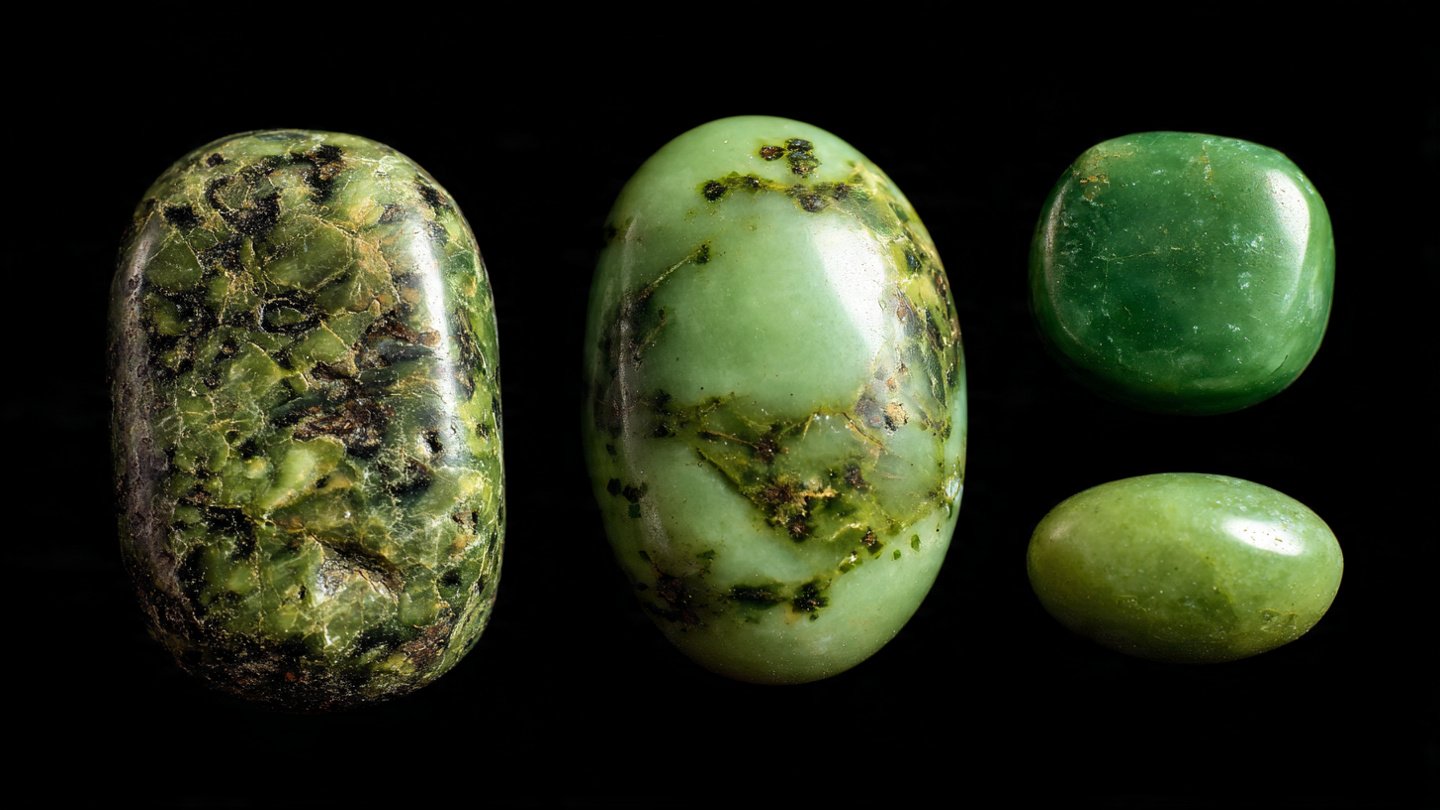
Držal si niekedy nádherný zelený kameň a čudoval sa, či si udrel nefrit zlato? Nie si sám. Trh s drahokamami je zaplavený nefritovými vyzerajúcimi kameňmi, ktoré dokážu oklamať aj skúsených zberateľov na prvý pohľad. Niektoré z nich sú prírodné kamene s podobným vzhľadom, zatiaľ čo iné sú zámerne uvedené na trh, aby oklamali kupujúcich.
Pochopenie rozdielu medzi pravým nefritom a jeho podvodníkmi nie je len o vyhýbaní sa podvodom. Oceňuje jedinečné vlastnosti každého kameňa a robí informované rozhodnutia o nákupe. Či už ste zberateľ, milovník šperkov, alebo niekto, kto nedávno zdedil "jade" kus, tento sprievodca vám pomôže oddeliť skutočný obchod od presvedčivých falzifikátov.
Poďme preskúmať najbežnejšie nefrit vyzerať ako kamene, ako ich identifikovať, a to, čo robí každý z nich zvláštne vo svojom vlastnom práve.
Čo robí Jade výnimočnou
Predtým, než sa ponoríme do podvodníkov, nech pochopiť, čo sme si porovnať s nimi. Pravý nefrit prichádza v dvoch odlišných formách: nefrit a nefrit. Obe sú oficiálne uznané za nefrit gemologickými inštitúciami po celom svete vrátane Gemologického inštitútu Ameriky (GIA).
Nephrite jade sa pohybuje od krémovej bielej až po hlbokú zelenú a dokonca čiernu. Skladá sa z kremičitanu vápenatého a je už viac ako 7000 rokov cenný, najmä v čínskej kultúre. Jadeite, vzácnejšia a cennejšia odroda, zobrazuje žiarivé farby vrátane smaragdovej zelenej, levandule, červenej, žltej a bielej. Pozostáva z kremičitanu hlinito-sodného.
Oba typy majú pozoruhodnú pevnosť vďaka svojej prepletanej kryštalickej štruktúre. To robí nefrit neuveriteľne odolný a odolný proti lámaniu, čo je dôvod, prečo ju staroveké civilizácie používali na nástroje a zbrane. Skutočný nefrit má tiež špecifickú gravitáciu medzi 2.90 a 3.38, cíti chladný na dotyk, a vytvára hudobný tón, keď udrel.
Teraz, keď vieme, čo hľadáme, nech spĺňajú kamene, ktoré sa často mýlia s nefritom.
Serpentine: Najbežnejší Jade Imposter
Ak tam je jeden kameň, ktorý si zaslúži titul "nebezpečenstvo zlo dvojča," to je serpentín. Tento minerál vyzerá pozoruhodne podobne ako nefritová jada, najmä tmavšie zelené odrody. V skutočnosti, serpentín bol predávaný ako nefrit po stáročia, niekedy pod menami ako "nový nefrit," "olive nede" alebo "kórejská neda."
Ako rozpoznať Serpentína
Serpentine zdieľa nede as zelenú farbu a voskový lesk, takže vizuálna identifikácia zložité. Existuje však niekoľko kľúčových rozdielov. Serpentín je výrazne mäkší ako nefrit, hodnotenie 2.5-5.5 na stupnici tvrdosti Mohs v porovnaní s nefrit 6-7. Môžete poškriabať serpentine s oceľovým nožom, zatiaľ čo nefrit odoláva tejto skúške.
Hustota rozpráva ďalší príbeh. Serpentín má špecifickú hmotnosť 2.44-2.62, výrazne ľahšiu ako nefrit, keď držíte kusy podobnej veľkosti. Podľa Medzinárodnej Gem Society, serpentín tiež cíti mierne mastnejší alebo viac mydla na dotyk v porovnaní s nefritový hladší pocit.
Pod zväčšením serpentín často zobrazuje vláknitú alebo šupinatý textúru, zatiaľ čo nefrit ukazuje jednotnejšiu, jemnozrnnú štruktúru. Keď je serpentín držaný na silné svetlo, môže sa zdať priesvitnejší pri viditeľnom žilovaní, zatiaľ čo nefritová jada zvyčajne vykazuje konzistentnejšiu opacitu.
Stojí Serpentine za niečo?
Neodmietni hada ako bezcenného! Hoci jej chýba nefritová prestíž a hodnota, serpentín je krásny kameň vo svojom vlastnom práve. Kvalitné serpentínové kúsky robia atraktívne, cenovo dostupné šperky a dekoratívne predmety. Kľúčom je kúpiť to, čo v skutočnosti je, nie platiť nefritové ceny za serpentín.
Aventurine: The Sparkling Pretender
Aventurín, najmä zelená odroda, často maškarné ako nefrit na trhu. Táto quartzová odroda sa predáva pod zavádzajúcimi názvami ako "Indian nede," "Colorado nede," alebo jednoducho prechádza ako skutočná vec v turistických obchodoch po celom svete.
Rozlišovacie vlastnosti
Najvýraznejšou črtou aventurínu je jeho aventurescencia, trblietavý alebo trblietavý efekt spôsobený obsiahnutými minerálmi ako fuchsite alebo hematit. Pozrite sa pozorne na kúsok zelenej aventuríny a všimnete si drobné iskry, ktoré zachytávajú svetlo. Skutočný nefrit nikdy neprejavuje túto iskru kvalitu.
Aventurín sadzby 6.5-7 na Mohs stupnici, podobne ako nefrit, ale špecifická gravitácia sa výrazne líši na 2,64-2,69 v porovnaní s nefritovej vyššej hustoty. Keď ťuknite na autentickú jade, vytvára jasný, rezonantný tón. Aventurín znie skôr ako obyčajný kremeň a vytvára nudnejší zvuk.
Distribúcia farieb tiež poskytuje stopy. Aventurín zvyčajne ukazuje viac rovnakej farby po celom, zatiaľ čo nefrit často zobrazuje jemné farebné variácie a niekedy dusenie. Pod mikroskopom, aventurín odhaľuje kremenné a charakteristické sklo textúru, zreteľne odlišné od nefritových prepojovacích vláknitej štruktúry.
Aventuríne a pravá hodnota
Aventurín je naozaj krásna a má svoju vlastnú metafyzickú a dekoratívnu príťažlivosť. Je to podstatne dostupnejšie ako nefrit, čo je vynikajúce pre veľké rezby, korálky a každodenné šperky. Problémom nie je samotná pomsta, ale nečestní predajcovia, ktorí ju nesprávne predstavujú ako nefrit.
Bledý imitátor
Prehnit sa často zamieňa s bledozelenou alebo žltou nefritou, najmä s ľahšími odrodami nefritu. Tento vápenatý kremičitan hlinitý minerálne zobrazuje mäkké, priesvitné zelené až žlto-zelené farby, ktoré môžu veľmi pripomínať určité nefritové vzorky.
Ako im povedať oddelene
Prehnite sa zvyčajne javí priesvitnejšie ako väčšina nefritu, čo umožňuje viac svetla prejsť. Pri podsvietení prehnit často ukazuje charakteristické "grape-like" alebo botryoidálnej vnútornej štruktúry, viditeľné ako zaoblené, bublin-like formácie. Jade udržiava vláknitejšiu lineárnu vnútornú štruktúru.
Tvrdosť poskytuje ďalšiu stopu. Prehnit sa pohybuje 6-6,5 na Mohsovej stupnici, mierne mäkší ako nefrit. Čo je dôležitejšie, prehnite má špecifickú hmotnosť 2.80-2.95, ľahšiu ako väčšina nefritov. Podľa výskumu, ktorý uverejnil Gemologický inštitút Ameriky, má prehnit aj iný index lomu, ktorý môžu gemológovia merať so špecializovaným vybavením.
Prehnite často obsahuje čierne alebo biele inklúzie, ktoré vyzerajú ako ihly alebo malé kryštály. Kým nefrit môže mať inklúzie, v zväčšovaní sa objavujú rôzne. Celkový "cítiť" sa tiež líši—prehnite má tendenciu cítiť mierne teplejšie na dotyk v porovnaní s nefritovej slávnej chladu.
Chrysoprase: Premium Look-like
Chrysoprase je v skutočnosti jedným z cennejších nefraktických náhrad, ktoré niekedy vedú k uznávaným cenám. Tento jasný jablkovo-zelená rozmanitosť chalcedony môže vyzerať pozoruhodne podobne ako vysokokvalitný nedeit, najmä imperiálny nefrit.
Identifikačné metódy
Farba je prvá stopa. Chrysoprase zobrazuje svetlé, takmer neónové jablko-zelená farba, ktorá je docela uniforma po celom. Jadeite, dokonca aj vysoko kvalitné vzorky, zvyčajne ukazuje nejaké farebné variácie alebo zooning. Chrysoprase odvodzuje svoju farbu z niklu, zatiaľ čo jadeite
Pod zväčšením chrysoprase odhaľuje chrumkavý kremeň mikrokryštalickej štruktúry, výrazne odlišný od nedeite a spájanie kryštálov pyroxénu. Špecifická závažnosť chryzoprázy (2,58-2,64) je výrazne nižšia ako jadeite (3.30-3,38), takže sa cíti ľahšie v ruke.
Jedna zaujímavá vlastnosť: chryzoprase farba môže vyblednúť s predĺženým vystavením slnku alebo tepla, podľa štúdií Mineralogickej spoločnosti Ameriky. Pravý jadeite udržuje svoju stálosť farieb za týchto podmienok. Táto stavba skutočne pomáha identifikovať staršie chryzoprase kusy, ktoré sa mohli osvetliť v priebehu času.
Chrysoprase
Vysokokvalitná chryzoprase je skutočne cenná a zberateľná, najmä hlboko zelené exempláre z Austrálie. Nie je menejcenný ako nefrit; je to jednoducho iný materiál s vlastnou krásou a vlastnosťami. Problém vzniká len vtedy, keď predajcovia úmyselne zmiasť dva.
Maw-Sit-Sit: Geológ Puzzle
This one’s interesting because maw-sit-sit (also called chloromelanite) actually contains jadeite, mixed with other minerals like kosmochlor and albite. Found primarily in Myanmar, it gets marketed as “jade” but technically isn’t pure jadeite or nephrite.
What Makes It Different
Maw-sit-sit displays distinctive dark green to black patterns with bright green spots or patches, creating a mottled appearance. Pure jade rarely shows this particular color combination and pattern. The specific gravity varies between 2.74-3.48 depending on the exact mineral composition, making it unreliable for identification.
Under microscopic examination, maw-sit-sit reveals a complex mixture of minerals rather than jade’s more uniform composition. However, because it contains actual jadeite, some dealers argue it qualifies as jade. The GIA doesn’t officially classify it as jade in the traditional sense.
For buyers, maw-sit-sit occupies a gray area. It’s not fake, contains real jadeite, and can be quite beautiful. The important thing is understanding exactly what you’re purchasing and paying an appropriate price for this unique material rather than premium jade prices.
Hydrogrossular Garnet: The South African Challenger
Often called “Transvaal jade” or “African jade,” hydrogrossular garnet from South Africa has fooled many buyers with its striking resemblance to jade. This massive green garnet variety displays colors and textures remarkably similar to nephrite.
Detection Techniques
Hydrogrossular garnet’s specific gravity (3.36-3.55) actually overlaps with jadeite’s range, making the standard heft test less reliable. However, the refractive index differs significantly at 1.720-1.734 compared to jade’s 1.600-1.688, though this requires specialized gemological equipment to measure.
The Mohs hardness of 6.5-7.5 is similar to jade, but hydrogrossular garnet often contains distinctive black chromite inclusions that appear as spots or patches. These look different from jade’s typical inclusions under magnification. According to the Journal of Gemmology, infrared spectroscopy provides definitive identification, showing characteristic garnet absorption patterns.
Practically speaking, most people rely on expert examination to distinguish high-quality hydrogrossular garnet from jade. The similarities are simply too close for casual inspection. If you’re considering a significant purchase, professional gemological testing is essential.
Dyed Quartzite and Other Treated Materials
Here’s where we enter truly deceptive territory. Some of the “jade” in the marketplace isn’t even naturally green. Unscrupulous sellers dye white or pale quartzite, marble, and even chalcedony green to imitate jade.
Spotting Dyed Imposters
Dyed materials often show unnaturally vibrant, uniform color that lacks jade’s characteristic subtle variations. The dye frequently concentrates in cracks, fractures, or more porous areas, creating uneven color intensity visible under magnification.
The acetone test can reveal dye, though it’s somewhat destructive. Dab a cotton swab with acetone on an inconspicuous area. If green color transfers to the swab, you’ve got a dyed stone. Real jade won’t react to this test. However, this method may violate return policies, so use it cautiously.
Dyed materials sometimes fluoresce under UV light due to the dyes used, while natural jade typically doesn’t fluoresce (though some jadeite can show weak fluorescence). According to testing protocols from the American Gem Trade Association, dyed stones also often display different absorption patterns under spectroscopic analysis.
The Polymer Jade Problem
Even more concerning are polymer imitations made from plastic or resin, sometimes with jade powder mixed in. These feel warm to the touch, are suspiciously lightweight, and may show mold marks or bubbles under magnification. The hot point test (carefully touching a hot needle to an inconspicuous spot) will cause plastic to melt or smell, while stone won’t react—but this permanently damages the piece.
Scientific Tests for Jade Authentication
While visual inspection and simple tests help, definitive jade identification often requires scientific analysis. Let’s explore the methods professionals use.
Specific Gravity Testing
This fundamental test measures density by weighing the stone in air and water, then calculating specific gravity. True jade falls within specific ranges: nephrite (2.90-3.03) and jadeite (3.30-3.38). Most jade look-alikes fall outside these ranges. You can perform this test at home with a precise scale and water container, following specific formulas available from gemological resources.
Refractive Index Measurement
Professional gemologists use a refractometer to measure how light bends through the stone. Nephrite shows a refractive index of 1.600-1.627, while jadeite measures 1.652-1.688. Each jade substitute has its own characteristic range, making this test highly reliable for identification.
Spektroskopia
Advanced techniques like Raman spectroscopy and infrared spectroscopy analyze the molecular structure of materials, providing definitive identification. According to research from the Chinese University of Hong Kong’s Gemmological Laboratory, these methods can distinguish jade from all substitutes with near-perfect accuracy. However, they require expensive equipment only available at professional testing facilities.
Chelsea Filter Test
This classic gemological tool uses colored filters to examine stones. Under a Chelsea filter, jadeite containing chromium appears pinkish-red, while many substitutes remain green. However, not all jadeite shows this reaction, and some treated stones can fool this test, so it’s not definitive alone.
Practical Tips for Buyers
Armed with knowledge about jade look-alike stones, let’s discuss practical strategies for making smart purchases and avoiding fakes.
Buy from Reputable Sources
Established jewelers with gemological credentials, certified dealers, and auction houses with authentication processes offer your best protection. While you’ll pay fair market prices, you’re also getting authenticity guarantees. According to the Better Business Bureau, reputable dealers typically offer return policies and will provide documentation of authenticity.
Request Certification
For significant purchases, insist on certification from recognized gemological laboratories like GIA, AGL (American Gemological Laboratories), or SSEF (Swiss Gemmological Institute). These certificates detail the stone’s identity, any treatments, and quality characteristics. Be wary of sellers who refuse or become defensive about certification requests.
Learn the Market Prices
If a deal seems too good to be true, it probably is. High-quality jadeite commands premium prices—thousands or even millions of dollars for exceptional pieces. Nephrite is generally more affordable but still commands respectable prices for quality specimens. Research current market values before shopping to develop realistic price expectations.
The Touch and Sound Test
While not foolproof, these traditional tests provide useful preliminary screening. Real jade feels notably cool when first touched and produces a clear, musical tone when two pieces are gently tapped together. Practice with known jade samples to train your senses. Many fakes feel warmer and produce duller sounds.
Examine Carefully
Use a jeweler’s loupe (10x magnification) to examine the stone’s internal structure. Look for jade’s characteristic fibrous, interlocking texture. Be suspicious of perfectly uniform color, as natural jade typically shows some variation. Check for concentrated color in cracks (indicating dye) or air bubbles (suggesting glass or plastic).
Ask Direct Questions
Don’t hesitate to ask sellers specific questions: Is this nephrite or jadeite? Has it been treated? Where did it originate? Honest dealers welcome questions and provide detailed answers. Vague responses or defensive reactions raise red flags.
The Cultural and Historical Context
Understanding why jade has been imitated for millennia adds important context to this discussion. Jade holds profound cultural significance, particularly in Chinese, Mesoamerican, and Maori cultures, where it symbolizes virtue, purity, and spiritual connection.
In ancient China, jade was considered more valuable than gold, reserved for emperors and nobility. This reverence created strong demand and inevitable imitations. Archaeological evidence from the Smithsonian Institution shows that even ancient civilizations struggled with jade authentication, using tests similar to those we use today.
The historical use of jade substitutes wasn’t always deceptive. Many cultures valued jade alternatives for their own properties and beauty, using them alongside authentic jade. The problem arose when imitations got deliberately passed off as the more valuable material.
Today’s jade market reflects centuries of tradition combined with modern commercial realities. Understanding this context helps appreciate why authentication matters and why certain stones consistently get confused with jade.
Appreciating Each Stone for What It Is
Here’s an important perspective shift: not every jade look-alike stone deserves contempt. Many of these minerals are genuinely beautiful and valuable in their own right.
Serpentine, aventurine, chrysoprase, and others have their own geological stories, unique properties, and aesthetic appeal. The issue isn’t these stones themselves but the dishonest practice of misrepresenting them. When properly identified and fairly priced, jade alternatives offer accessible beauty for people who admire the jade aesthetic but can’t afford or don’t need authentic jade.
Consider building a collection that celebrates both jade and its look-alikes. Each stone tells a different geological story and offers unique visual and tactile experiences. This approach removes the pressure of authentication anxiety while expanding your appreciation of Earth’s mineral diversity.
Quality aventurine makes gorgeous beaded jewelry. Serpentine carvings can be stunning. Chrysoprase rivals jade in beauty and value. By understanding and valuing each material appropriately, you develop deeper appreciation for the entire spectrum of green gemstones.
Kedy hľadať odbornú pomoc
Some situations absolutely require professional gemological examination. If you’re considering purchasing jade valued over $500, inheriting potentially valuable jade pieces, insuring jade jewelry, or questioning the authenticity of pieces you already own, professional testing provides peace of mind.
Certified gemologists use sophisticated equipment and years of training to provide definitive identifications. The cost of testing (typically $50-200 per item) is modest compared to the potential loss from purchasing misrepresented stones or underinsuring valuable pieces.
Professional reports also serve important purposes for insurance claims, estate settlements, and potential resale. They document authenticity, quality characteristics, and approximate value, providing legal protection and peace of mind.
Final Thoughts on Jade Look-Alikes
The world of jade and its look-alike stones is fascinating, complex, and sometimes frustrating. Armed with the knowledge from this guide, you’re better equipped to navigate the marketplace, appreciate different stones appropriately, and avoid costly mistakes.
Remember these key takeaways: True jade comes only as nephrite or jadeite. Many beautiful stones resemble jade but have different compositions and properties. Scientific testing provides definitive identification when stakes are high. Reputable dealers, proper certification, and reasonable skepticism protect you from fraud. Each stone has its own value and beauty when properly identified.
The jade market will always have challenges, but informed buyers make better decisions and help discourage deceptive practices. Whether you’re pursuing authentic jade or appreciating beautiful alternatives, knowledge empowers you to collect confidently and enjoy these remarkable minerals fully.
Have you encountered jade look-alike stones in your collecting journey? Share your experiences in the comments below! If you found this guide helpful, please share it with fellow collectors and gem enthusiasts. Your engagement helps spread accurate information and protects others from making costly mistakes. Got questions about a specific stone? Drop a comment and let’s discuss it together!
For ongoing updates about jade, gemstone identification, and collecting tips, consider subscribing to our newsletter. Stay informed, collect wisely, and enjoy the fascinating world of minerals!
Disclaimer: This article provides educational information about jade and similar stones based on gemological research and established testing methods from institutions like the Gemological Institute of America, International Gem Society, and peer-reviewed scientific publications. For definitive authentication of valuable stones, always consult a certified gemologist. Individual stone characteristics can vary, and no single test provides 100% certainty without professional examination.


