

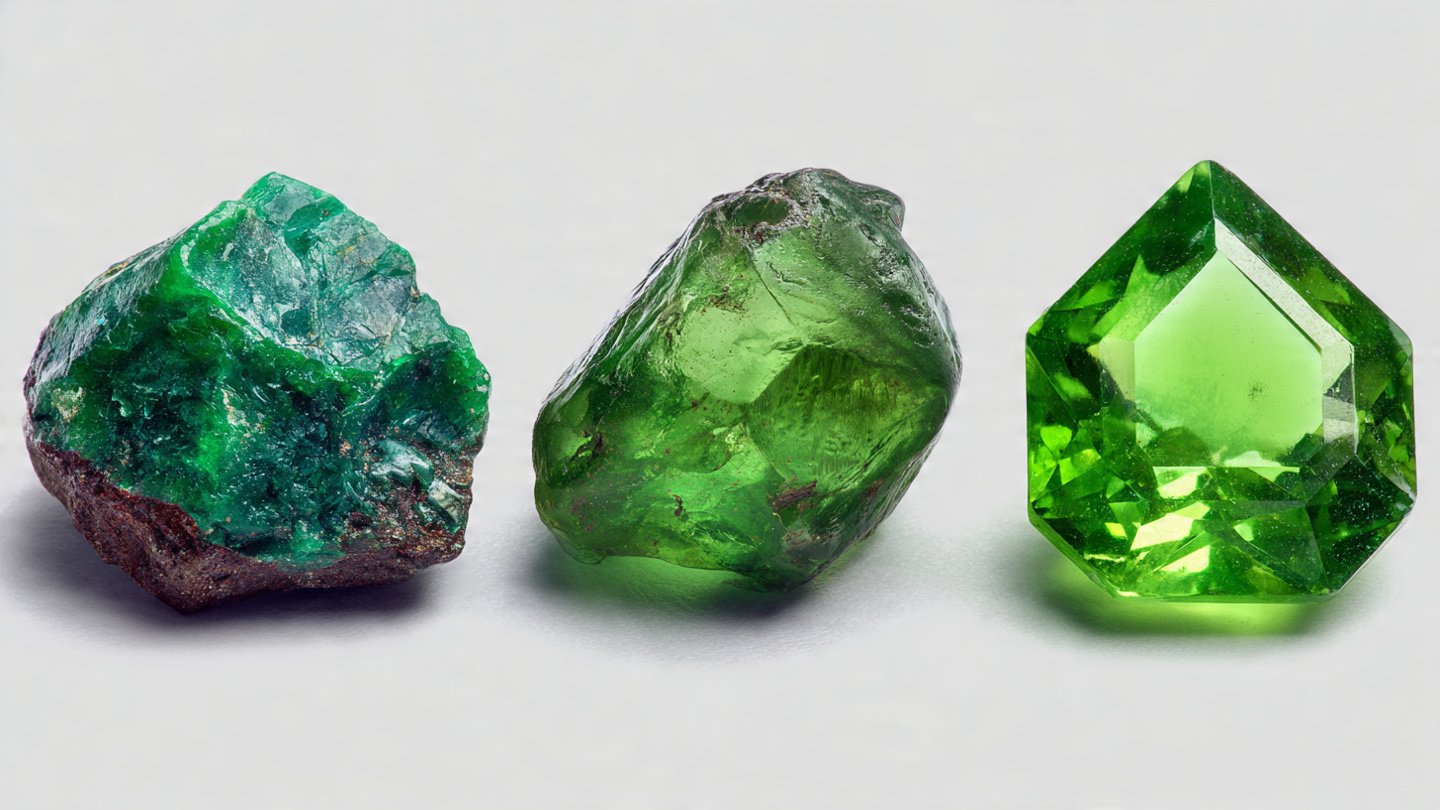
Výber medzi nefritom, smaragdom a peridotom môže cítiť ohromujúci. Tieto tri nádherné zelené drahokamy majú uchvátené milovníkov šperkov po stáročia, ale oni sú prekvapivo odlišné takmer v každom smere. Či už ste nákupy pre zásnubný prsteň, liečivý kryštál, alebo jednoducho zvedavý o týchto ohromujúcich kameňov, pochopenie ich jedinečné vlastnosti vám pomôže urobiť správnu voľbu.
Nechajte sa ponoriť hlboko do toho, čo robí každý z týchto zelených krás zvláštne, a čo je dôležitejšie, ktorý si zaslúži miesto vo vašej zbierke.
Pochopenie troch zelených kameňov
Než porovnáme jade vs smaragd vs peridot, poďme zistiť, čo každý kameň v skutočnosti je. To je dôležité, pretože mnohí ľudia zmiasť tieto drahokamy alebo predpokladať, že všetky zelené kamene sú vytvorené rovné.
Jade nie je technicky jediný kameň. Pojem "jade" sa vzťahuje na dva rôzne minerály: jadeit a nefrit. Obaja sú tvrdé, husté kamene cenené v ázijských kultúrach po tisíce rokov. Jadeite je vzácnejší a cennejší, zatiaľ čo nefrita je bežnejšie, ale stále krásne.
smaragdové patrí do berylovej skupiny minerálov a je zafarbený stopovým množstvom chrómu a niekedy vanádu. Tento drahokam si cení kráľovská ríša z Kleopatry pre moderných panovníkov. Smaragdy sú drahokamy, ktoré sú po boku diamantov, rubínov a zafírov "veľké štyri" drahokamov.
Peridot je drahokam-kvalita odrody minerálneho olivínu. Tento kameň sa vytvára hlboko v zemskom plášťi a je privedený na povrch sopečnou činnosťou. Peridot je jedným z mála drahokamov, ktoré sa vyskytujú len v jednej farbe, hoci intenzita tejto zelenej sa môže líšiť.
Každý kameň má svoj vlastný geologický príbeh, kultúrny význam a praktické úvahy. Poďme rozbiť presne, ako sa porovnávať.
Farebné rozdiely medzi Jade, smaragd, a Peridot
Farba je zvyčajne prvá vec, ktorú si ľudia všimnú, a to je, kde tieto tri kamene ukazujú ich najzrejmejšie rozdiely.
Rozsah jade farieb
Jade sa objavuje v mnohých farbách, vrátane bielej, levandule, žlté, oranžové, a dokonca aj čierne, ale zelená jade je najviac uznávaný a cenený. Zelená pochádza z obsahu železa. Imperial nede zobrazuje intenzívnu smaragdovú zelenú farbu a je najcennejšou odrodou. Väčšina nefritu sa stretnete sa pohybuje od bledej seladon zelená až hlboké les zelená, často s mierne mliečna alebo nepriehľadná kvalita.
Smaragdový farebný profil
Smaragdové predstavenie obsahuje živú, modrozelenú až čisto zelenú farbu. Najcennejšie smaragdy zobrazujú nasýtené médium až tmavozelené s vynikajúcou transparentnosťou. Farba musí byť dostatočne intenzívna, aby ju odlíšiť od svetlejšie zelenej beryl, ktorý je klasifikovaný ako smaragd. Kolumbijské smaragdy sú známe svojou čisto zelenou farbou, zatiaľ čo zambijské smaragdy často vykazujú mierne modré podtón.
Farebné vlastnosti peridotu
Peridot sa dodáva v odtieňoch od žltkastozelenej po olivovo zelenú po hnedozelenú. Kameň sa nikdy neobjaví v modrozelených ako smaragd. Intenzita farby závisí od obsahu železa. Najžiadanejšie peridot zobrazuje čistú trávu-zelenú bez žltých alebo hnedých odtieňoch, aj keď mierne žlté podtón je súčasťou peridot a odlišuje ju od iných zelených drahokamov.
Rýchle porovnanie farieb:
- Jade: Nepriehľadné až priesvitné, sa pohybuje od bledej až po hlbokú zelenú, často s mäkkým vzhľadom
- Smaragd: Transparentné, živé modrasté zelené až čisto zelené, brilantné a nasýtené
- Peridot: Priehľadný, žltkastozelený až olivovozelený, ľahší a svieži ako smaragd
Porovnanie tvrdosti a životnosti
Pri investovaní do drahokamových šperkov záleží na trvanlivosti. Chcete niečo, čo vydrží každodenné nosenie bez neustáleho strachu o poškodenie.
Tvrdosť Jade
Jade is one of the toughest gemstones on Earth. On the Mohs hardness scale, jadeite rates 6.5-7 and nephrite rates 6-6.5. However, hardness isn’t the same as toughness. Jade’s interlocking crystalline structure makes it extremely resistant to breaking or chipping. Ancient civilizations used jade for weapons and tools precisely because of this toughness.
You can wear jade jewelry every day without significant worry. It resists scratches better than you might expect and rarely chips or breaks unless subjected to extreme force.
Emerald Fragility
Emerald scores 7.5-8 on the Mohs hardness scale, making it harder than jade. However, emeralds are notoriously brittle due to natural inclusions and fractures. Most emeralds contain visible inclusions called “jardin” (French for garden) that create internal weaknesses.
Jewelers often treat emeralds with oils or resins to fill surface fractures and improve clarity. This makes emeralds less suitable for everyday rings and better suited for earrings, necklaces, or special occasion jewelry. An emerald engagement ring requires careful wearing and regular maintenance.
Peridot Durability
Peridot rates 6.5-7 on the Mohs hardness scale, similar to jade. However, peridot doesn’t possess jade’s exceptional toughness. The stone can chip if struck hard and is sensitive to rapid temperature changes. Acids can damage peridot, so remove peridot jewelry before using cleaning products.
Despite these limitations, peridot works well in most jewelry types with reasonable care. It’s more durable than emerald but less tough than jade.
Durability Winner: Jade takes the crown for everyday wearability, followed by peridot, with emerald requiring the most careful handling.
Price and Value Differences
Your budget plays a huge role in choosing between these stones. The price range varies dramatically.
Jade Pricing
Jade price depends entirely on which type you’re buying. Nephrite jade is quite affordable, with nice pieces starting around $10-50 per carat. Jadeite is significantly more expensive, ranging from $100 to over $3,000 per carat for high-quality stones.
Imperial jade, the finest jadeite with intense emerald-green color and high translucency, can fetch astronomical prices exceeding $3 million per carat at auction. A Cartier jade necklace sold for $27.4 million at Sotheby’s in 2014, demonstrating jade’s incredible value in the collector market.
Chinese and Asian markets drive jade prices higher than Western markets, where the stone is less culturally significant.
Emerald Pricing
Emerald is a precious stone with prices reflecting that status. Lower-quality emeralds start around $200-500 per carat, but fine emeralds easily reach $5,000-50,000 per carat or more. Exceptional Colombian emeralds with vivid color and good clarity have sold for over $100,000 per carat.
The famous Rockefeller Emerald sold for $5.5 million in 2017, setting a world record of $305,000 per carat. Origin significantly affects price, with Colombian emeralds commanding premium prices, followed by Zambian and Brazilian stones.
Peridot Pricing
Peridot is the most affordable of the three stones. Commercial-quality peridot costs $50-100 per carat, while fine peridot ranges from $200-500 per carat. Even exceptional peridot rarely exceeds $700 per carat.
This affordability makes peridot an excellent choice for budget-conscious buyers who want a genuine gemstone without the precious stone price tag. You can get a stunning peridot piece for a fraction of what you’d pay for similar-sized emerald or imperial jade.
Price Comparison Summary:
- Most affordable: Peridot
- Mid-range: Nephrite jade
- High-end: Jadeite and Emerald (both can reach extreme prices)
Cultural Significance and Symbolism
The meaning behind these stones varies dramatically across cultures and throughout history.
Jade Cultural Importance
Jade holds profound significance in Chinese culture, where it’s been treasured for over 7,000 years. The Chinese consider jade more valuable than gold, viewing it as a symbol of purity, wisdom, justice, and moral integrity. Confucius wrote about jade’s virtues, comparing its qualities to human character.
In Mayan and Aztec cultures, jade represented life and fertility. Warriors wore jade amulets for protection, and jade artifacts accompanied the deceased into the afterlife. New Zealand’s Māori people value pounamu (nephrite jade) as a sacred treasure passed down through generations.
Modern metaphysical practitioners associate jade with prosperity, good fortune, and emotional balance. Many believe jade promotes harmony and attracts abundance.
Emerald Symbolism
Ancient Egyptians associated emeralds with fertility and rebirth. Cleopatra was famously obsessed with emeralds, claiming ownership of all emerald mines in Egypt. The Incas and Aztecs considered emeralds holy stones.
In medieval Europe, emeralds were believed to reveal truth, protect against evil spells, and predict the future. The stone became associated with Venus, representing love and beauty.
Today, emerald is the birthstone for May and symbolizes rebirth, renewal, and love. The 20th and 35th wedding anniversaries traditionally feature emerald gifts. Metaphysically, emerald is associated with the heart chakra, emotional healing, and enhanced intuition.
Peridot Historical Meaning
Ancient Egyptians called peridot the “gem of the sun,” believing it protected against nightmares and evil spirits. Some historians think Cleopatra’s famous emerald collection may have actually included peridot, as the two stones were often confused in ancient times.
Peridot appears in priests’ robes mentioned in the Bible and decorated European medieval churches. Hawaiian folklore associates peridot with Pele, the volcano goddess, as the stone forms in volcanic lava.
As August’s birthstone, peridot symbolizes strength, protection, and positive power. Crystal healers connect peridot with releasing negative patterns and attracting prosperity.
Liečivé vlastnosti a metafyzické presvedčenia
Whether you embrace crystal healing or remain skeptical, understanding these beliefs helps you appreciate why people choose specific stones.
Jade Healing Properties
Traditional Chinese medicine has used jade for thousands of years. Practitioners believe jade:
- Promotes kidney and heart health
- Reduces inflammation and pain
- Balances the body’s energy systems
- Calms the nervous system and promotes peace
- Attracts prosperity and good luck
- Strengthens relationships and emotional bonds
Jade rollers have become popular in modern skincare routines, with users claiming reduced puffiness and improved circulation, though scientific evidence remains limited.
Emerald Metaphysical Qualities
Crystal healing traditions attribute these properties to emerald:
- Opens and activates the heart chakra
- Promotes unconditional love and compassion
- Enhances mental clarity and memory
- Supports emotional healing from past trauma
- Strengthens intuition and psychic abilities
- Attracts abundance and success
Some wear emerald to recover from heartbreak or strengthen current relationships. The stone supposedly helps speakers communicate with greater eloquence and truth.
Peridot Energy Work
Believers in crystal healing suggest peridot:
- Releases negative emotions like jealousy and resentment
- Protects the aura from negative energy
- Boosts confidence and self-worth
- Attracts wealth and abundance
- Supports physical detoxification
- Reduces stress and promotes restful sleep
Peridot is sometimes called the “study stone” because it supposedly enhances focus and mental clarity during learning.
Important Note: No scientific evidence supports gemstone healing claims. These beliefs represent cultural traditions and personal experiences rather than medical fact. Always consult healthcare professionals for medical concerns.
Best Uses for Each Gemstone
Choosing the right stone depends on your specific needs and preferences.
When to Choose Jade
Select jade if you:
- Want exceptional durability for daily wear
- Appreciate cultural significance and spiritual meaning
- Prefer opaque or translucent stones over transparent gems
- Love the soft, classic look of green jade
- Want a conversation piece with historical depth
- Are shopping in Asian markets where jade holds premium value
Perfect for: Bangles, pendants, rings for daily wear, carved ornaments, meditation stones, family heirlooms
When to Choose Emerald
Choose emerald if you:
- Want a traditional precious gemstone
- Love vibrant, transparent green color
- Are selecting a May birthstone
- Want a stone for special occasions rather than daily wear
- Appreciate luxury and prestige
- Have the budget for high-quality stones
Perfect for: Engagement rings (with protective settings), earrings, pendants, special occasion jewelry, investment pieces
When to Choose Peridot
Pick peridot if you:
- Want genuine gemstone quality at affordable prices
- Love fresh, lime-green or olive tones
- Need an August birthstone
- Want something unique and less common
- Prefer transparent stones with sparkle
- Appreciate historical and volcanic origins
Perfect for: Everyday jewelry, summer pieces, birthstone gifts, vintage-inspired designs, affordable genuine gemstone options
How to Identify Real vs Fake Stones
With valuable stones comes the risk of counterfeits and treatments. Here’s how to protect yourself.
Identifying Genuine Jade
Real jade feels cold to the touch and warms slowly. It should feel heavy for its size due to its density. When tapped gently with metal, jade produces a clear, musical tone. Fake jade (often glass or dyed quartz) sounds dull.
Examine the stone under light. Natural jade shows fine fibrous or granular structure. Polymer jade or glass appears too perfect and uniform. Be wary of jade that’s too cheap or too perfect.
The jadeite vs nephrite distinction matters for value. Ask for certification from reputable gemological laboratories like GIA (Gemological Institute of America) when buying expensive jade.
Spotting Real Emerald
Genuine emeralds almost always contain inclusions. If an emerald appears flawless, it’s likely synthetic or treated glass. Use a jeweler’s loupe to examine internal characteristics.
Natural emeralds show specific inclusion patterns and color zoning. Most emeralds receive clarity treatments with oils or resins, which is acceptable industry practice when disclosed. Always request certification from GIA or other recognized labs.
Synthetic emeralds exist and are chemically identical to natural emeralds but cost much less. Lab-created emeralds are legitimate products if sold honestly, but you deserve to know what you’re buying.
Verifying Authentic Peridot
Real peridot shows double refraction when viewed through a jeweler’s loupe, creating a doubling effect of internal inclusions or facet edges. This is a reliable test distinguishing peridot from glass or other imitations.
Peridot has specific gravity that makes it feel heavier than glass. The stone should show consistent color throughout, though slight variations are normal. Extremely cheap “peridot” is likely colored glass or synthetic material.
Check for lily pad inclusions, a characteristic feature of natural peridot. These look like water lily pads under magnification.
Pro Tip: Always buy from reputable dealers, request certifications for valuable pieces, and don’t hesitate to get an independent appraisal for expensive purchases.
Care and Maintenance Tips
Proper care extends the life and beauty of your gemstone jewelry.
Caring for Jade
Jade is low-maintenance but benefits from these practices:
- Clean with warm water and mild soap using a soft brush
- Avoid harsh chemicals and ultrasonic cleaners
- Store separately from harder stones that could scratch it
- Remove jade jewelry before using cleaning products
- Apply lotions and perfumes before putting on jade
- Occasionally wipe with a slightly damp cloth to maintain luster
Jade can handle water, so you don’t need to remove it for handwashing. The stone actually improves with wear, developing a warmer glow over time.
Maintaining Emerald
Emeralds require gentle care:
- Clean only with lukewarm water and mild soap
- Never use ultrasonic or steam cleaners (they can damage treatments)
- Avoid exposing emeralds to extreme temperature changes
- Remove emerald rings before manual work or exercise
- Have emeralds professionally re-oiled every few years
- Store in soft pouches away from harder gemstones
Many jewelers offer emerald cleaning services specifically designed for this delicate stone.
Peridot Care Guidelines
Keep your peridot beautiful with these tips:
- Clean with warm soapy water and a soft brush
- Avoid acid exposure (including acidic cleaners)
- Don’t expose to rapid temperature changes
- Store away from harder stones to prevent scratches
- Remove before exercising or doing manual work
- Keep away from harsh chemicals
Peridot is more durable than emerald but still deserves careful handling.
Making Your Final Choice
Now that you understand jade vs emerald vs peridot, how do you decide? Consider these factors:
Budget: Peridot offers the best value, nephrite jade is mid-range, while emerald and imperial jadeite command premium prices.
Durability: Jade wins for everyday wear, peridot is suitable for most jewelry, emerald requires careful handling.
Color Preference: Choose emerald for vivid bluish-green, jade for classic opaque green, peridot for fresh lime-green tones.
Symbolism: Jade for wisdom and prosperity, emerald for love and renewal, peridot for protection and strength.
Investment: Top-quality emeralds and imperial jade appreciate in value, while peridot remains affordable.
Personal Connection: Trust your intuition. The right stone speaks to you personally beyond objective criteria.
You might even choose to own all three. Each stone offers unique beauty and meaning worth experiencing.
Záver
The choice between jade, emerald, and peridot isn’t about finding the “best” stone—it’s about finding the right stone for you. Jade offers unmatched toughness and cultural depth. Emerald provides luxury and brilliant color. Peridot delivers genuine gemstone beauty at accessible prices.
Consider your lifestyle, budget, color preferences, and personal connection to each stone. Whether you choose the ancient wisdom of jade, the precious allure of emerald, or the sunny charm of peridot, you’re selecting a piece of Earth’s natural artistry to treasure.
Each stone carries millions of years of geological history and thousands of years of human appreciation. That’s pretty special, regardless of which green gemstone you choose.
Ready to find your perfect green gemstone? Share this guide with friends who love jewelry, and comment below which stone captures your heart! If you found this comparison helpful, bookmark it for your next gemstone shopping trip.
Disclaimer: Metaphysical and healing properties represent traditional beliefs and cultural practices. No scientific evidence supports gemstone healing claims. Consult qualified medical professionals for health concerns. Price ranges are approximate and vary based on quality, origin, size, market conditions, and geographic location.


